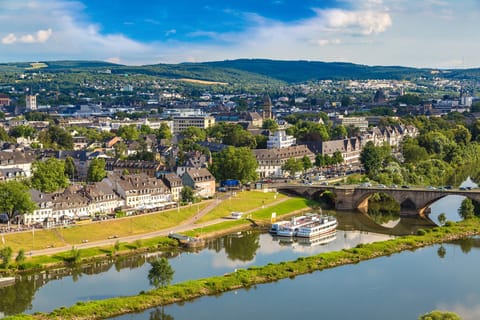
Trier, Moselle: Wine Tour with Cruise
Experience the Moselle on the boat. Afterwards, you will visit a winemaker in Trier with wine tasting and food. The journey to the winemaker is by vintage bus.
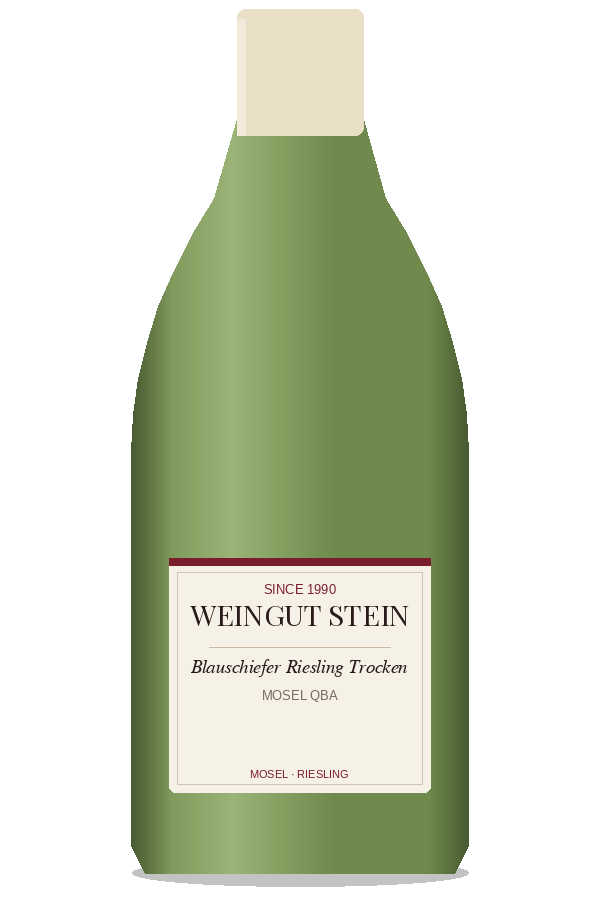 Pale straw with green glints
Still White · Mosel QbA · Mosel
A dry, low-intervention blue-slate Riesling: bright, juicy and savoury, an everyday wine from near-abandoned steep sites.
No critic score is published for this bottle that we can cite with a reviewer, a vintage and a review year, so none is shown. The rating in the header is our own.
Allow 5 minutes from open to pour.
A dry, low-intervention blue-slate Riesling: bright, juicy and savoury, an everyday wine from near-abandoned steep sites.
Structurally light-bodied, high acidity with a long finish. A dry, low-intervention blue-slate Riesling: bright, juicy and savoury, an everyday wine from near-abandoned steep sites.
Drink 2 to 8 from vintage. Young vintages benefit from 30-90 minutes of decanting; mature bottles should be handled carefully for sediment.
Mosel river trout meuniere is the canonical pairing. Other strong matches include Grilled vegetables and Goat cheese. Bright slate-driven acidity and citrus mirror the brown-butter and lemon of the local fish.
The blend is Riesling. The wine is classified as Mosel QbA.
Experience the Moselle on the boat. Afterwards, you will visit a winemaker in Trier with wine tasting and food. The journey to the winemaker is by vintage bus.
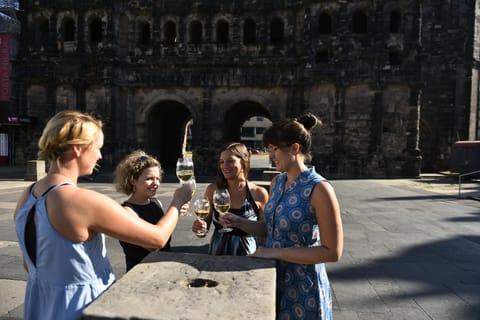
Experience Trier with all your senses: This delightful city tour combines history, architecture, and a guided wine tasting at three special stops.
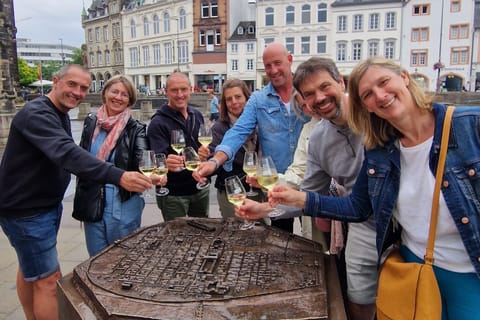
Explore the rich and long history of the wine-growing region of Moselle and Trier on this guided walking tour of Germany's oldest city. Enjoy an included wine-tasting ...