Alsace Half-Day Wine Tour from Strasbourg
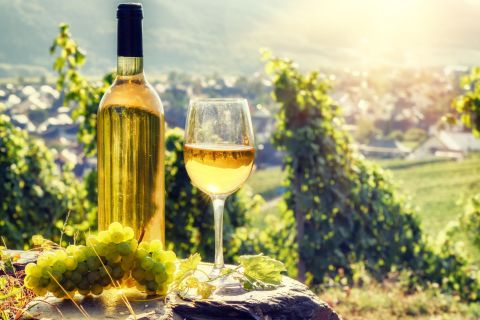
Depart from Strasbourg on a half-day tour along the Alsace wine route to discover some of the best wines of France. Visit 2 wineries, learn about the 7 types of Alsace wines.

Riesling, Gewurztraminer and 51 Grands Crus on the Vosges flank
France's mosaic of granite, limestone and volcanic terroirs along the Vosges, where Riesling, Gewurztraminer and Pinot Gris bottle Alsace's 51 Grands Crus and dual French-German village heritage.
Depart from Strasbourg on a half-day tour along the Alsace wine route to discover some of the best wines of France. Visit 2 wineries, learn about the 7 types of Alsace wines.
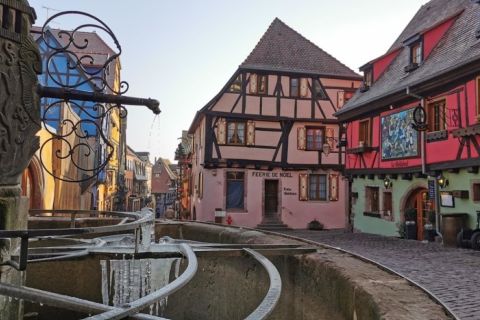
Experience half a day on the famous wine road of Alsace to visit Hunawihr, Riquewihr, and a winemaker cellar with wine tasting! This is the perfect way to get an overv...
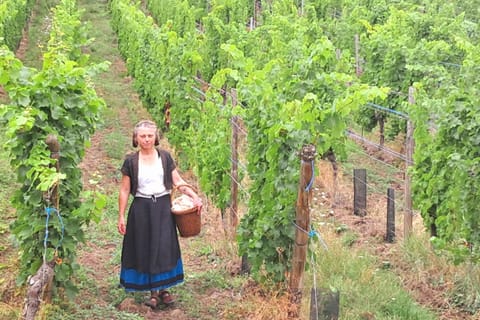
Authentic Alsatian immersion in picturesque Riquewihr - with the option of wine tasting - accompanied by a costumed local character. Where Alsatian history and tradition meet.
Every vineyard, tasting room, wine bar and cellar we cover in Alsace, pinned. Click a pin for the page.
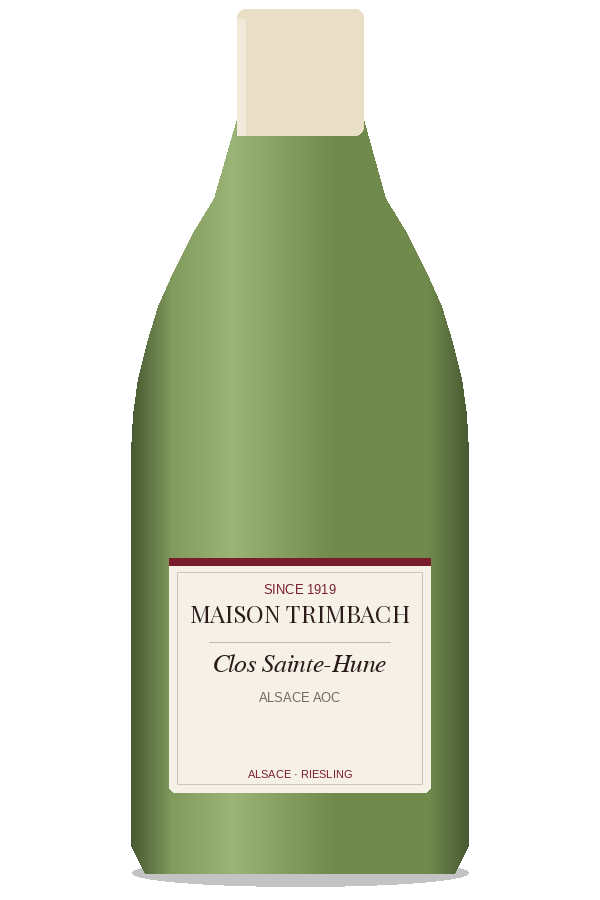
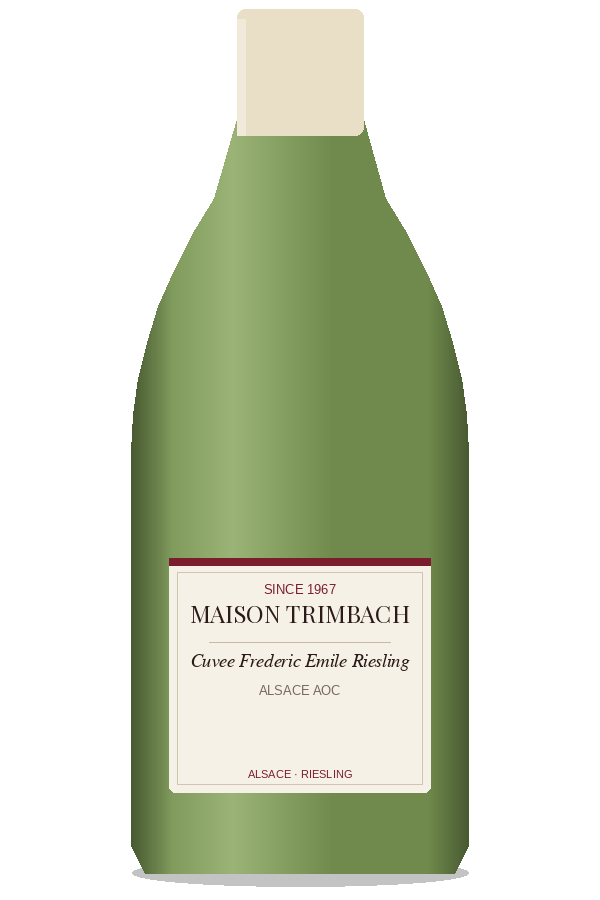
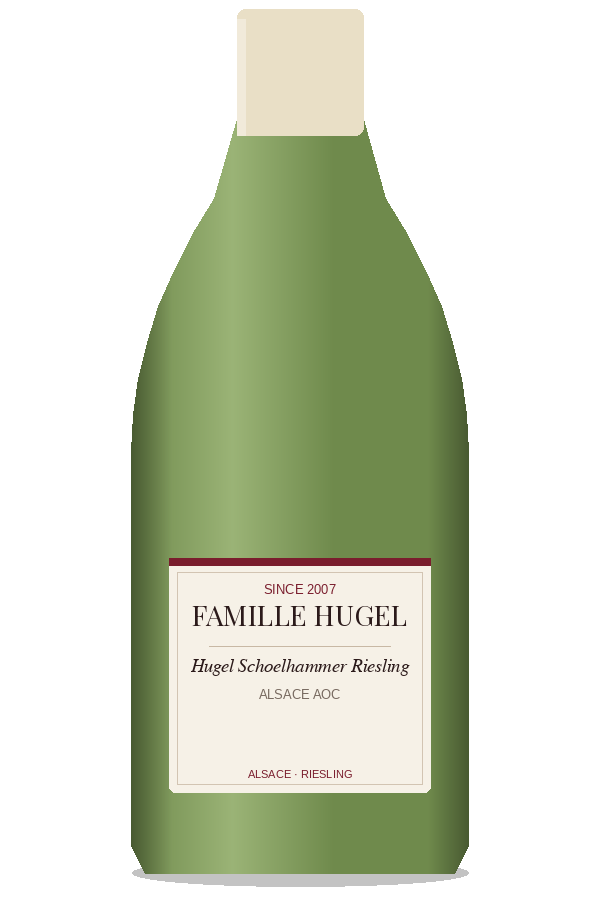
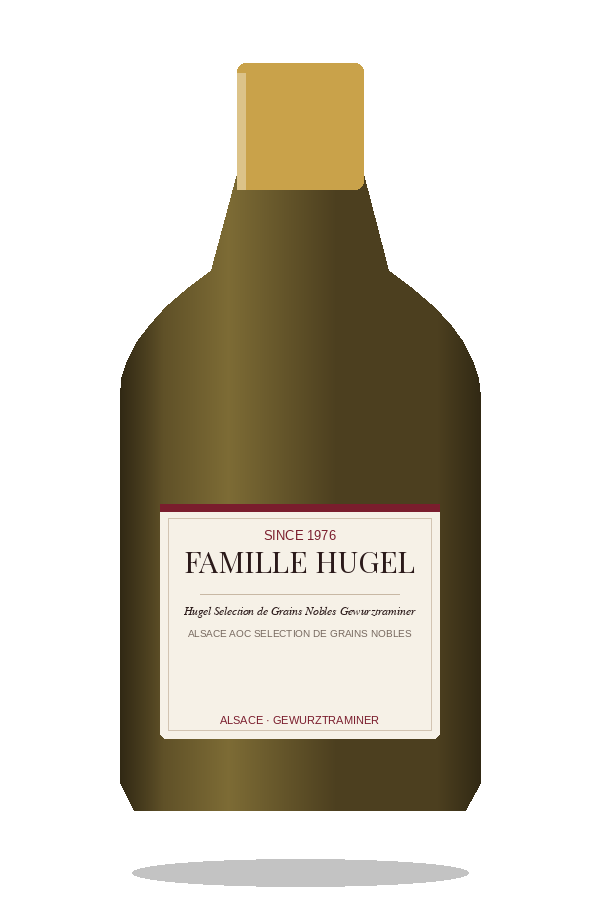
The iconic bottles that define Alsace.
Producer: Trimbach
Trimbach's 1.67 hectare walled monopole inside Grand Cru Rosacker, family-declassified to Alsace AOC. The benchmark for dry, ageworthy Alsace Riesling.
Price: EUR 250 to 450 at retail
Producer: Trimbach
Trimbach's flagship cuvee, a Riesling blend of Grand Cru Geisberg and Osterberg parcels released after several years of bottle age. Smoky, structured and ageworthy.
Price: EUR 75 to 110 at retail
Producer: Hugel Et Fils
Hugel's flagship single-parcel Schoenenbourg Riesling, declassified to Alsace AOC. Yellow plum, preserved lemon and limestone built for a 20-year cellar.
Price: EUR 150 to 230 at retail
Producer: Hugel Et Fils
Hugel's botrytised Gewurztraminer at SGN ripeness, made only in noble-rot vintages. Saffron honey, candied rose, apricot jam; a multi-decade dessert wine.
Price: EUR 180 to 320 at retail
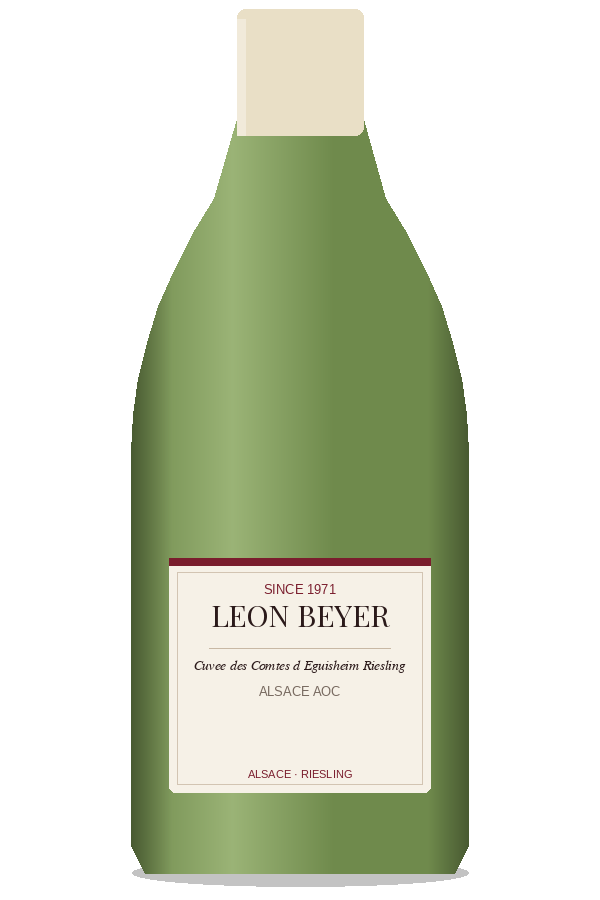
Producer: Leon Beyer
Beyer's flagship dry Riesling, sourced from old vines on Pfersigberg around Eguisheim and labelled Alsace AOC. Steely, mineral, built for a 20-year cellar.
Price: EUR 60 to 95 at retail
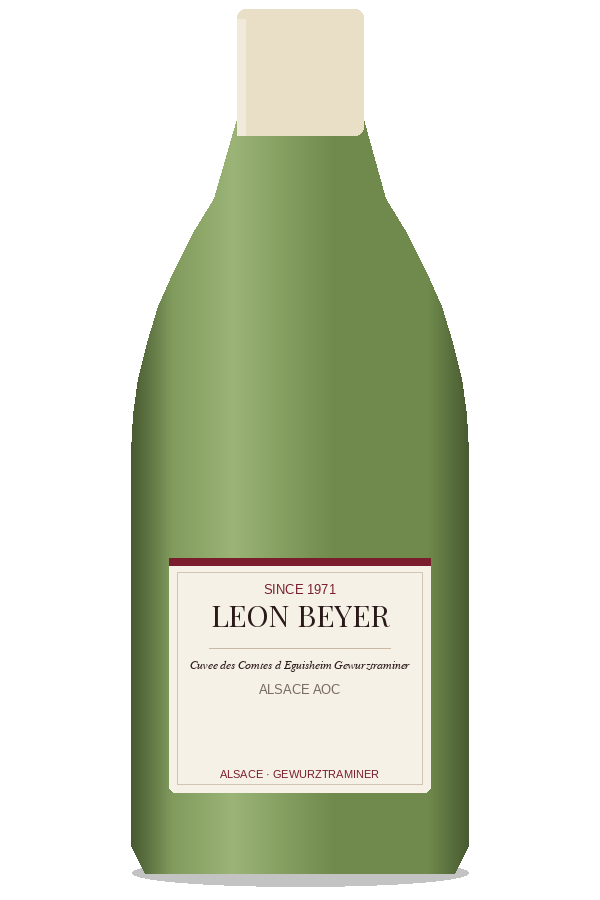
Producer: Leon Beyer
Beyer's flagship dry Gewurztraminer from Eguisheim old plots. Rose, lychee and ginger, but bone-dry and structured; the textbook Alsace dry Gewurz.
Price: EUR 55 to 85 at retail
A handful of the estates we send friends to when they are in Alsace.
Thirteen-generation Ribeauville house founded in 1626, source of Clos Sainte-Hune Riesling from the Rosacker Grand Cru and a long-standing reference for bone-dry Alsace Riesling.
Signature: clos-sainte-hune, frederic-emile, reserve-personnelle
Founded in 1639, the 13th-generation Riquewihr house that led the 1984 reform giving Alsace its Vendanges Tardives and Selection de Grains Nobles laws.
Signature: schoenenbourg, vendanges-tardives-gewurztraminer, gentil
Eguisheim winegrowers since 1580, the house that built the dry-style reputation of Alsace Gewurztraminer and Riesling and supplies many French three-star tables.
Signature: comtes-d-eguisheim-gewurztraminer, comtes-d-eguisheim-riesling, cuvee-particuliere
Guebwiller estate spanning 130 hectares including 70 hectares of Grand Cru terraces on Kitterle, Kessler, Saering and Spiegel, a substantial Grand Cru holding under single ownership.
Signature: kitterle-riesling, kessler-gewurztraminer, saering-riesling
The Faller family's Clos des Capucins at the foot of Schlossberg in Kaysersberg, biodynamic since the 2000s and one of the touchstones for Alsace Riesling and Pinot Gris.
Signature: schlossberg-riesling-cuvee-sainte-catherine, furstentum-gewurztraminer, altenbourg-pinot-gris
Turckheim estate built from the 1959 union of the Zind and Humbrecht families and run by Olivier Humbrecht MW, holding parcels in Brand, Hengst and the volcanic Clos Saint-Urbain on the Rangen.
Signature: clos-saint-urbain-rangen, brand-riesling, clos-windsbuhl-pinot-gris
The quiet opener of the Route des Vins, an old crown of limestone villages 20 km west of Strasbourg where Riesling and Pinot Gris meet a wider cooler-climate viticulture before the Vosges sharpen south.
Schist-and-sandstone slopes where Riesling turns saline, Sylvaner reaches its only Grand Cru on Zotzenberg, and Heiligenstein hides the rare Savagnin Rose called Klevener.
Pink-granite Riesling country behind medieval ramparts, with a strong natural-wine current that runs from Domaine Ostertag in Epfig to the straw-bale cellar of Achillee in Scherwiller.
The classical heart of Alsace Riesling, where Trimbach's Clos Sainte-Hune climbs the Rosacker hill above Hunawihr and Marcel Deiss in Bergheim makes the case for field-blend climats.
The picture-book hill town of Alsace, where Hugel has been bottling since 1639 and the Schoenenbourg's marl-and-keuper slope grows Riesling that ages for half a century.
Granite Schlossberg meets clay-limestone Furstentum and the warm Mambourg, an amphitheatre that grows everything from chiselled Riesling at the Clos des Capucins to richer Gewurztraminer above Kientzheim.
Also: Kientzheim, Ammerschwihr
Peak wine-travel season in Alsace is spring through autumn, with harvest the standout window.
classified-growth and grand-cru estates require booking days to weeks ahead; smaller family domaines often take walk-ins midweek.
most estates open 10:00 to 17:00 by appointment, often closed Sunday and Monday.
tipping is not expected at tastings; buying a bottle from the cellar door is the customary thank-you.
If you only open one bottle, open Clos Sainte-Hune by trimbach. It is the wine most associated with Alsace.