Riesling
The undisputed king of the Mosel, accounting for the large majority of plantings and every famous single vineyard from Wehlener Sonnenuhr to Scharzhofberger.
The grapes that define Mosel: the canonical varietals and how the region expresses them.
The grapes that define Mosel: the canonical varietals and how the region expresses them.
The undisputed king of the Mosel, accounting for the large majority of plantings and every famous single vineyard from Wehlener Sonnenuhr to Scharzhofberger.
A Riesling crossing (with Madeleine Royale) bred by Hermann Muller from Thurgau in 1882, long the workhorse white of German bulk wine and still one of the Mosel's most planted varieties after Riesling.
One of the oldest cultivated European grapes, grown here since Roman times and now concentrated almost entirely on the shell-limestone soils of the Obermosel on the Luxembourg border, where Riesling struggles.
Pinot Noir, locally called Spatburgunder, is a small but growing presence on the warmer, more sheltered Mosel sites and on the limestone of the Obermosel.
A 1929 crossing of Trollinger and Riesling that ripens reliably and retains Riesling-like acidity, planted on the Mosel as a frost-hardy alternative on cooler or flatter sites.
Pinot Blanc, called Weissburgunder in Germany, is grown in small quantities on the limestone Obermosel and warmer Lower Mosel sites where it produces dry, fuller-bodied, gently nutty whites with pear and almond notes and moderate acidity. A versatile food wine that contrasts with the slate-driven Riesling style and is often vinified bone-dry for the table.
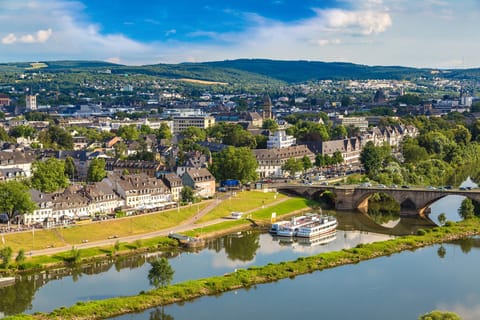
Experience the Moselle on the boat. Afterwards, you will visit a winemaker in Trier with wine tasting and food. The journey to the winemaker is by vintage bus.
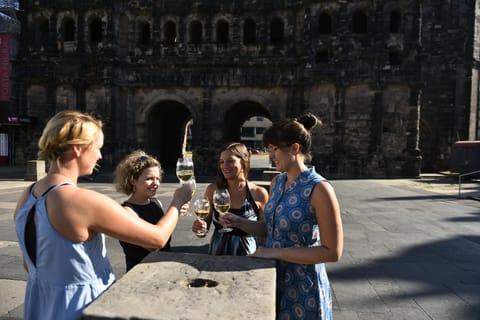
Experience Trier with all your senses: This delightful city tour combines history, architecture, and a guided wine tasting at three special stops.
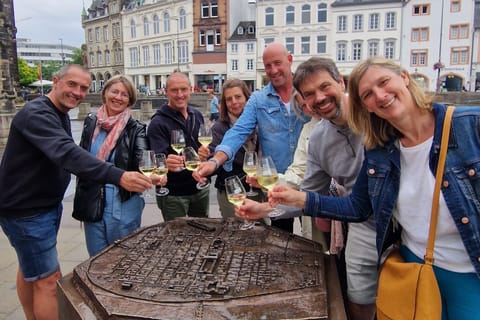
Explore the rich and long history of the wine-growing region of Moselle and Trier on this guided walking tour of Germany's oldest city. Enjoy an included wine-tasting ...
Peak wine-travel season in Mosel is spring through autumn, with harvest the standout window.
classified-growth and grand-cru estates require booking days to weeks ahead; smaller family domaines often take walk-ins midweek.
most estates open 10:00 to 17:00 by appointment, often closed Sunday and Monday.
tipping is not expected at tastings; buying a bottle from the cellar door is the customary thank-you.
Ask the next local you meet what they would order. Mosel rewards trust.