Chaource with Chablis (Chardonnay) ★ 4.6
Chaource is fine, creamy and lightly salted, with mushroom and cream. A light, racy village Chablis lifts that texture and gives each mouthful a clean finish.
Bottles to try:
The local cheeses of Burgundy with the local wines that suit them, and why they work.
The cheeses of Burgundy with the wines made beside them. Pairings marked as a local tradition are the ones a regional source names; the rest are our own picks, and say so.
Chaource is fine, creamy and lightly salted, with mushroom and cream. A light, racy village Chablis lifts that texture and gives each mouthful a clean finish.
Bottles to try:
The syndicate recommends a Mâconnais Chardonnay or a Mâcon red. A white matches the cheese's milky, buttery youth and its hazelnut and hay notes with age, without overwhelming a 30 to 40 g cheese.
Bottles to try:
The Burgundy wine board gives Crémant de Bourgogne its top rating for this triple cream. Bubbles and acidity cut through the butterfat and reset the palate after each bite.
Chaource is creamy and delicately salted, with cream and fresh mushroom notes, and grows creamier as it ripens. A Chablis grand cru, full-bodied with high acidity, has the weight to match the paste and the acidity to clean it.
Bottles to try:
The Burgundy wine board gives Viré-Clessé its top rating for Charolais. A Chardonnay of ripe fruit suits a creamy goat cheese with notes of grass, hay, hazelnut and butter.
Soumaintrain and Chablis share the Yonne. A regional produce site pairs a Chablis or Petit Chablis with younger cheeses and a premier cru with the most pronounced ones, the wine's acidity against the brine rind and milky paste.
Bottles to try:
Chaource is creamy and lightly salted, with mushroom and cream notes. A village white from Meursault, Puligny or Chassagne, full-bodied and oak-aged with high acidity, is round enough for the cream and fresh enough to clean it.
Bottles to try:
A triple cream with a pronounced lactic taste and flavours of cream and fresh butter. A Côte de Beaune grand cru white, full-bodied and oak-aged with high acidity and a long finish, carries that fat without going flat.
Bottles to try:
The Burgundy wine board gives its top rating to a white Saint-Romain for the abbey cheese. Cîteaux is a mild, fruity pressed cheese with a pasture taste, so a fresh white leaves it in front.
Cîteaux is a mild, fruity pressed cheese with a pasture taste. A Beaune or Volnay premier cru, medium-bodied with bright acidity and moderate tannin, lets the cheese stay in front.
Bottles to try:
Brillat-Savarin is a triple cream with flavours of cream and fresh butter. A premier cru white from the Côte de Beaune, full-bodied and oak-aged with high acidity, has the weight for the butterfat and the acidity to stop it cloying.
Bottles to try:
Cîteaux is a mild, fruity pressed cheese, close to a small Reblochon. A village Pinot Noir from the Côte d'Or, medium-bodied with bright acidity and moderate tannin, meets its supple paste without burying the pasture taste.
Bottles to try:
The cheese is rich, with cream and fresh butter flavours. A premier cru Chablis, dry and high in acidity, cuts through the butterfat and keeps the cream from cloying.
Bottles to try:
A washed rind can flatten a big wine. A medium-bodied Pinot Noir with bright acidity and moderate tannin, such as Mercurey, Savigny or Bourgogne rouge, keeps its fruit against Langres's rind and creamy paste.
Bottles to try:
Saint-Florentin is mild, lactic and slightly acid, with a discreet bitterness when young. Aligoté's high acidity matches that tang, and its body stands up to the washed rind without covering the milky paste.
Bottles to try:
Mâconnais is a small goat's cheese, milky and buttery when young, turning to hazelnut and hay with age. A Chardonnay from Montagny, Rully or Mercurey, with high acidity and fair weight, meets it without covering those notes.
Bottles to try:
A white option. Village Chablis, light and racy, cuts the creamy paste, though the Burgundy wine board warns that a washed-rind Époisses can overpower any wine, so a small portion works best.
Bottles to try:
Burgundy’s iconic vineyards on a 5-hour wine tasting tour. Travel along the Grands Crus Wine Road through the Côte de Nuits & Côte de Beaune. 2-hour of free time in Be...
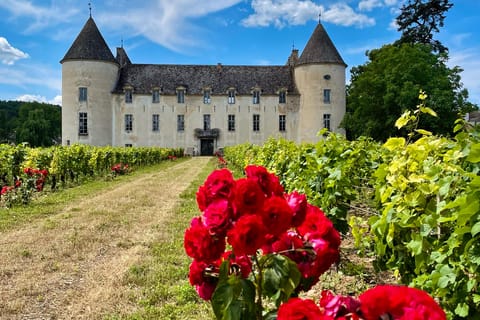
Tasting of the estate's wines: 4 wines (including 2 Premiers Crus)

Explore the mythical UNESCO Heritage route des grands crus, experience wine tasting in Burgundy!
Yes. The appellation requires the cheeses to be rubbed with a salted solution containing Marc de Bourgogne during ripening.
At least four weeks, according to the defence syndicate.
Within the delimited zone around the Auxois and Châtillonnais: western Côte-d'Or, three cantons of Yonne and two of Haute-Marne.
Its zone straddles two departments: the Aube, in Champagne, and the Yonne, in Burgundy. It is a cheese of the border country between the two.
A minimum of 14 days is noted; the guide to French cheese puts the peak tasting at four to five weeks.
The syndicate suggests the local wines: a white Mâconnais Chardonnay or a red Mâcon.
Raw goat's milk, from Alpine or Poitevin goats.
Ivory, with a delicate bluish down that can appear during ageing.