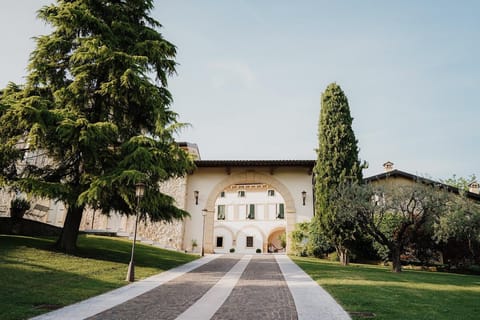
Valpolicella Classica: Visit and tasting at Corte Borghetti
Visit the vineyards and winery of Corte Borghetti and taste 5 wines in the 17th-century barrel cellar, with cold cuts and cheeses from Lessinia, extra virgin olive oil...
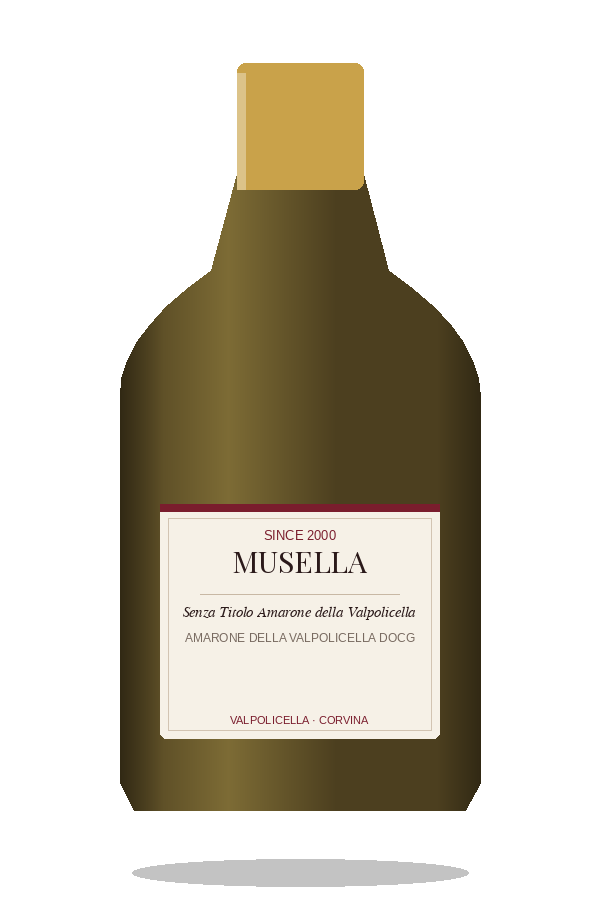 Gold, deepening to amber with age
Dessert Passito · Amarone della Valpolicella DOCG · Valpolicella
The estate's attempt to vinify Amarone in the most natural and traditional way possible: a hundred days of drying, hand destemming and crushing, indigenous-yeast fermentation in an oak truncated-cone vat with daily hand punch-downs, then five years in untoasted 700-litre oak with no filtration and no fining.
No critic score is published for this bottle that we can cite with a reviewer, a vintage and a review year, so none is shown. The rating in the header is our own.
Senza Titolo means untitled. First made in 2000, it is Musella's most interventionist-free Amarone: unfiltered, unfined, racked twice, fermented on indigenous yeasts at uncontrolled temperature with a daily tuning-fork stimulation at 432 hertz.
After a hundred days of drying the grapes are destemmed and crushed by hand, fermented with indigenous yeasts at uncontrolled temperature in an oak truncated-cone vat with daily manual punch-downs and a daily 432 hertz tuning-fork stimulation, then rested five years in untoasted 700-litre oak. The wine is neither filtered nor fined and is racked only twice.
The name means untitled. Musella presents the wine as an attempt to vinify Amarone in the most natural and traditional way possible, starting from a very close selection of grapes.
The estate publishes 16.55 percent alcohol.
Visit the vineyards and winery of Corte Borghetti and taste 5 wines in the 17th-century barrel cellar, with cold cuts and cheeses from Lessinia, extra virgin olive oil...
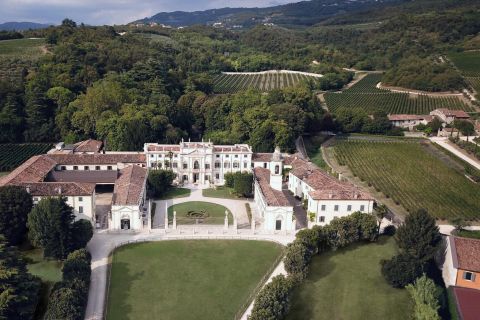
Embark on an immersive experience in Valpolicella and discover the history, art, vineyards and excellent contemporary wines on a tour of Tenuta Santa Maria owned by Gi...
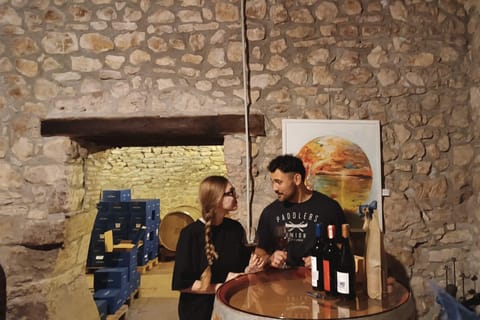
A "well-rounded" tasting of Valpolicella wines: 5 wines that will give you an overview of our production and introduce you to the particularities of the typical varieties