
Penedes Wine & Cava Tasting & 4WD Vineyards Tour from Barcelona
Enjoy an exclusive day out to a two local wineries in Penedès Region and taste 4 excellent wines and 3 excellent wines and 4 glasses of cava perfectly paired with loca...
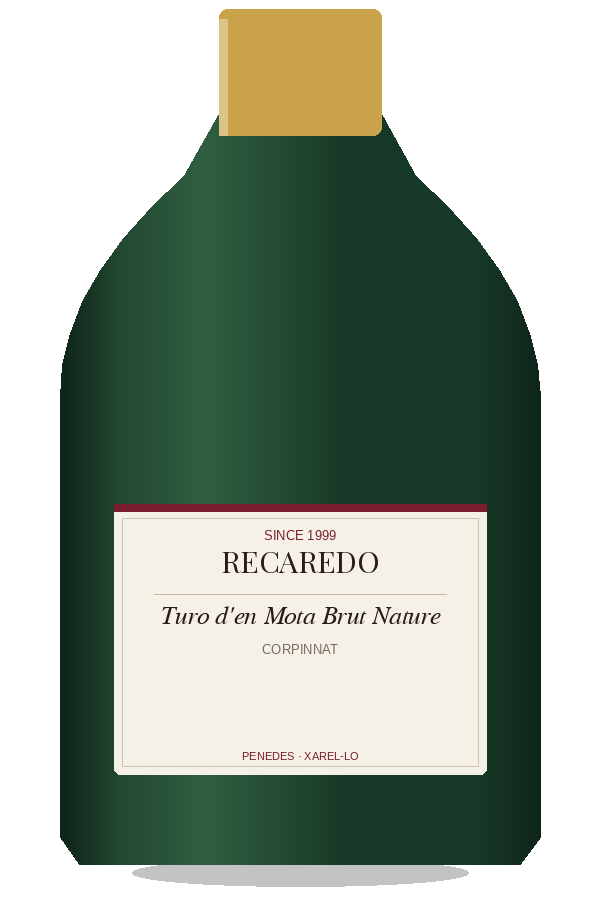 Pale gold, fine bead
Sparkling Traditional · Corpinnat · Penedes
Single-vineyard 100 percent Xarel-lo Corpinnat from a north-facing plot planted in 1940. Over 100 months on lees brings wild-herb and honeyed-almond depth on a saline, racy frame. First vintage 1999, released 2008.
No critic score is published for this bottle that we can cite with a reviewer, a vintage and a review year, so none is shown. The rating in the header is our own.
Aroma: wild Mediterranean herb, chamomile, candied lemon, honeyed almond
Palate: saline minerality, stone fruit, creamy long bead, racing acidity
Single-vineyard 100 percent Xarel-lo Corpinnat from a north-facing plot planted in 1940. Over 100 months on lees brings wild-herb and honeyed-almond depth on a saline, racy frame. First vintage 1999, released 2008.
Allow 60 minutes from open to pour.
Single-vineyard 100 percent Xarel-lo from a north-facing plot planted in 1940 at the Recaredo estate. First vintage 1999, released 2008. Turo d'en Mota demonstrated that single-vineyard Xarel-lo could produce a serious, long-aged sparkling wine and helped establish the long-ageing case for what would become the Corpinnat collective.
Wild Mediterranean herb, chamomile, candied lemon and honeyed almond on the nose; saline minerality, stone fruit, a creamy long bead and racing acidity on the palate. Medium-bodied with racy acidity and a long savoury finish.
Drink between 5 and 30 years from vintage. The 100-plus month lees ageing has delivered most of the autolytic complexity; cellaring deepens the wine into tertiary honeyed-nut and saline territory over decades.
100 percent Xarel-lo from a single north-facing plot planted in 1940. The wine demonstrated single-vineyard Xarel-lo's serious, long-aged sparkling potential.
A single north-facing plot at the Recaredo estate in Sant Sadurni d'Anoia, planted in 1940 on chalky silt-loam soils. The shaded north exposure gives high-acidity wines built for long ageing.
Enjoy an exclusive day out to a two local wineries in Penedès Region and taste 4 excellent wines and 3 excellent wines and 4 glasses of cava perfectly paired with loca...

Enjoy a private day trip from Barcelona to Montserrat and Codorníu Cava Cellars, combining mountain heritage with Catalonia’s iconic sparkling wine tradition. Be picke...

Penedés region is one of the most important wine and cava regions in Catalonia. Penedés land is between the sea and the mountains, and this influence of the sun and t...