Mercado Municipal 1º de Maio
Évora's municipal market, in the building in the middle of Praça 1º de Maio, sells cheeses among other fresh food, according to Wikivoyage. Which stalls sell cheese, and which cheeses, is not documented.

Cheese · IGP · Alentejo
A semi-soft sheep and goat's milk cheese from Fifteen municipalities of Portalegre district (milk and production), with cheese-making and ripening limited by the specification to Castelo de Vide, Nisa, Marvão, Crato, Alter do Chão, Arronches, Monforte and Portalegre.
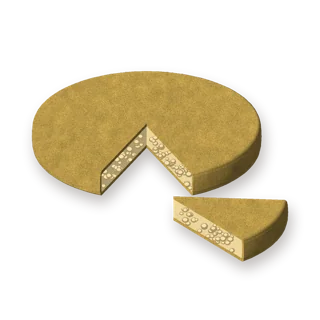
A mixed raw ewe and goat's milk cheese, the two milks combined in ratios of 20 to 80, 40 to 60 or 60 to 40 and set with animal rennet or cardoon. The curd is pressed in cinchos, salted, rested four or five days and cured three to four weeks. Some cheesemakers rub the rind around days 20 to 25 with a cloth soaked in colorau (paprika) and water, which gives the thin, slightly rough rind its toasted yellow to orange colour. A regular, sharp-edged cylinder, 7 to 10 cm across, 3 to 4 cm high and 150 to 400 g; it is made from mid-January to mid-July.
Made in: Fifteen municipalities of Portalegre district (milk and production), with cheese-making and ripening limited by the specification to Castelo de Vide, Nisa, Marvão, Crato, Alter do Chão, Arronches, Monforte and Portalegre
A slightly strong, clean, picante bouquet and a pleasant, distinctive aroma (specification). The paste is supple to hard, well knit, yellowish to orange, with small eyes.
Rind: natural crust
Wine and cheese
Tolosa has a slightly picante finish and, in some dairies, a rind rubbed with paprika. A palhete, a field blend of red and white grapes kept on clay talha and then in used oak, brings acidity and little tannin, so the spice meets freshness, not grip.
Tolosa is semi-soft with a slightly picante finish. Antão Vaz whites fermented and aged in clay talha are medium in body with high acidity, so the acidity answers the spice and no oak gets between the wine and the paste.
A dry rosé made in stainless steel, light in body and high in acidity, sets off the supple, semi-soft paste of Tolosa and meets its slightly picante finish with freshness rather than tannin.
Tolosa's semi-soft paste and slightly picante finish want a red with no grip. Moreto and Tinta Carvalha are light in body, low in tannin and made with minimal oak, so the wine stays fresh beside the spice instead of fighting it.
The grapes behind these winesAntão VazAragonezMoretoTinta Carvalha
From the source
Évora's municipal market, in the building in the middle of Praça 1º de Maio, sells cheeses among other fresh food, according to Wikivoyage. Which stalls sell cheese, and which cheeses, is not documented.
Serpa's annual cheese fair, with Queijo Serpa DOP as its anchor product. Cheesemakers from the area, Portugal and abroad attend, alongside food stalls, crafts, a sheep show, live shearing and cheese-making demonstrations, a cheese contest and a cheese week in the municipality's restaurants.
Estremoz's traditional Saturday-morning market on the Rossio, where farmers sell direct; the municipality lists cheeses among the goods. Wikivoyage describes about five adjacent stalls selling ewe and goat milk cheeses.
Village cheese fair in Tolosa, in Nisa municipality, run by the parish council with municipal support. The 25th edition, held in May 2026 (reported on 18 May), was a one-day event with a contest for wines made in the parish, a community lunch with music and roast pork on the spit.
A visit to the Almocreva dairy in Penedo Gordo, where cured sheep's milk cheese in the Serpa style is made. The website invites visitors to book through its contact page; length and price are not stated.
Mestiço means mixed: the cheese is made from a blend of sheep's and goat's milk. Portuguese Wikipedia dates the first studies naming it to the end of the 19th century, and the DGADR puts the start of its making between 1901 and 1905.
According to the specification, some cheesemakers rub the rind after 20 to 25 days of cure with a cloth dipped in colorau (paprika) and water.
Mainly from mid-January to mid-July, the lactation season of the region's ewes and goats.
Same cheeseboard
Plan the trip
Tastings and tours where it is made, and somewhere to stay.
Booking links go to our partners (GetYourGuide, Viator, Zen Hotels), who may pay us a commission. It never decides what we cover. Editorial standards.
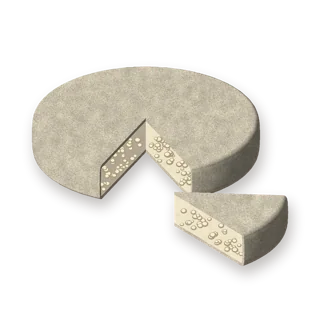
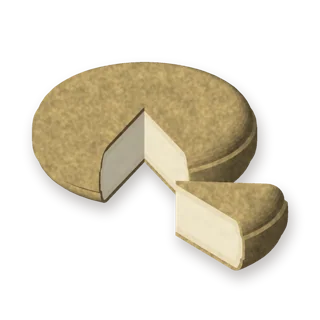
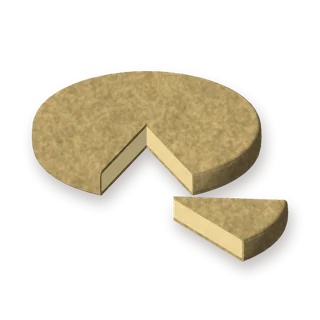
Sources: protection register, tradicional.dgadr.gov.pt, pt.wikipedia.org. The drawing is made from the cheese's recorded shape, rind and paste, not a photograph.