Mercado Municipal 1º de Maio
Évora's municipal market, in the building in the middle of Praça 1º de Maio, sells cheeses among other fresh food, according to Wikivoyage. Which stalls sell cheese, and which cheeses, is not documented.

Cheese · DOP · Alentejo
A hard, pressed sheep's milk cheese from Sixteen municipalities of Évora district: Alandroal, Arraiolos, Avis, Borba, Estremoz, Évora, Fronteira, Montemor-o-Novo, Mourão, Portel, Redondo, Reguengos de Monsaraz, Sousel, Vendas Novas, Viana do Alentejo and Vila Viçosa.
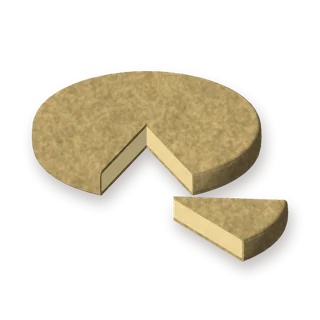
Raw milk of the Merina Branca ewe, filtered through salted cloths, warmed over a wood fire and set with cardoon (Cynara cardunculus), then ripened at least 30 days for a semi-hard paste or 90 for a hard one. It is a low cylinder with rounded sides and no defined edge. The pequeno is 6 to 8 cm across and 60 to 90 g; the merendeiras run 12 to 15 cm across and 120 to 300 g. The rind is yellowish and darkens in the air; the paste is closed and greasy with a few small eyes, and the flavour slightly picante and acid.
Made in: Sixteen municipalities of Évora district: Alandroal, Arraiolos, Avis, Borba, Estremoz, Évora, Fronteira, Montemor-o-Novo, Mourão, Portel, Redondo, Reguengos de Monsaraz, Sousel, Vendas Novas, Viana do Alentejo and Vila Viçosa
Characteristic aroma and flavour, slightly picante and acid, more marked in the hard cheeses. The paste is closed, well knit and uniformly yellowish with a few small eyes, and the rind yellowish, hard or semi-hard, smooth or slightly rough (specification).
Rind: natural crust
Wine and cheese
Portuguese Wikipedia says Évora cheese was once kept under olive oil in clay talhas. Reds fermented in talha share that clay and carry high acidity that echoes the cheese's slightly acid, picante paste; the lighter, younger bottles suit the semi-hard wheel.
Évora is firm, slightly picante and acid. A dry Alentejo white blend made without oak, light to medium in body and fresh, keeps pace with the cheese's tang, and no wood stands between the wine and the ewe's milk.
Évora is a small, firm ewe's cheese, slightly picante and acid, more so in the hard paste. A medium-bodied Alentejo red with moderate tannin refreshes the mouth between slices without laying a heavy tannic coat over the cheese.
The grapes behind these winesAragonezTrincadeiraAntão VazArintoRoupeiroTouriga Nacional
From the source
Évora's municipal market, in the building in the middle of Praça 1º de Maio, sells cheeses among other fresh food, according to Wikivoyage. Which stalls sell cheese, and which cheeses, is not documented.
Serpa's annual cheese fair, with Queijo Serpa DOP as its anchor product. Cheesemakers from the area, Portugal and abroad attend, alongside food stalls, crafts, a sheep show, live shearing and cheese-making demonstrations, a cheese contest and a cheese week in the municipality's restaurants.
Estremoz's traditional Saturday-morning market on the Rossio, where farmers sell direct; the municipality lists cheeses among the goods. Wikivoyage describes about five adjacent stalls selling ewe and goat milk cheeses.
Village cheese fair in Tolosa, in Nisa municipality, run by the parish council with municipal support. The 25th edition, held in May 2026 (reported on 18 May), was a one-day event with a contest for wines made in the parish, a community lunch with music and roast pork on the spit.
A visit to the Almocreva dairy in Penedo Gordo, where cured sheep's milk cheese in the Serpa style is made. The website invites visitors to book through its contact page; length and price are not stated.
The DGADR page says the milk comes from the regional Merina Branca breed, raw and unpasteurised.
The DGADR gives three formats: a small hard cheese of 6 to 8 cm and 60 to 90 g, a hard merendeira of 12 to 14 cm and 120 to 200 g, and a semi-hard merendeira of 13 to 15 cm and 200 to 300 g.
Portuguese Wikipedia says it was stored submerged in olive oil in clay vessels called talhas, which let it be eaten through the whole year.
The EU registered it as a DOP in 1996 (Regulation 1107/96), the earliest protection we could confirm. Portuguese Wikipedia gives 1994, but we found no national act to support it.
Same cheeseboard
Plan the trip
Tastings and tours where it is made, and somewhere to stay.
Booking links go to our partners (GetYourGuide, Viator, Zen Hotels), who may pay us a commission. It never decides what we cover. Editorial standards.
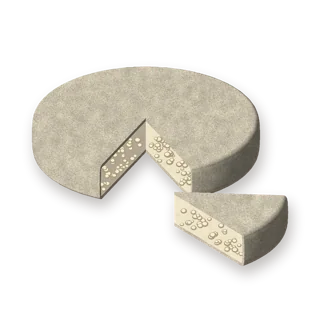
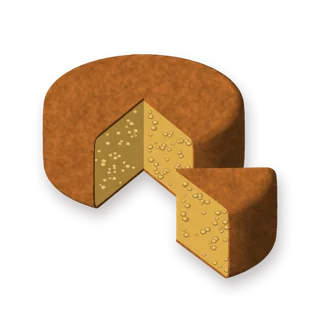
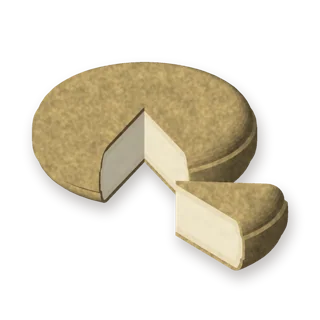
Sources: protection register, tradicional.dgadr.gov.pt, pt.wikipedia.org. The drawing is made from the cheese's recorded shape, rind and paste, not a photograph.