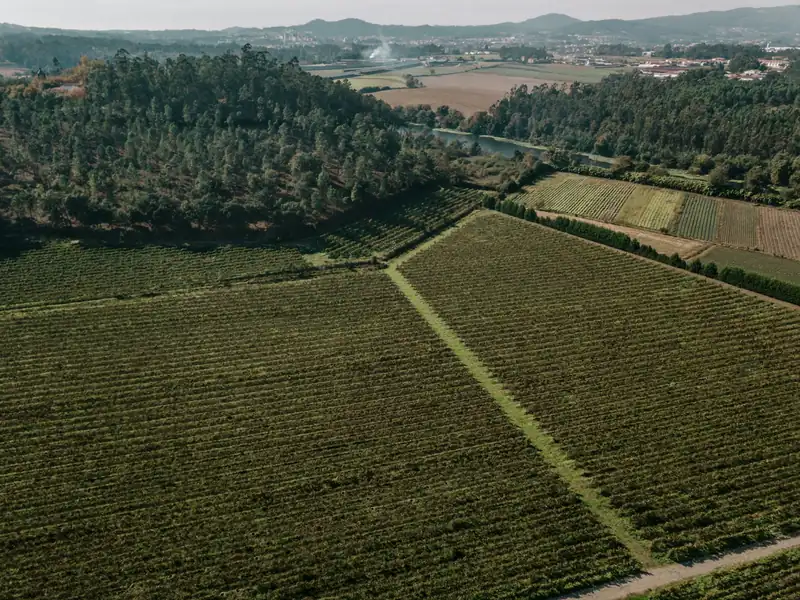
Queijaria Guilherme
Cheese dairy near Serpa, started in 2001, with separate sheep's milk lines (Serpa DOP, requeijão) and goat's milk lines (fresh and cured). Its factory shop sells to the public on weekdays.

Cheese · DOP · Alentejo
A semi-soft sheep's milk cheese from Twelve whole municipalities of the Baixo Alentejo (Mértola, Beja, Castro Verde, Almodôvar, Cuba, Ourique, Moura, Serpa, Vidigueira, Aljustrel, Ferreira do Alentejo, Alvito) and some parishes of Odemira, Santiago do Cacém, Grândola and Alcácer do Sal.
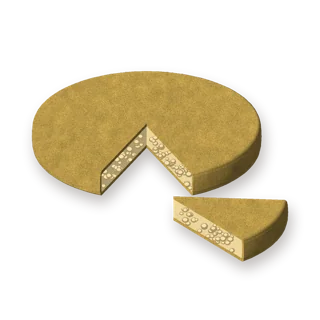
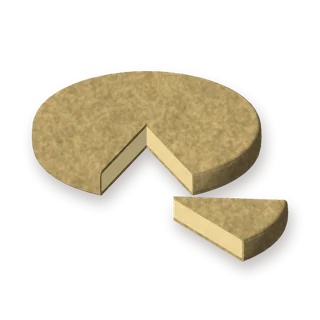
Raw ewe's milk curdled with an infusion of cardoon flower (Cynara cardunculus), drained slowly and ripened for at least 30 days. The cheese is a low cylinder with a slightly convex top and no defined edge, under a thin, slightly rough straw-coloured rind. The specification gives five sizes from a 200 g merendeira to a 2.5 kg giant; the normal size is 17 to 20 cm across, 4 to 6 cm high and 0.9 to 1.5 kg. The paste is closed and buttery and the cut face can slump. The DGADR dates the first written reference to 1905. Decreto Regulamentar 39/87 of 29 June 1987 created the demarcated region of Queijo Serpa, and the EU registered the DOP in 1996 (Regulation 1107/96).
Made in: Twelve whole municipalities of the Baixo Alentejo (Mértola, Beja, Castro Verde, Almodôvar, Cuba, Ourique, Moura, Serpa, Vidigueira, Aljustrel, Ferreira do Alentejo, Alvito) and some parishes of Odemira, Santiago do Cacém, Grândola and Alcácer do Sal
A clean, mild flavour that can be slightly picante, with a smell from mild to slightly strong. The paste is smooth and buttery with few or no eyes, white-yellow to straw and darkening in contact with air (specification).
Rind: natural crust
Wine and cheese
A young Serpa is buttery and mild, at most slightly picante. A dry white led by Antão Vaz, with or without a touch of oak, has the high acidity to cut through that butter and leaves the ewe's milk flavour clean on the finish.
Serpa's buttery, mild paste softens the tannin of a dry red blend of Aragonez and Trincadeira. The lighter, briefly oaked bottles suit a young wheel; the full-bodied, oak-aged reservas want a cheese with more age to hold its own.
A young Serpa is buttery and mild. A traditional-method rosé with zero dosage and long lees ageing, medium in body and high in acidity, lifts the butter with its bubbles and leaves a dry, savoury finish.
The grapes behind these winesAragonezAntão VazTrincadeiraTouriga Nacional
From the source
Cheese dairy near Serpa, started in 2001, with separate sheep's milk lines (Serpa DOP, requeijão) and goat's milk lines (fresh and cured). Its factory shop sells to the public on weekdays.
Dairy in Penedo Gordo, founded in 1995 and named Almocreva in 1999, making cured sheep's milk cheese in the Serpa recipe from its own flocks' milk. Its website invites visitors to buy or arrange a factory visit.
Évora's municipal market, in the building in the middle of Praça 1º de Maio, sells cheeses among other fresh food, according to Wikivoyage. Which stalls sell cheese, and which cheeses, is not documented.
Serpa's annual cheese fair, with Queijo Serpa DOP as its anchor product. Cheesemakers from the area, Portugal and abroad attend, alongside food stalls, crafts, a sheep show, live shearing and cheese-making demonstrations, a cheese contest and a cheese week in the municipality's restaurants.
Estremoz's traditional Saturday-morning market on the Rossio, where farmers sell direct; the municipality lists cheeses among the goods. Wikivoyage describes about five adjacent stalls selling ewe and goat milk cheeses.
Village cheese fair in Tolosa, in Nisa municipality, run by the parish council with municipal support. The 25th edition, held in May 2026 (reported on 18 May), was a one-day event with a contest for wines made in the parish, a community lunch with music and roast pork on the spit.
A visit to the Almocreva dairy in Penedo Gordo, where cured sheep's milk cheese in the Serpa style is made. The website invites visitors to book through its contact page; length and price are not stated.
Raw ewe's milk only, set with an infusion of cardoon flower (Cynara cardunculus) rather than animal rennet, plus salt. The APS, the producers' association, lists exactly three ingredients: raw sheep's milk, salt and the cardoon infusion.
At least 30 days under the specification. When ripening passes 180 days the cheese becomes Queijo Serpa Velho, which is hard, dry and stronger.
Two, both from the DGADR page: the curd is cut with only four movements, based on religious beliefs, and the cloth used to filter the milk is folded exactly 40 times. English Wikipedia repeats the 40-fold detail.
The specification describes the paste as buttery with a cut face that deforms easily and may spill. Cold storage firms it, and Queijaria Guilherme advises taking it out of the fridge an hour before eating.
Same cheeseboard
Plan the trip
Tastings and tours where it is made, and somewhere to stay.
Booking links go to our partners (GetYourGuide, Viator, Zen Hotels), who may pay us a commission. It never decides what we cover. Editorial standards.
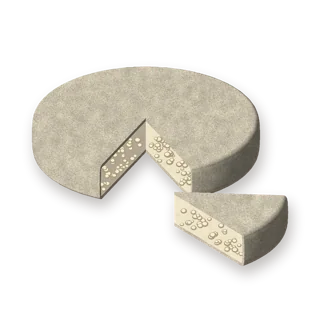
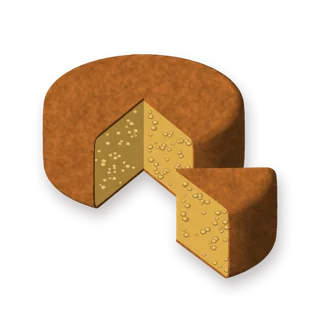
Sources: protection register, tradicional.dgadr.gov.pt, queijoserpadop.pt. The drawing is made from the cheese's recorded shape, rind and paste, not a photograph.