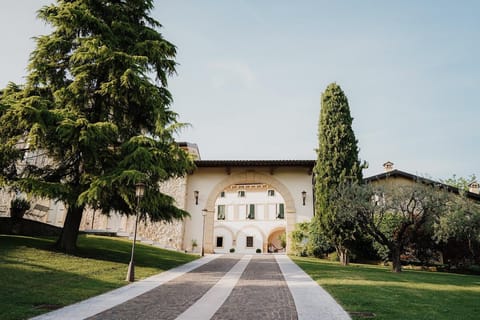
Valpolicella Classica: Visit and tasting at Corte Borghetti
Visit the vineyards and winery of Corte Borghetti and taste 5 wines in the 17th-century barrel cellar, with cold cuts and cheeses from Lessinia, extra virgin olive oil...
 Deep garnet
Still Red · Valpolicella Ripasso Superiore DOC · Valpolicella
Ruby red with garnet and orange reflections, floral on the nose with evident ripe fruit that stays fresh, and a vertical palate playing on acid and saline notes with an excellent balance between minerality and a tannin that closes dry and persistent.
No critic score is published for this bottle that we can cite with a reviewer, a vintage and a review year, so none is shown. The rating in the header is our own.
Aroma: floral notes, ripe fruit, fresh lift
Palate: vertical acid-saline line, minerality, dry persistent close
Ruby red with garnet and orange reflections, floral on the nose with evident ripe fruit that stays fresh, and a vertical palate playing on acid and saline notes with an excellent balance between minerality and a tannin that closes dry and persistent.
For the Ripasso the best bunches from the late September harvest rest a month and a half in the fruttaio, are vinified after Saint Martin's Day on 11 November to make a Valpolicella Superiore, and that wine is then refermented on the Amarone skins. The estate credits the site's mixed scaglia and volcanic soil for the wine's minerality.
The best bunches from the late September harvest are placed in crates and stay a month and a half in the fruttaio. The lightly dried grapes are vinified after Saint Martin's Day on 11 November to make a Valpolicella Superiore, which then goes through a second fermentation on the Amarone skins.
The estate reports a ruby red with garnet and orange reflections, a floral nose with evident ripe fruit that stays fresh, and a vertical palate playing on acid and saline notes with an excellent balance between minerality and a tannin that closes dry and persistent.
Falezze attributes it to a soil composed partly of scaglia limestone and partly of volcanic earth.
Visit the vineyards and winery of Corte Borghetti and taste 5 wines in the 17th-century barrel cellar, with cold cuts and cheeses from Lessinia, extra virgin olive oil...
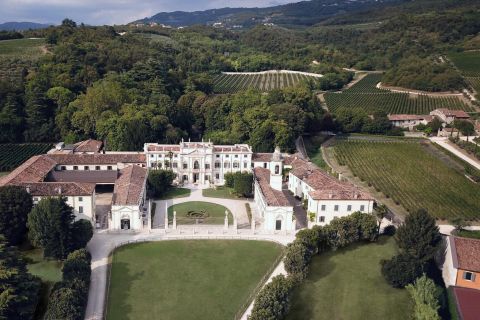
Embark on an immersive experience in Valpolicella and discover the history, art, vineyards and excellent contemporary wines on a tour of Tenuta Santa Maria owned by Gi...
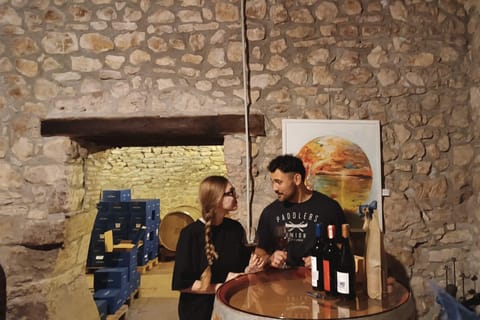
A "well-rounded" tasting of Valpolicella wines: 5 wines that will give you an overview of our production and introduce you to the particularities of the typical varieties