Ferme du Mas Rolland
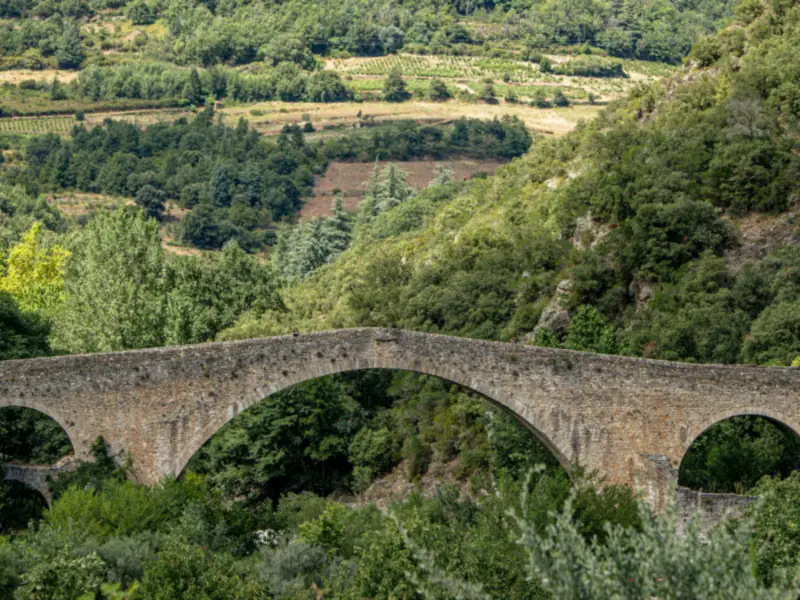
Goat farm near the Faugères vineyards making raw-milk AOP Pélardon, ash-coated cheeses and tommes. Farm shop open daily 16:30 to 18:30 in season, with a farm visit and milking to watch.

Cheese · AOP · Languedoc
A soft, bloomy rind goat's milk cheese from About 500 communes, mostly in Gard, Hérault, Lozère and Aude, plus one commune in Tarn (Murat-sur-Vèbre).
A small round cheese of raw whole goat's milk from the Cévennes and the departments of Gard, Hérault, Lozère and Aude, with a thin rind covered partly or wholly in pale yellow, white or blue moulds. The AOC decree dates from August 2000 and EU protection from 2001. The milk is curdled for at least 18 hours with very little rennet (no more than 1 ml per 10 litres), moulded by hand in faisselles, dry-salted and ripened for 11 days or more. A Languedoc dictionary of 1756 already described it as a small round flat cheese made in the Cévennes.
Made in: About 500 communes, mostly in Gard, Hérault, Lozère and Aude, plus one commune in Tarn (Murat-sur-Vèbre)
A smooth, even paste, white to ivory, with a small hazelnut taste; it turns brittle and the rind darkens as ripening goes on, according to French Wikipedia. The pairing guide accords-mets-vins.fr calls the texture crumbly and the taste frank, sometimes slightly spicy.
Rind: natural crust
Wine and cheese
accords-mets-vins.fr suggests Picpoul de Pinet for a more aged Pélardon, saying its saline finish picks up the cheese's lactic, slightly hazelnut notes. Raised in tank with no oak, Picpoul is dry and high in acidity, so it cleans the paste without covering the goat's milk.
A young Pélardon is lactic and lightly hazelnut. A dry rosé from stainless steel, with no oak, has the acidity to freshen the palate and enough red-fruit body that the goat cheese is not left tasting chalky.
Pélardon is frank and slightly spicy. A Languedoc white blend kept in tank or concrete with no oak, built on grapes such as Roussanne, Grenache Blanc, Vermentino or Viognier, gives clean acidity and peach or pear fruit that do not cover the goat's milk.
accords-mets-vins.fr advises light, low-tannin reds for Pélardon, such as a young Saint-Chinian or a lightly extracted Faugères, and warns that a powerful or oaky red crushes it. A medium-bodied red raised mostly in concrete or old wood, with supple tannin, keeps the goat's milk in view.
A Pélardon left to ripen turns firmer and drier. A Languedoc white blend raised wholly or partly in used barriques, demi-muids or foudres has the breadth to hold it, and old wood adds texture without a vanilla layer over the goat's milk.
Pélardon turns firmer and brittle as it ripens, and a longer-aged one needs a white with more breadth. A dry Hérault white built on Terret Blanc and raised in old oak brings apricot, almond and a saline lift, giving weight without sweetness or vanilla.
The grapes behind these winesSyrahGrenacheCarignanViognierRoussanneGrenache Blanc
From the source
Goat farm near the Faugères vineyards making raw-milk AOP Pélardon, ash-coated cheeses and tommes. Farm shop open daily 16:30 to 18:30 in season, with a farm visit and milking to watch.
Montpellier cheese shop founded by Cécile and Nina in the Saint-Denis quarter, ageing cheeses in cave and selling around 160 cheeses from cow, goat and sheep, with wines, groceries, made-to-order platters and cheese-and-wine tastings.
Halles de Narbonne stall under the line 'Aveyronnais pur beurre', on the former Gandolf counter and now held by Alain Sigaud, who advises by taste, menu or mood. It also lists delivery.
Halles de Narbonne stall that carries on the Crèmerie Lainé tradition, with Corine and Noémie behind the counter. It sells regional farmhouse and appellation cheeses, suggests matching them with fine honeys, country jams and the region's wines, and takes orders for party and aperitif boards.
Halles de Narbonne cheese stall held since 2001 by Frédéric Oulès, a Narbonne native and former caterer and restaurateur. The Halles' history page traces the stall back to 1895, through the Rouquet and Belzon families.
Hour-long guided tour of the working Roquefort Société caves in Roquefort-sur-Soulzon, Aveyron, beyond the Languedoc vineyards, ending with a tasting of the house's four Roquefort AOP cheeses. Two people minimum, daily; ripening cheeses are in the caves only from January to June.
Afternoon visit of a Pélardon goat farm near Faugères: the milking parlour, the bucks and the kids, with milking to watch, then tasting and buying at the farm shop. Open daily from mid-February to the end of October; the tourist board lists 13 February to 24 October 2026.
A longer guided visit of the Roquefort Société caves in Aveyron, beyond the Languedoc vineyards, with the four Roquefort AOP cheeses tasted alongside sweet flavour pairings and wine. The company lists it for April to August, with limited places and online booking only.
A two-hour visit of the Roquefort Société caves in Aveyron, beyond the Languedoc vineyards, led by the house's master affineur, ending with the four Roquefort AOP cheeses tasted with sweet flavour pairings and wine. The company calls it a July and August visit, one slot a day on one or two days a week, yet its ticket page lists sessions on 20 and 22 October 2026.
Free visit of the Gabriel Coulet caves in Roquefort-sur-Soulzon, Aveyron, beyond the Languedoc vineyards, open to walk in without booking all year except 1 January and 25 December. It ends with a free tasting of the house's sheep cheeses; the caves stay at 10 to 12 °C, so bring a layer.
Covered Baltard-style market that opened on 1 January 1901, with 66 traders on the Halles' site, four of them cheese stalls. A regional tourism page calls Sunday morning, and the hour before noon for the local aperitif, especially lively; the Halles also run themed evening 'nocturnes' through the year.
The specification gives 60 to 70 mm across, 22 to 27 mm high and at least 60 g, measured 11 days after renneting, according to French Wikipedia.
At least 11 days at 8 to 16 °C with 85 to 95 percent humidity. Longer ripening gives a drier, more peppery cheese.
The pairing guide accords-mets-vins.fr suggests light, low-tannin reds such as a young Saint-Chinian or a lightly extracted Faugères, and crisp whites such as Picpoul de Pinet, and warns that a very powerful or oaky red can crush its subtlety.
Same cheeseboard
Plan the trip
Tastings and tours where it is made, and somewhere to stay.
Booking links go to our partners (GetYourGuide, Viator, Zen Hotels), who may pay us a commission. It never decides what we cover. Editorial standards.
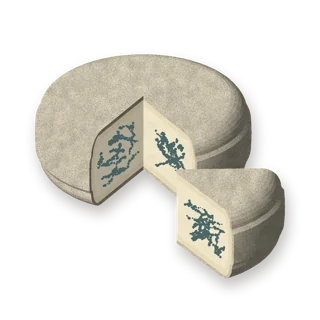
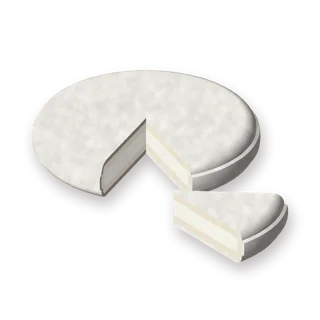
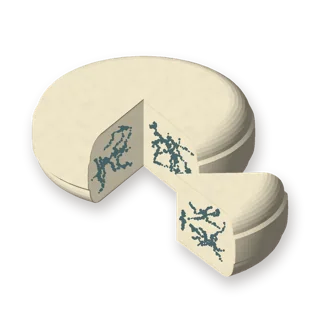
Sources: protection register, fr.wikipedia.org, www.herault-tourisme.com. The drawing is made from the cheese's recorded shape, rind and paste, not a photograph.