Fromagerie de Banon
Dairy in Banon since 1958, making Banon AOP folded by hand in chestnut leaves, and Tome de Provence, with milk from nine producers within 90 km. Visitors buy at its village shop.

Cheese · AOP · Provence
Also labelled Banon AOP
A semi-soft goat's milk cheese from 179 communes in Alpes-de-Haute-Provence, Hautes-Alpes, Drôme and Vaucluse.
A small round goat's cheese from the hills of Haute-Provence, made from raw whole milk by the soft-curd method, drained in moulds, then wrapped in brown chestnut leaves tied with a strand of natural raffia. It ripens naked for 5 to 10 days and then at least 10 more under the leaves, which keep it moist and pass their tannins into the paste. It was the first cheese of the Provence-Alpes-Côte d'Azur region to be protected, as an AOC in 2003, and only Provençale, Rove and Alpine goats may supply the milk.
Made in: 179 communes in Alpes-de-Haute-Provence, Hautes-Alpes, Drôme and Vaucluse
A smooth, creamy paste, unctuous at the heart, under a cream-yellow rind that sits beneath the leaves. INAO says it releases the scents of the Haute-Provence undergrowth, and Androuet describes a taste from tangy to pronounced.
Rind: wrapped in leaves
Wine and cheese
Banon's creamy paste under a cream-yellow rind is tangy, with a woody leaf note. A Cassis blanc raised in steel, with citrus, almond and high acidity, cuts the richness. INAO suggests a white from the cheese's own hills.
Banon is creamy and unctuous under its chestnut leaves, with more weight than a fresh goat's cheese. A Côtes de Provence rosé partly fermented in old oak gains body and texture, and its high acidity keeps the tangy paste lively.
A Palette blanc, mostly Clairette raised a year on its lees in old foudres, is full-bodied and waxy with fennel and salted-nut notes, enough weight for Banon's woody, creamy paste without sharp acidity.
Bellet blanc is Rolle-led, with lemon, almond paste and a saline edge, light enough not to swamp Banon's soft paste while its acidity lifts the cream. INAO advises a white with this cheese.
The grapes behind these winesGrenacheMarsanneRolleTibourenClairette
From the source
Dairy in Banon since 1958, making Banon AOP folded by hand in chestnut leaves, and Tome de Provence, with milk from nine producers within 90 km. Visitors buy at its village shop.
Farm and creamery of an ESAT run by the ARI association at Revest-du-Bion, turning more than 60,000 litres of goat milk a year into cheese, Banon AOP included. Shop open daily.
Fromager-affineur on rue d'Italie in Aix, run by Benoit Lemarié, with more than 150 varieties, raclette and fondue ranges and platters for receptions. Delivers free within the Pays d'Aix.
Cheesemongers in Aubagne since 1900, when Louis Bellon came from Ristolas in the Queyras; Charles-Henri Bellon, the fourth generation, runs the shop on rue Rastègue. Cheeses from every region, brousses du Rove, cachaille.
Cheese shop run by Laurent and François, with more than fifty cheeses from small producers in France and Europe, from a local farm goat's cheese to truffle cheese, plus charcuterie, wine and preserves.
Annual cheese festival: the village goes pedestrian for a producers' market of cheese, bread, wine and honey, with Banon folding and cheese-making demonstrations and a public judging for the Banon d'Or. The 32nd edition, on Sunday 17 May 2026, had Corsica as guest.
Goat festival with about 20 stands of goat farmers and producers, animals, food and drink on site and free activities for all ages, held whatever the weather. The 30th edition was held on Sunday 12 April 2026.
Join the farmer for the morning milking of the goats, then share a farm breakfast made from the dairy's own products. Suitable for children, with a limit of ten people. Booked through the Cassis tourist office, where reviews are dated September 2026.
Guided visit of an artisan goat farm in Cassis: meet the animals, learn how the cheeses are made, then taste farm products. A glass of wine can be added, and the shop sells the cheeses.
Brown chestnut leaves tied with a strand of natural raffia. INAO says the cheese ripens in them so that chestnut tannins migrate into the paste. The Fromagerie de Banon says it gathers its leaves from early November, dries them until mid-January and moistens them again before wrapping.
INAO suggests fig jam and a glass of white wine from the cheese's own terroir, such as Coteaux de Pierrevert, Côtes du Rhône, Ventoux or Luberon.
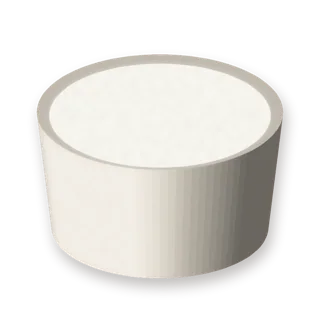
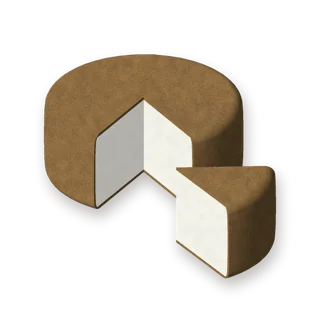
INAO's specification gives 75 to 85 mm across with its leaves, 20 to 30 mm high and 90 to 110 g without them. Androuet describes a slightly domed disc 7 cm across and 2.5 cm thick, about 110 g; French Wikipedia says 6 to 7 cm in its summary and 8 cm by 2 to 3 cm for about 100 g elsewhere.
INAO says at least 15 days of ripening are needed before it can be eaten, with the final stretch spent under the chestnut leaves.
Same cheeseboard
Plan the trip
Tastings and tours where it is made, and somewhere to stay.
Booking links go to our partners (GetYourGuide, Viator, Zen Hotels), who may pay us a commission. It never decides what we cover. Editorial standards.
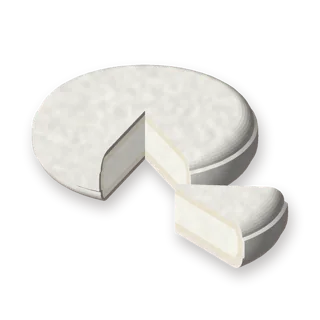
Sources: protection register, www.inao.gouv.fr, fr.wikipedia.org. The drawing is made from the cheese's recorded shape, rind and paste, not a photograph.