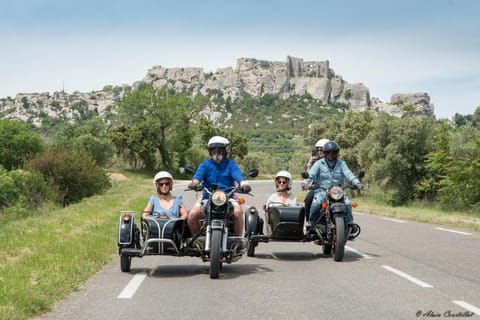
From Aix-en-Provence: Half-day Sidecar Wine Tour
Leave Aix-en-Provence aboard a vintage sidecar and discover the legendary Sainte-Victoire mountain, Cézanne’s muse, along with charming villages and local wine tastings.
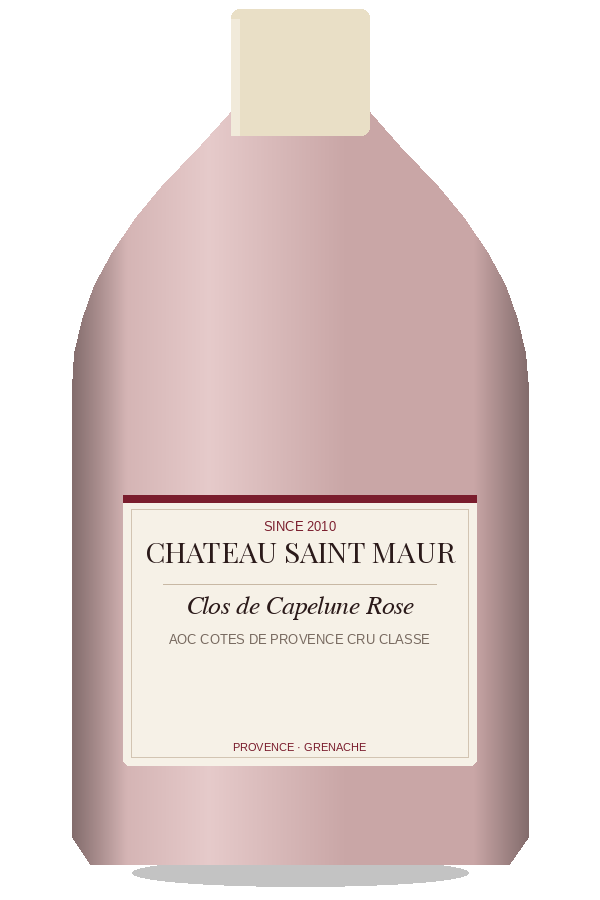 Pale salmon pink
Still Rose · AOC Cotes de Provence Cru Classe · Provence
Saint Maur's premium single-vineyard rose, partially old-oak fermented for textural depth. Stone fruit and tangerine over saline depth with creamy almond-wax richness.
No critic score is published for this bottle that we can cite with a reviewer, a vintage and a review year, so none is shown. The rating in the header is our own.
Aroma: white peach, tangerine peel, almond, white flower
Palate: nectarine, blood orange, saline, wax
Saint Maur's premium single-vineyard rose, partially old-oak fermented for textural depth. Stone fruit and tangerine over saline depth with creamy almond-wax richness.
Clos de Capelune was launched as Saint Maur's premium single-vineyard rose in 2010 after Roger Zannier's acquisition. The cuvee draws from a single high-elevation parcel on the estate.
White peach, tangerine peel, almond and white flower on the nose; nectarine, blood orange, saline and wax on the palate. Medium-bodied with high acidity and a long saline finish.
Drink between 2 and 7 years from vintage. The partial oak fermentation gives the cuvee real cellaring potential; bottles often peak between year 3 and 5.
Yes. The estate does not use animal-derived fining agents on Capelune.
Lobster with herb butter is the canonical pairing. Pan-fried turbot with hollandaise, roast capon with citrus and saffron paella are equally strong matches.
Clos de Capelune is a single-vineyard cuvee partially fermented in old oak, giving it more texture and aging potential than the stainless-steel-only multi-source L'Excellence.
Leave Aix-en-Provence aboard a vintage sidecar and discover the legendary Sainte-Victoire mountain, Cézanne’s muse, along with charming villages and local wine tastings.
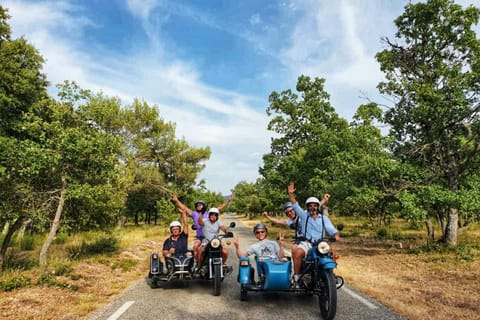
Cruise through Provence in a vintage sidecar, soak in Cézanne’s landscapes, and enjoy a chilled glass of wine at a local vineyard.
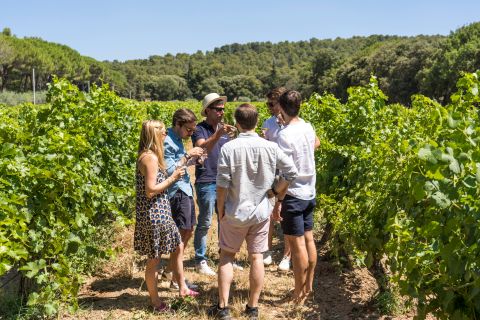
Experience the Provençal lifestyle with this tour from Aix-en-Provence. Start your day by savoring the wines of Côtes de Provence. In the afternoon, explore some of Lu...