
Uncorked Villamagna: Wine Tasting in Italy’s Smallest DOC
Discover Villamagna, Italy’s smallest wine DOC. Taste Montepulciano d’Abruzzo in family‑owned wineey where the winemaker crafts the wine, and enjoy a traditional Itali...
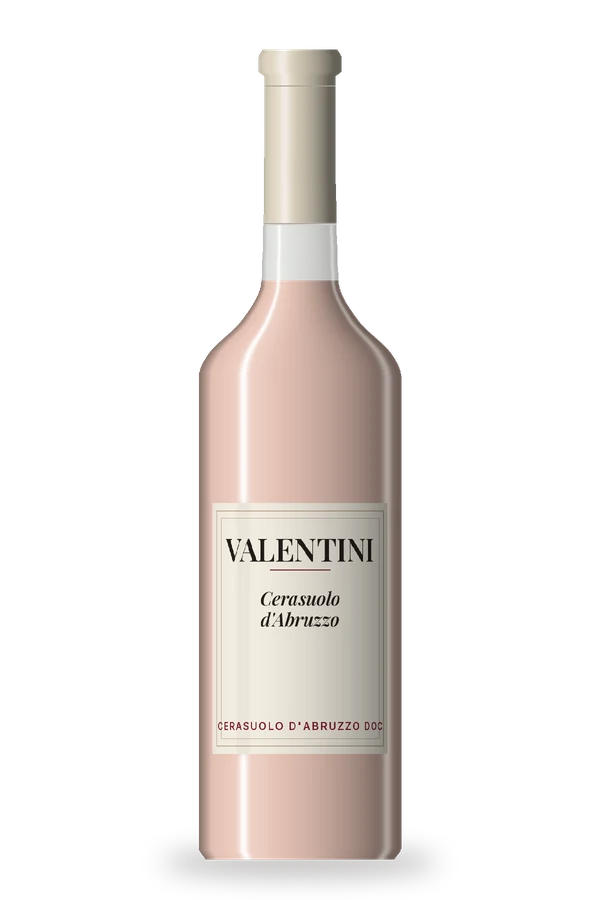 Pale salmon pink
Still Rose · Cerasuolo d'Abruzzo DOC · Abruzzo
A rosato of red-wine proportions. WineMag found the 2016 coral pink and deep, opening slowly on wild strawberry and orange peel over wet stone, then round on the palate with amalgamated salinity and a long mineral close.
No critic score is published for this bottle that we can cite with a reviewer, a vintage and a review year, so none is shown. The rating above is our own.
Aroma: wild strawberry, orange peel, wet stone
Palate: red fruit, salinity, minerality
A rosato of red-wine proportions. WineMag found the 2016 coral pink and deep, opening slowly on wild strawberry and orange peel over wet stone, then round on the palate with amalgamated salinity and a long mineral close.
Shops that list this wine from Valentini. The vintage on offer, price, stock and delivery are on the shop's page.
Discover Villamagna, Italy’s smallest wine DOC. Taste Montepulciano d’Abruzzo in family‑owned wineey where the winemaker crafts the wine, and enjoy a traditional Itali...
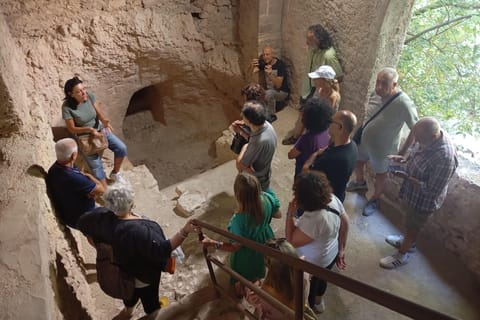
Explore Raiano’s mural-lined historic center on a guided walking tour. Follow the Aterno River through the San Venanzio Nature Reserve to historic mills, then taste ol...

Discover Pescara on a walking tour. From the Ponte del Mare, along the river and across the bridge, we will reach Pescara Vecchia, the places associated with D'Annunzi...
 Canestrato di Castel del Monte
Our pick For a fresh or semi-aged wheel, with its hay notes and sweet finish, the high acidity of a dry Cerasuolo refreshes the palate, and with no tannin it does not overpower a cheese that is still gentle.
 Formaggio degli sposi
Our pick The mixed cow and sheep cheese of Farindola is decided in flavour but more delicate than the pecorino. A dry Cerasuolo with high acidity gives it freshness without tannin.
 Scamorza abruzzese
Our pick Fresh scamorza is compact and delicate, and the briefly matured appassita is more decided. A dry Cerasuolo with high acidity refreshes the stretched cow's-milk paste and has the weight to hold up to the appassita.
Yes. Cerasuolo d'Abruzzo has been a rosato DOC in its own right since 2010, made from Montepulciano with brief skin contact. It is not a by-product of red winemaking.
WineMag described the 2016 as coral pink with wild strawberry, orange peel and wet stone, round on entry, with salinity and minerality fully amalgamated and a long mineral finish.
Fermentation is spontaneous in 35 hectolitre oak casks without temperature control or filtration. The wine stays 12 months in cask and then at least another year in bottle.