Our pick
Qualigeo pairs Castelmagno with full-bodied reds. The crumbly, piquant paste of an aged wheel, with its blue-green veins, meets Barolo's firm tannin and high acidity, which clear the palate between pieces.
Bottles to try:
Ossolano with Barolo ★ 4.4
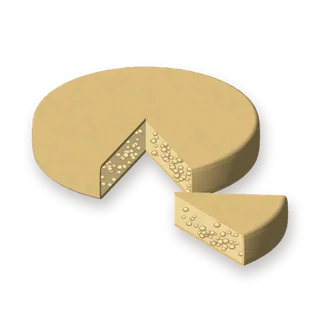
Qualigeo lists Barolo first among the structured reds it calls the classic match for Ossolano. The elastic, savoury paste with its herbal pasture notes gives Nebbiolo's tannin something to grip, and an older, more intense wheel holds its own.
Bottles to try:
Our pick
Barbaresco is the kind of full-bodied red Qualigeo suggests for Castelmagno. Nebbiolo's firm tannin and high acidity cut through the crumbly, piquant paste of an aged wheel and keep its salty, savoury edge in view.
Bottles to try:
Ossolano with Barbera d'Asti ★ 4.3
Barbera d'Asti is one of the four reds Qualigeo names for Ossolano. Its high acidity and moderate tannin cut through the elastic, savoury paste without covering the herbal pasture flavour, a softer match than Barolo.
Bottles to try:

Our pick
Qualigeo says fresh Robiola di Roccaverano calls for a white wine of character. Arneis, a dry white with some body and fresh acidity, suits the creamy paste and answers the cheese's slight acidity.
Bottles to try:

Gorgonzola with Moscato d'Asti ★ 4.3
Our pick
Sweet against salty and veined: a Dolce Gorgonzola, soft with a sweet to slightly piquant flavour, meets a sweet, low-alcohol, fizzy Moscato whose sugar and bubbles refresh the palate.
Bottles to try:

Bettelmatt with Langhe Nebbiolo ★ 4.3
Our pick
Bettelmatt is intense and herbaceous, spicier with age. A Langhe Nebbiolo brings high acidity and medium tannin, enough grip for the alpine herbs without the weight of a Barolo, which would crowd a summer cheese.
Bottles to try:

Bra with Barbera d'Alba ★ 4.2
Our pick
Qualigeo pairs Bra Duro with Piedmont reds of more body and structure. Barbera d'Alba's bright acidity cuts through the savoury, aromatic aged paste, and its ripe fruit has the weight to match it.
Bottles to try:
Bra with Nizza ★ 4.2
Our pick
Bra Duro is savoury and full of aroma, aged at least 180 days. Nizza, Barbera from the Asti hills at its fullest, has the body to match that depth, and its high acidity cuts through the hard, savoury paste.
Bottles to try:
Bra with Dolcetto (d'Alba and Dogliani) ★ 4.1
Our pick
Qualigeo recommends young Piedmont reds with Bra Tenero. Dolcetto fits: a young, fruity red with soft tannin, easy beside the mild, fragrant white paste of a Tenero.
Bottles to try:
Our pick
The goat cheese is creamy, savoury and slightly acidic. A lightly sparkling, low-alcohol sweet Moscato d'Asti softens that tang, and its bubbles clear the creaminess from the palate.
Bottles to try:
Our pick
Fresh Robiola di Roccaverano is creamy, savoury and slightly acidic. A dry, mineral Langhe Riesling with racy acidity cuts through the cream and meets the cheese's own tang instead of softening it.
Bottles to try:

Raschera with Barbera d'Asti ★ 4.0
Our pick
Raschera is delicate and only moderately piquant, savoury when aged. Barbera d'Asti's high acidity lifts the supple ivory paste, and its moderate tannin leaves the mild, fragrant flavour of the cheese intact.
Bottles to try:

Murazzano with Arneis (Roero and Langhe) ★ 4.0
Our pick
A young Murazzano is milk-white, soft and gently fragrant. A dry, fresh Arneis matches the milky softness without covering the delicate aroma, and an older, more piquant wheel still comes through.
Bottles to try:
Our pick
Qualigeo says Gorgonzola Piccante prefers well-structured, aged reds. A very piquant, longer-aged Piccante can overwhelm a delicate wine, so it wants a Barolo with enough tannin and age to stand up to it.
Bottles to try:

Grana Padano with Barbera d'Alba ★ 4.0
Our pick
A finely granular, delicate-flavoured wheel is salty and savoury. Barbera d'Alba's high acidity refreshes it, and with moderate tannin the wine does not fight the grainy texture.
Bottles to try:
Our pick
A fresh Murazzano is milky and delicately fragrant, with piquant notes as it ages. Gavi's dry Cortese, medium in body with high acidity, cleans the palate and leaves that delicate aroma intact.
Bottles to try:

Our pick
Semigrasso Toma is more intense and harmonious than the whole-milk type. Freisa's firm tannin and wild-berry fruit have the grip for it, and its high acidity keeps the soft, slightly salty paste fresh.
Bottles to try:
Toma Piemontese with Dolcetto (d'Alba and Dogliani) ★ 3.9
Our pick
A whole-milk Toma is soft, sweet, slightly acidic and salty. Dolcetto's soft tannin and dark berry fruit sit easily beside it, with nothing in either to fight the other.
Bottles to try: