DOP, first protected 1987Sheep milk, rawSemi, softNatural rind
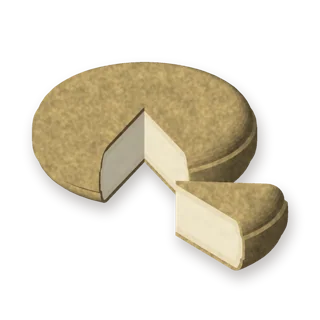
Raw ewe's milk curdled with an infusion of cardoon flower (Cynara cardunculus), drained slowly and ripened for at least 30 days. The cheese is a low cylinder with a slightly convex top and no defined edge, under a thin, slightly rough straw-coloured rind. The specification gives five sizes from a 200 g merendeira to a 2.5 kg giant; the normal size is 17 to 20 cm across, 4 to 6 cm high and 0.9 to 1.5 kg. The paste is closed and buttery and the cut face can slump. The DGADR dates the first written reference to 1905. Decreto Regulamentar 39/87 of 29 June 1987 created the demarcated region of Queijo Serpa, and the EU registered the DOP in 1996 (Regulation 1107/96).
Taste: A clean, mild flavour that can be slightly picante, with a smell from mild to slightly strong. The paste is smooth and buttery with few or no eyes, white-yellow to straw and darkening in contact with air (specification).
Ageing: At least 30 days; over 180 days it is sold as Queijo Serpa Velho
Made in: Twelve whole municipalities of the Baixo Alentejo (Mértola, Beja, Castro Verde, Almodôvar, Cuba, Ourique, Moura, Serpa, Vidigueira, Aljustrel, Ferreira do Alentejo, Alvito) and some parishes of Odemira, Santiago do Cacém, Grândola and Alcácer do Sal
DOP, first protected 1987Sheep milk, rawHardNatural rind
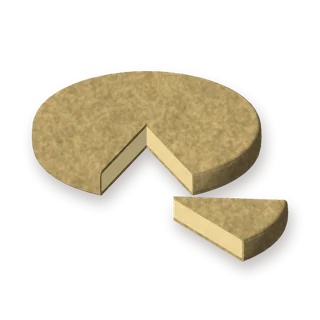
The name given to Queijo Serpa DOP when it is ripened for more than 180 days, a threshold in the 2024 specification. The Serpa name was first protected by Decreto Regulamentar 39/87 of 29 June 1987 and registered by the EU in 1996. It is made from the cunca, normal and giant sizes of Serpa and keeps the size of the cheese it started as, so the specification gives no fixed dimensions; the shape stays a low cylinder, with a flat or slightly concave top. The thin, slightly rough rind runs from straw to dark straw, turns hard to extra-hard and may be coated with colourless paraffin; the paste turns semi-hard to hard, dry and slightly brittle, with the colour spreading from the edge inwards.
Taste: Intense, clean and lingering, and it can be slightly picante. The paste is semi-hard to hard, slightly brittle and dry, light to dark straw yellow (specification).
Ageing: More than 180 days, in cure rooms at 6 to 15 degrees C and 70 to 95 percent humidity
Made in: The Queijo Serpa DOP area: twelve Baixo Alentejo municipalities including Serpa, Beja, Moura and Vidigueira, plus some parishes of Odemira, Santiago do Cacém, Grândola and Alcácer do Sal
DOP, first protected 1996Sheep milk, rawHardNatural rind
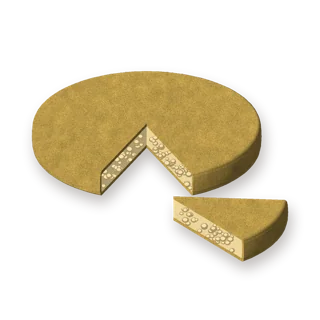
Raw milk of the Merina Branca ewe, filtered through salted cloths, warmed over a wood fire and set with cardoon (Cynara cardunculus), then ripened at least 30 days for a semi-hard paste or 90 for a hard one. It is a low cylinder with rounded sides and no defined edge. The pequeno is 6 to 8 cm across and 60 to 90 g; the merendeiras run 12 to 15 cm across and 120 to 300 g. The rind is yellowish and darkens in the air; the paste is closed and greasy with a few small eyes, and the flavour slightly picante and acid.
Taste: Characteristic aroma and flavour, slightly picante and acid, more marked in the hard cheeses. The paste is closed, well knit and uniformly yellowish with a few small eyes, and the rind yellowish, hard or semi-hard, smooth or slightly rough (specification).
Ageing: At least 30 days for the semi-hard paste and 90 days for the hard paste, at 8 to 15 degrees C
Made in: Sixteen municipalities of Évora district: Alandroal, Arraiolos, Avis, Borba, Estremoz, Évora, Fronteira, Montemor-o-Novo, Mourão, Portel, Redondo, Reguengos de Monsaraz, Sousel, Vendas Novas, Viana do Alentejo and Vila Viçosa
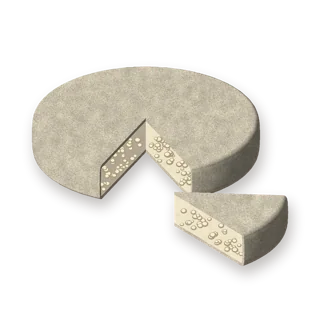
DOP, first protected 1993Sheep milk, rawSemi, hardNatural rind
Raw ewe's milk of the Merina Branca breed, coagulated with cardoon infusion at 25 to 28 degrees C, cut, packed into cinchos, worked by hand and salted, then ripened in two phases. The original size is 13 to 16 cm across and 800 to 1300 g; the production rules give no height. A smaller merendeira is 10 to 12 cm and 200 to 400 g. The crust is firm and whitish-yellow, soft after making and hardening with age; the paste is semi-hard, white-yellow and closed, with a few small eyes. Portuguese Wikipedia places most of the dairies in Tolosa. Decreto Regulamentar 6/93 of 16 March 1993 created the demarcated region of Queijo de Nisa, and the EU registered the DOP in 1996 (Regulation 1107/96).
Taste: A slightly acid flavour and an intense aroma (DGADR). The crust is smooth or slightly rough and the paste closed with a few small eyes, uniformly white to yellowish (production rules).
Ageing: At least 45 days, in two phases: 15 to 18 days at 8 to 10 degrees C, then 30 to 40 days at 10 to 14 degrees C
Made in: Eight municipalities of Portalegre district: Nisa, Crato, Castelo de Vide, Marvão, Portalegre, Monforte, Arronches and Alter do Chão

IGPSheep and goat milk, rawSemi, softNatural rind
A mixed raw ewe and goat's milk cheese, the two milks combined in ratios of 20 to 80, 40 to 60 or 60 to 40 and set with animal rennet or cardoon. The curd is pressed in cinchos, salted, rested four or five days and cured three to four weeks. Some cheesemakers rub the rind around days 20 to 25 with a cloth soaked in colorau (paprika) and water, which gives the thin, slightly rough rind its toasted yellow to orange colour. A regular, sharp-edged cylinder, 7 to 10 cm across, 3 to 4 cm high and 150 to 400 g; it is made from mid-January to mid-July.
Taste: A slightly strong, clean, picante bouquet and a pleasant, distinctive aroma (specification). The paste is supple to hard, well knit, yellowish to orange, with small eyes.
Ageing: 3 to 4 weeks, the stage the specification calls meia cura
Made in: Fifteen municipalities of Portalegre district (milk and production), with cheese-making and ripening limited by the specification to Castelo de Vide, Nisa, Marvão, Crato, Alter do Chão, Arronches, Monforte and Portalegre