A guide to cheese farms in Alentejo.

Cheese Farms in Alentejo

Queijaria Guilherme ★ 4.4

Monte Vale de Faia, SerpaShop Monday to Friday 9:00 to 17:00 (company FAQ)DairyShop only

Cheese dairy near Serpa, started in 2001, with separate sheep's milk lines (Serpa DOP, requeijão) and goat's milk lines (fresh and cured). Its factory shop sells to the public on weekdays.

Cheeses: Queijo Serpa, Requeijão, Queijo de cabra fresco

Visiting: factory shop selling its own cheeses, weekday opening 9:00 to 17:00
Book wine experiences in Alentejo

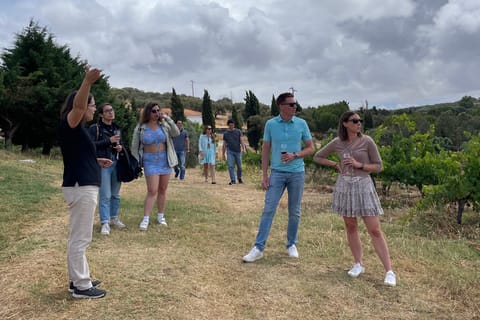
Alentejo Wine and Cork from Évora

Day trip4 hours4.8 from 17 reviewsfrom €70

This tour is about two very important products for the Alentejo region: wine and cork. Come and discover the process from cork harvesting to the final bottle of wine. ...

See all 424 bookable experiences in Alentejo

Cheese Farms in Alentejo, FAQ

What is Queijo Serpa made from?

Raw ewe's milk only, set with an infusion of cardoon flower (Cynara cardunculus) rather than animal rennet, plus salt. The APS, the producers' association, lists exactly three ingredients: raw sheep's milk, salt and the cardoon infusion.

How long is it ripened?

At least 30 days under the specification. When ripening passes 180 days the cheese becomes Queijo Serpa Velho, which is hard, dry and stronger.

What local customs does the DGADR record?

Two, both from the DGADR page: the curd is cut with only four movements, based on religious beliefs, and the cloth used to filter the milk is folded exactly 40 times. English Wikipedia repeats the 40-fold detail.

Why can the cut cheese run?

The specification describes the paste as buttery with a cut face that deforms easily and may spill. Cold storage firms it, and Queijaria Guilherme advises taking it out of the fridge an hour before eating.

What makes a Serpa a Serpa Velho?

Age: the specification reserves the name Queijo Serpa Velho for cheese ripened for more than 180 days, against a minimum of 30 days for Queijo Serpa.

Can the rind be eaten?

Not always. The specification lets the Velho's rind be coated with colourless paraffin, and allows a surface coating containing a preservative if the producers' group approves it; in that case the label must say that the rind is not edible.

Which sheep give the milk?

The DGADR page says the milk comes from the regional Merina Branca breed, raw and unpasteurised.

How big is a Queijo de Évora?

The DGADR gives three formats: a small hard cheese of 6 to 8 cm and 60 to 90 g, a hard merendeira of 12 to 14 cm and 120 to 200 g, and a semi-hard merendeira of 13 to 15 cm and 200 to 300 g.

← Back to Alentejo wine guide