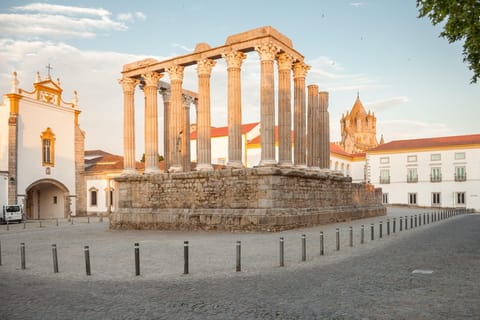
A guide to cheese experiences in Alentejo.

Cheese Experiences in Alentejo

Feira do Queijo do Alentejo ★ 4.8

SerpaFairevery year at the end of February (Serpa municipality); Portuguese Wikipedia adds that it always starts on the last Friday of February. The 2026 edition is over; check the Serpa municipality for the next datesthree days, Friday to Sunday (Wikipedia)

Serpa's annual cheese fair, with Queijo Serpa DOP as its anchor product. Cheesemakers from the area, Portugal and abroad attend, alongside food stalls, crafts, a sheep show, live shearing and cheese-making demonstrations, a cheese contest and a cheese week in the municipality's restaurants.
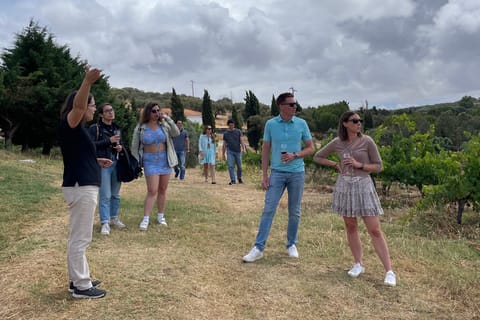
Feira do Queijo de Tolosa ★ 4.3

Tolosa, NisaFairevery year in mid-May (the 24th edition was held the weekend before a 19 May 2025 report, the 25th was reported on 18 May 2026; the 2026 edition has been held)one day in 2026 (Nisa municipality report)

Village cheese fair in Tolosa, in Nisa municipality, run by the parish council with municipal support. The 25th edition, held in May 2026 (reported on 18 May), was a one-day event with a contest for wines made in the parish, a community lunch with music and roast pork on the spit.

Estremoz Saturday market ★ 4.4

Rossio, EstremozMarketevery Saturday morning

Estremoz's traditional Saturday-morning market on the Rossio, where farmers sell direct; the municipality lists cheeses among the goods. Wikivoyage describes about five adjacent stalls selling ewe and goat milk cheeses.

Book wine experiences in Alentejo

Alentejo Wine and Cork from Évora

Day trip4 hours4.8 from 17 reviewsfrom €70

This tour is about two very important products for the Alentejo region: wine and cork. Come and discover the process from cork harvesting to the final bottle of wine. ...

See all 424 bookable experiences in Alentejo

Cheese Experiences in Alentejo, FAQ

What is Queijo Serpa made from?

Raw ewe's milk only, set with an infusion of cardoon flower (Cynara cardunculus) rather than animal rennet, plus salt. The APS, the producers' association, lists exactly three ingredients: raw sheep's milk, salt and the cardoon infusion.

How long is it ripened?

At least 30 days under the specification. When ripening passes 180 days the cheese becomes Queijo Serpa Velho, which is hard, dry and stronger.

What local customs does the DGADR record?

Two, both from the DGADR page: the curd is cut with only four movements, based on religious beliefs, and the cloth used to filter the milk is folded exactly 40 times. English Wikipedia repeats the 40-fold detail.

Why can the cut cheese run?

The specification describes the paste as buttery with a cut face that deforms easily and may spill. Cold storage firms it, and Queijaria Guilherme advises taking it out of the fridge an hour before eating.

What makes a Serpa a Serpa Velho?

Age: the specification reserves the name Queijo Serpa Velho for cheese ripened for more than 180 days, against a minimum of 30 days for Queijo Serpa.

Can the rind be eaten?

Not always. The specification lets the Velho's rind be coated with colourless paraffin, and allows a surface coating containing a preservative if the producers' group approves it; in that case the label must say that the rind is not edible.

Which sheep give the milk?

The DGADR page says the milk comes from the regional Merina Branca breed, raw and unpasteurised.

How big is a Queijo de Évora?

The DGADR gives three formats: a small hard cheese of 6 to 8 cm and 60 to 90 g, a hard merendeira of 12 to 14 cm and 120 to 200 g, and a semi-hard merendeira of 13 to 15 cm and 200 to 300 g.

← Back to Alentejo wine guide