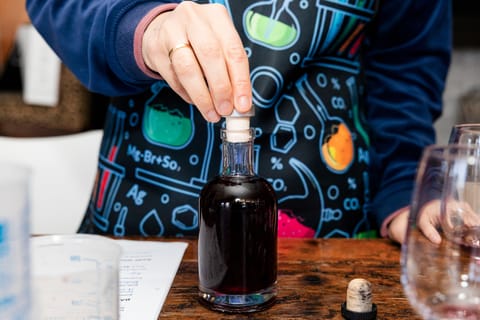
Nemea: Blend Your Own Wine, Become a Winemaker for a Day
Create your own wine in Nemea! Taste local wines, learn blending secrets, mix your own bottle and take it home as a special memory from Greece’s red wine land.
 Pale gold
Still White · Nemea
Assyrtiko planted in Nemea married to Kydonitsa from Vlahioti, exuberant and fine with unripe citrus and lemon blossom over faint yeast and oak, an awakening acidity and a quince-and-bergamot second dimension from the Kydonitsa.
Best 1 to 3 years from vintage.
No critic score is published for this bottle that we can cite with a reviewer, a vintage and a review year, so none is shown. The rating above is our own.
Aroma: unripe citrus, lemon blossom, yeast
Palate: quince, apricot, bergamot, pineapple
Assyrtiko planted in Nemea married to Kydonitsa from Vlahioti, exuberant and fine with unripe citrus and lemon blossom over faint yeast and oak, an awakening acidity and a quince-and-bergamot second dimension from the Kydonitsa.
Create your own wine in Nemea! Taste local wines, learn blending secrets, mix your own bottle and take it home as a special memory from Greece’s red wine land.
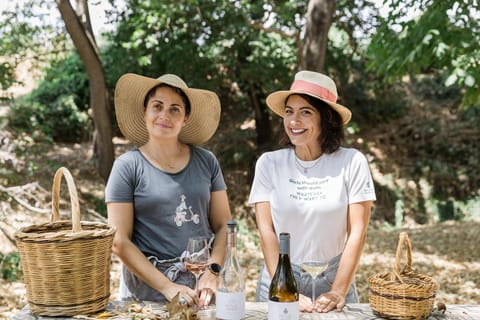
Enjoy a relaxed wine picnic at a big table by the river in Nemea. Taste local wines, enjoy snacks, play a fun game, and capture beautiful moments surrounded by nature ...
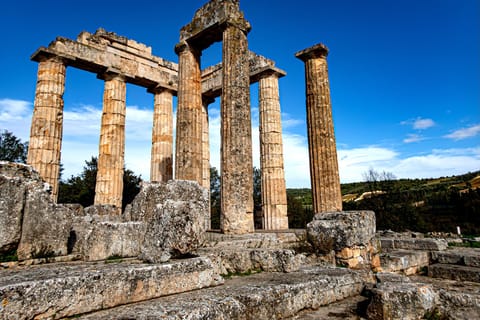
Explore the ancient site of Nemea, taste local wines, and visit the Corinth Canal on a guided tour from Athens. Walk through the original tunnel used by athletes 2,300...
Mitravelas describes an exuberant white with finesse, fruitiness and Assyrtiko's familiar minerality. The nose has intense fruit with unripe citrus fruits and lemon blossoms and faint notes of yeast and oak, while the Kydonitsa adds ripe quince, peach, apricot, pear, pineapple, rosehip, bergamot and lime.
Assyrtiko, originally a Santorini variety, planted in Nemea, blended with 20 percent Kydonitsa of the Morea. Mitravelas sources the Assyrtiko from Bogazi in Nemea and the Kydonitsa from Vlahioti in Laconia.
Partly. The wine is vinified in stainless steel tanks but part of the Assyrtiko ferments in oak barrels, and it then spends four to five months in oak and steel over organic lees.
The producer specifies 8 to 10 degrees Celsius, and gives the wine an ageing potential of more than three years.