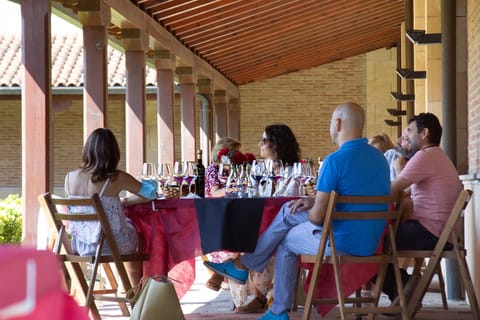
Rioja: Bodegas Altanza
Visit a unique Rioja winery and discover Altanza, a place where wine tourism goes far beyond a tour with tastings.
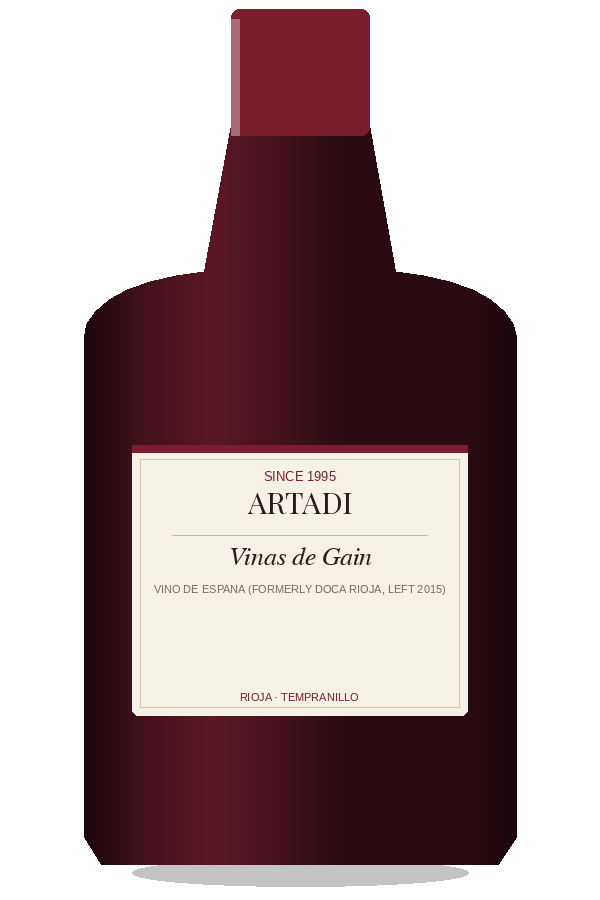 Ruby, medium depth
Still Red · Vino de Espana (formerly DOCa Rioja, left 2015) · Rioja
Artadi's village-level Tempranillo from several old-vine Laguardia plots: the gateway to the estate, fresh and floral with fine tannins and a mineral lift.
| Critic | Vintage | Score |
|---|---|---|
| Tim Atkin reviewed 2021 | 2019 | 92/100 |
Scores as published by each critic for the vintage shown.
Aroma: red and black cherry, violet, cedar, fresh herb
Palate: red fruit, supple tannin, mineral, fresh
Artadi's village-level Tempranillo from several old-vine Laguardia plots: the gateway to the estate, fresh and floral with fine tannins and a mineral lift.
Allow 65 minutes from open to pour.
Vinas de Gain is Artadi's village-level red, a blend of old-vine Laguardia parcels and the entry point to the range.
On the nose, red and black cherry, violet, cedar, fresh herb. On the palate, red fruit, supple tannin, mineral, fresh. Structurally medium-bodied, medium tannins, high acidity with a long finish. Artadi's village-level Tempranillo from several old-vine Laguardia plots: the gateway to the estate, fresh and floral with fine tannins and a mineral lift.
Drink 4 to 15 from vintage. Young vintages benefit from 30-90 minutes of decanting; mature bottles should be handled carefully for sediment.
Grilled lamb chops is the canonical pairing. Other strong matches include Pintxos de autor and Aged Idiazabal. Simple grilled lamb meets the supple tannin and red fruit.
No: the producer uses traditional animal-derived fining agents (typically egg whites or isinglass) during clarification, so the wine is not vegan.
The blend is Tempranillo (100%). The wine is classified as Vino de Espana (formerly DOCa Rioja, left 2015).
Visit a unique Rioja winery and discover Altanza, a place where wine tourism goes far beyond a tour with tastings.
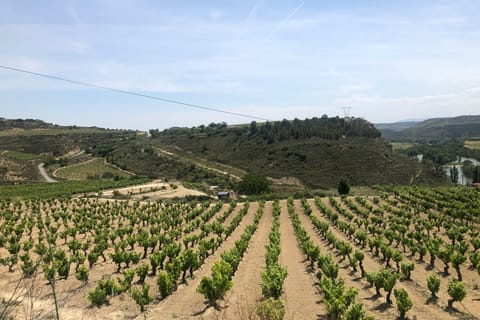
Discover Rioja on a full-day wine tour visiting 3 wineries in Rioja Alta and Alavesa. Taste local wines, explore wine country and enjoy a traditional pintxos lunch.
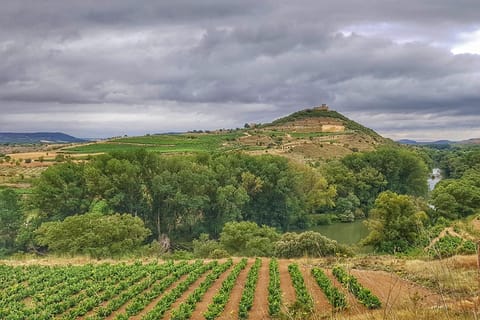
Taste selected wines at 3 different wineries in Rioja. Visit our own 1881 winery, La Bodega del Tesoro. Enjoy a traditional lunch in a wooden wine press.