Sheep milk, rawSemi, hardNatural rind
Sheep's-milk cheese from the eastern slope of the Gran Sasso, set with pig rennet, which the regional tourism board calls unique in Italy. Raw milk is curdled, the curd broken to grains of 0.5 to 2 cm and set in baskets whose imprint stripes the rind; wheels age on wooden boards and in wooden chests, rubbed with olive oil and vinegar. It is a Slow Food presidium and an Abruzzo traditional food product, not a DOP: the consortium's site says the DOP procedure is under way.
Taste: Grass and hay with a faint animal note, and lasting woodland and mushroom notes in long-aged wheels; only mildly piquant, per the consortium specification. Slow Food adds a granular, straw-yellow paste that stays slightly moist, with faintly musky scents of mushroom, noble mould and dry wood.
Ageing: From about 40 days to over a year (Slow Food); the consortium specification ages the wheels on wooden boards for about 3 months, then in wooden chests or cupboards
Made in: Farindola, Montebello di Bertona, Villa Celiera, Carpineto della Nora and Arsita in full, plus parts of Bisenti, Castelli, Penne and Civitella Casanova (provinces of Pescara and Teramo)

Sheep milk, rawHardNatural rindAlso Incanestrato di Castel del Monte
Hard raw sheep's-milk cheese of the transhumance, made on the L'Aquila side of the Gran Sasso, where flocks graze the Campo Imperatore plateau at about 1,800 m. The curd is set in baskets whose imprint marks the cylindrical wheel, salted and aged on boards, with the rind rubbed with olive oil. Wheels run from about half a kilo to 2.5 kg, with traditional 15 kg wheels also recognised. It is a Slow Food presidium and an Abruzzo traditional food product, defended by a producers' consortium.
Taste: Fresh and semi-aged wheels grow steadily more intense, with hay and pasture notes and a sweet finish. Aged wheels are creamy despite long ageing and piquant without being aggressive, going from grass to chestnut, pasture and spice.
Ageing: Fresh from 2 months; the presidium sets a minimum of 2 months for 1 to 2 kg wheels, 8 months for 5 kg and 15 months for the traditional 15 kg wheels; aged wheels can pass 12 months
Made in: Gran Sasso slope on the L'Aquila side: Barisciano, Calascio, Castel del Monte and Villa Santa Lucia
Sheep milk, rawSemi, hardNatural rind
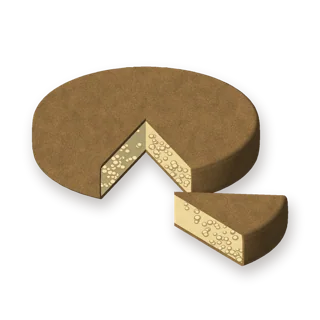
Pecorino of the Atri area, made from raw whole sheep's milk set with lamb or kid rennet, with a semi-cooked, compact paste and small, sparse eyes. The rind carries the imprint of the rush baskets and hardens and darkens with age. Italian Wikipedia says production is now almost entirely home-made; it is an Abruzzo traditional food product. Young wheels are eaten fresh, older ones are grated or kept in jars under olive oil, and the same curd gives sprisciocco, pressed by hand from the fresh curd, and a primo sale used for fried cheese.
Taste: Young wheels have a soft, white, spreadable paste with a faintly acidic, mildly piquant, very fragrant taste. Medium-aged wheels turn straw yellow, firmer, more intense and a little saltier; the oldest are dense, deep yellow with pink shades and decidedly piquant.
Ageing: The tourism board gives 40 days to 2 years; Italian Wikipedia says the youngest wheels are eaten at about 10 days, soft, white and spreadable
Made in: Atri and its hills, on the border between the provinces of Teramo and Pescara
Sheep milk, rawHardAlso Pecorino d'Abruzzo
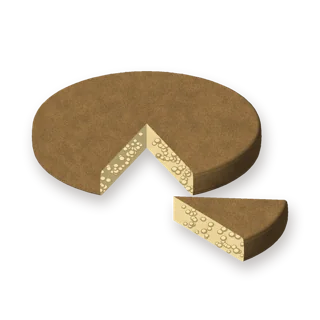
The general pecorino of the Abruzzo mountains, made from raw whole sheep's milk with animal rennet and salt, and listed as an Abruzzo traditional food product. It is a hard or semi-hard, dry paste with slight eyes. Methods vary slightly by place: salting is in brine or dry, and the wheels are generally rubbed with olive oil. The Gran Sasso park says wheels run from just over a kilo to 5 or 10 kg, while Italian Wikipedia gives 1 to 3 kg.
Taste: Aroma moves from delicate to more intense and piquant as it ages, per the Gran Sasso park. The park adds that pecorini of this area are generally less salty than those of other parts of central and southern Italy.
Ageing: Eaten fresh or aged; no single ageing time is given
Made in: Whole region, mainly the transhumance country now covered by the three national parks and the Sirente Velino regional park
Cow milkPasta, filata
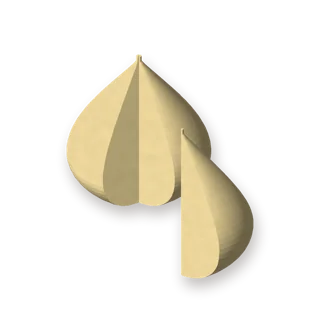
Pasta-filata cow's-milk cheese listed as an Abruzzo traditional food product, made across the region, with its origins in the provinces of Chieti and L'Aquila; the Gran Sasso park finds it mainly in the province of L'Aquila. Made from milk, rennet and salt, it is pear-shaped, and two wheels are tied on a raffia cord and hung astride a pole to age, which gives the cheese its name. Its colour and aroma vary with season and place, because summer pastures on the central Apennine uplands are rich in species.
Taste: At 60 to 70 days it is fresher and soft with sweet aromatic notes; with longer ageing it becomes firmer and piquant, according to the Gran Sasso park, which adds that colours and aromas differ with season and place.
Ageing: From about 60 to 70 days up to about 2 years
Made in: Whole region; traditionally the provinces of L'Aquila and Chieti

Sheep milk, rawFresh
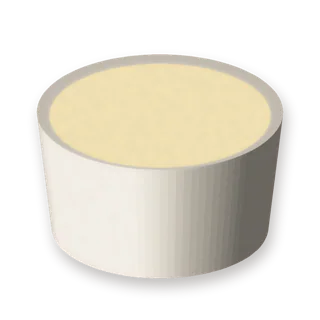
Soft raw sheep's-milk cheese of the L'Aquila uplands, set with an infusion of wild artichoke flowers (Carlina acaulis) and saffron, not animal rennet. Slow Food says production lapsed for about 60 years and was revived by a single producer at Castel del Monte. Slow Food gives wheels of 13 to 15 cm across and 7 to 8 cm thick, weighing 0.5 to 1 kg, with a surface pattern from the draining baskets. It is an Abruzzo traditional food product and is on Slow Food's Ark of Taste.
Taste: The regional tourism board describes a heady aroma with notes of artichoke and meadow herbs, and a mild, very fine taste. Slow Food describes a soft, creamy, cream-white paste with no eyes.
Ageing: About 30 to 40 days; ready to eat young
Made in: Province of L'Aquila, tied to the high pastures; now made across Abruzzo
Sheep milk, rawOtherAlso Cacio marcetto, cace fraceche
A very strong creamy spread made from sheep's-milk pecorino with cracks in the rind, in which the cheese fly Piophila casei lays eggs; the larvae (called saltarelli) break the proteins down to a cream. It is an Abruzzo traditional food product, with most produced around Castel del Monte. The two sources disagree on sale: Slow Food says European hygiene rules do not allow its sale, while the Gran Sasso park says it is on sale all year in glass jars and lists producers.
Taste: Creamy paste, very piquant, with a strong penetrating smell. Slow Food describes the paste as pale pink, the park as cream-white to ochre yellow. The park says to eat it on fresh bread, bruschetta or as a cream on a plate.
Ageing: About a year, per Slow Food
Made in: Whole region, mostly the inland areas; the main production area is Castel del Monte (L'Aquila)

Cow and sheep milk, rawOtherAlso Cacio degli sposi
Mixed-milk cheese of Farindola, made from half raw cow's milk and half raw sheep's milk and set with pig rennet, using a process very close to Pecorino di Farindola. The Gran Sasso park says it was made for weddings, the 'cheese of the spouses', and eaten fresh at wedding feasts held on the masserie. Production is very limited and now not only for weddings, depending on milk supply.
Taste: Decided in flavour but more delicate than Pecorino di Farindola, according to the Gran Sasso park, which says the pig rennet marks its aroma and taste just as it does in the pecorino.
Ageing: About 60 days
Made in: Farindola (province of Pescara)

Sheep and cow and goat milkFreshAlso Giuncata vaccina abruzzese, Sprisciocca
Fresh curd cheese, one of the oldest cheeses, named after the small rush basket (giunco) in which the curd drains. The Gran Sasso park says it is made mainly from sheep's milk but also from cow's or goat's, preferably from two milkings, and shepherds ate it warm for breakfast. The Abruzzo traditional products list records a cow's-milk giuncata under the alias Sprisciocca. It keeps only a few days, and today it is made by only some farms.
Taste: Pure white and creamy, with the acidic taste and smell typical of fresh curd, according to the Gran Sasso park, which says it should be eaten within a few days of making.
Ageing: None; eaten within a few days
Made in: Whole region

Goat milkFreshAlso Formaggi caprini abruzzesi
Traditional goat cheese of Abruzzo, sometimes with sheep's milk added, made with a technique close to that of the pecorini. The Abruzzo list distinguishes a lactic-coagulation goat cheese made around Farindola from a rennet-set one made in the Sagittario valley. It is eaten fresh after a short rest, or aged and often kept under bran to limit moisture loss. Most is made from April to September.
Taste: According to the Gran Sasso park, fresh caprino has a white, soft paste, while the aged cheese is more compact and slightly chalky; the flavour is intense.
Ageing: Eaten fresh after a short rest, or aged and often kept under bran
Made in: Lactic-curd goat cheese around Farindola (Pescara); rennet-set goat cheese in the Sagittario valley, notably around Villalago (L'Aquila)

Sheep milkWhey
Aged sheep's-milk ricotta made from the whey left after whole-milk sheep cheesemaking, heated to roughly 78 to 85 C so the whey proteins flocculate and rise with the residual fat. It is lifted into baskets, drained, and aged. The Gran Sasso park links it to the transhumant shepherds, who dried it naturally to carry and keep it; it was, with pecorino, their staple, and the fresh type is hard to sell because it must be eaten within about a day.
Taste: Keeps fragrance and softness after ageing, with the taste of the sheep's milk and the herbs and forage the animals ate, according to the Gran Sasso park.
Ageing: Aged by natural drying; no set time is given
Made in: Throughout the Gran Sasso and Monti della Laga park area; aged sheep's ricotta is traditional in Abruzzo and Lazio

Cow milkPasta, filata
Pasta-filata cow's-milk cheese on the Abruzzo list of traditional food products, made across the region and especially in the parts of Chieti and L'Aquila provinces that border Molise. The Del Mastro dairy at Sant'Eufemia a Maiella hand-pulls scamorze from pasteurised local mountain cow's milk and sells them fresh or appassita (briefly matured); its history page calls it one of the best-known dairies of the Pescara valley and says it made the Scamorza di Sant'Eufemia famous.
Taste: Del Mastro describes its fresh scamorza as compact with a delicate taste, and its appassita (briefly matured) scamorza as compact with a more decided taste and better keeping.
Ageing: Fresh, or briefly matured (appassita), per the Del Mastro dairy
Made in: Whole region, especially the parts of Chieti and L'Aquila provinces bordering Molise