Casera Consortile del Pecorino di Farindola
The producers' consortium shop, opened 2001 in a basement of the renovated town hall. It sells Pecorino di Farindola from the member farms and also selects and ages the cheeses it sells.

Cheese · Abruzzo
Also labelled Cacio marcetto, cace fraceche
A sheep's milk cheese from Whole region, mostly the inland areas; the main production area is Castel del Monte (L'Aquila).
A very strong creamy spread made from sheep's-milk pecorino with cracks in the rind, in which the cheese fly Piophila casei lays eggs; the larvae (called saltarelli) break the proteins down to a cream. It is an Abruzzo traditional food product, with most produced around Castel del Monte. The two sources disagree on sale: Slow Food says European hygiene rules do not allow its sale, while the Gran Sasso park says it is on sale all year in glass jars and lists producers.
Made in: Whole region, mostly the inland areas; the main production area is Castel del Monte (L'Aquila)
Creamy paste, very piquant, with a strong penetrating smell. Slow Food describes the paste as pale pink, the park as cream-white to ochre yellow. The park says to eat it on fresh bread, bruschetta or as a cream on a plate.
Rind: none, eaten fresh
Wine and cheese
Marcetto is a very piquant, strong-smelling cream eaten by the spoonful on bread. A full-bodied Montepulciano d'Abruzzo riserva, with its depth of fruit and tannin, is one of the few wines that holds its own; a little cheese at a time keeps the balance.
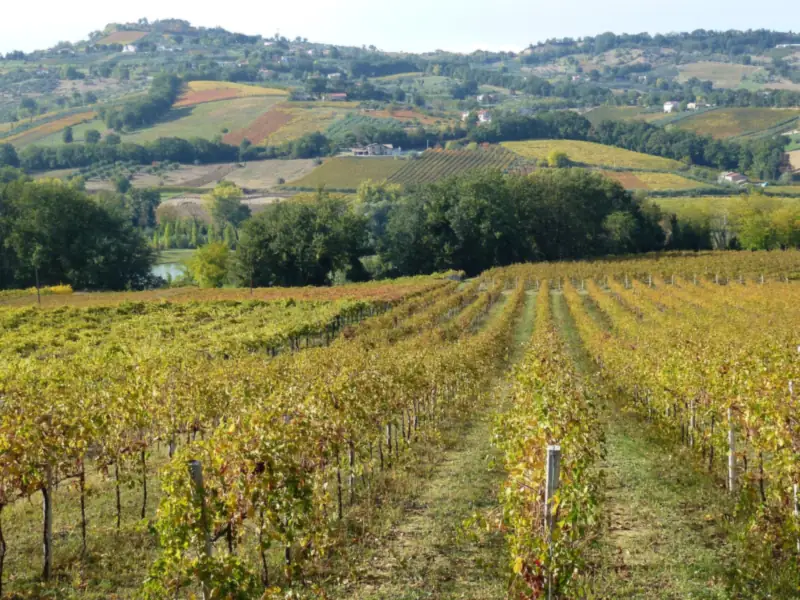
The grapes behind these winesMontepulciano
From the source
The producers' consortium shop, opened 2001 in a basement of the renovated town hall. It sells Pecorino di Farindola from the member farms and also selects and ages the cheeses it sells.
A 69 km driving loop from Barisciano, published by the Gran Sasso park, through Santo Stefano di Sessanio, Castel del Monte and Calascio. The park suggests buying Canestrato at a farm shop in Castel del Monte and stopping at the Campo Imperatore cooperative's dairy on the way back.
The sources disagree. Slow Food's Ark of Taste entry says the European hygiene and health rules do not allow its sale and warns that live larvae may injure the gut. The Gran Sasso park's product page says it is on sale all year, mainly in glass jars, and that the product keeps a high level of hygiene safety. Ask the producer before buying.
The Gran Sasso park explains that raw-milk pecorino with cracks in the rind attracts the cheese fly Piophila casei, whose larvae break down the proteins into a cream. Slow Food names the same fly and calls the larvae saltarelli.
Same cheeseboard
Plan the trip
Tastings and tours where it is made, and somewhere to stay.
Booking links go to our partners (GetYourGuide, Viator, Zen Hotels), who may pay us a commission. It never decides what we cover. Editorial standards.
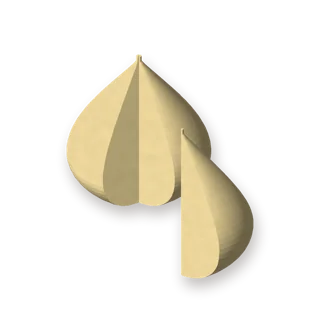
Sources: www.gransassolagapark.it, www.fondazioneslowfood.com. The drawing is made from the cheese's recorded shape, rind and paste, not a photograph.