Casera Consortile del Pecorino di Farindola ★ 4.5
The producers' consortium shop, opened 2001 in a basement of the renovated town hall. It sells Pecorino di Farindola from the member farms and also selects and ages the cheeses it sells.
The fromageries and cheese counters in Abruzzo worth a stop.
A guide to cheese shops in Abruzzo.
The producers' consortium shop, opened 2001 in a basement of the renovated town hall. It sells Pecorino di Farindola from the member farms and also selects and ages the cheeses it sells.
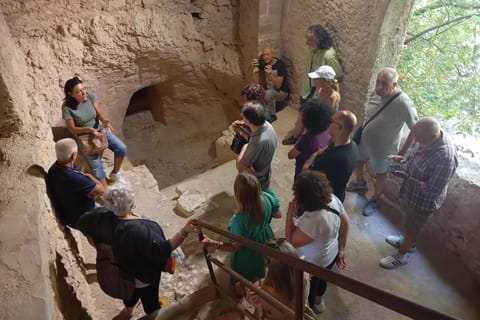
Explore Raiano on a guided walking tour. See historic murals, visit the San Venanzio Nature Reserve, and enjoy an olive oil and gelato tasting at Bar Aterno.
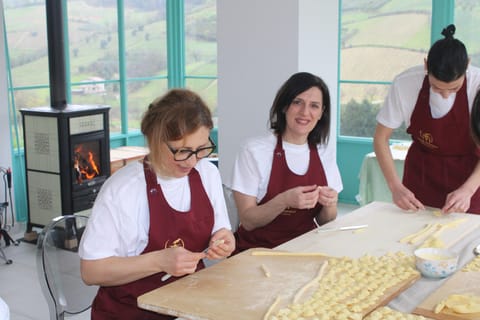
Discover the secrets of Abruzzo cuisine with a cooking class at Torre Monache in Villamagna. Learn to make authentic dishes, enjoy a shared meal, and try some wine fro...

Discover Villamagna, Italy's smallest wine appellation, on a guided tour that reveals why its reds are also made for summer drinking. Taste wines and enjoy a tradition...
Slow Food says the use of pig rennet is very old, and that a Vestini cheese made with pig rennet is already mentioned in Roman times. The regional tourism board calls it a case unique in Italy.
No. It is a Slow Food presidium and is on the Abruzzo list of traditional food products (PAT). The consortium's site says the procedure for the D.O.P. label is in progress.
The consortium's home page counts 12 producing farms. Slow Food says it is still made in very limited quantities, and that production is the prerogative of the women of the farm families, who hand the recipe down.
The park's product page says the rind carries the imprint of the basket (canestro) in which the curd is shaped.
Slow Food says the milk is used pure and comes mostly from Sopravvissana or Gentile di Puglia sheep.
Slow Food gives half a kilo to two and a half kilos for the aged wheels it describes, and the presidium rules also cover 5 kg and traditional 15 kg wheels. The Gran Sasso park page gives a range of 1 to 15 kg.
The Abruzzo tourism board gives 40 days to 2 years, depending on the style.
The tourism board says it can be eaten as it is, or kept in jars under extra virgin olive oil and eaten after at least six months. Italian Wikipedia adds that it is usually aged 40 to 60 days in bran, or much more rarely in ash, before it goes under oil.