Casera Consortile del Pecorino di Farindola
The producers' consortium shop, opened 2001 in a basement of the renovated town hall. It sells Pecorino di Farindola from the member farms and also selects and ages the cheeses it sells.

Cheese · Abruzzo
A semi-hard sheep's milk cheese from Atri and its hills, on the border between the provinces of Teramo and Pescara.
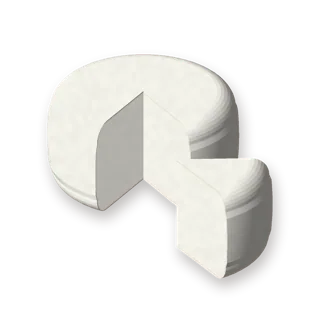
Pecorino of the Atri area, made from raw whole sheep's milk set with lamb or kid rennet, with a semi-cooked, compact paste and small, sparse eyes. The rind carries the imprint of the rush baskets and hardens and darkens with age. Italian Wikipedia says production is now almost entirely home-made; it is an Abruzzo traditional food product. Young wheels are eaten fresh, older ones are grated or kept in jars under olive oil, and the same curd gives sprisciocco, pressed by hand from the fresh curd, and a primo sale used for fried cheese.
Made in: Atri and its hills, on the border between the provinces of Teramo and Pescara
Young wheels have a soft, white, spreadable paste with a faintly acidic, mildly piquant, very fragrant taste. Medium-aged wheels turn straw yellow, firmer, more intense and a little saltier; the oldest are dense, deep yellow with pink shades and decidedly piquant.
Rind: natural crust
Wine and cheese
Young Pecorino di Atri, eaten at about 10 days, is soft, white and faintly acidic. A Trebbiano d'Abruzzo with high acidity echoes that and keeps the pairing light and fresh.
Medium-aged Pecorino di Atri is straw yellow, firmer, more intense and a little saltier than the young cheese. A dry Trebbiano d'Abruzzo Superiore, rested for months before bottling, has the acidity to cut the sheep's-milk fat and the depth for the firmer paste.
The grapes behind these winesTrebbiano Abruzzese
From the source
The producers' consortium shop, opened 2001 in a basement of the renovated town hall. It sells Pecorino di Farindola from the member farms and also selects and ages the cheeses it sells.
A 69 km driving loop from Barisciano, published by the Gran Sasso park, through Santo Stefano di Sessanio, Castel del Monte and Calascio. The park suggests buying Canestrato at a farm shop in Castel del Monte and stopping at the Campo Imperatore cooperative's dairy on the way back.
The Abruzzo tourism board gives 40 days to 2 years, depending on the style.
The tourism board says it can be eaten as it is, or kept in jars under extra virgin olive oil and eaten after at least six months. Italian Wikipedia adds that it is usually aged 40 to 60 days in bran, or much more rarely in ash, before it goes under oil.
Same cheeseboard
Plan the trip
Tastings and tours where it is made, and somewhere to stay.
Booking links go to our partners (GetYourGuide, Viator, Zen Hotels), who may pay us a commission. It never decides what we cover. Editorial standards.
Sources: www.abruzzoturismo.it, it.wikipedia.org. The drawing is made from the cheese's recorded shape, rind and paste, not a photograph.