Ferme-Auberge du Kastelberg
Farm-inn on the Route des Crêtes run by a marcaire family for seven generations, making Munster and Bargkass from its own cows' milk. Open mid-April to mid-October for cheese sales and marcaire meals.

Cheese · Alsace
Also labelled Barikass
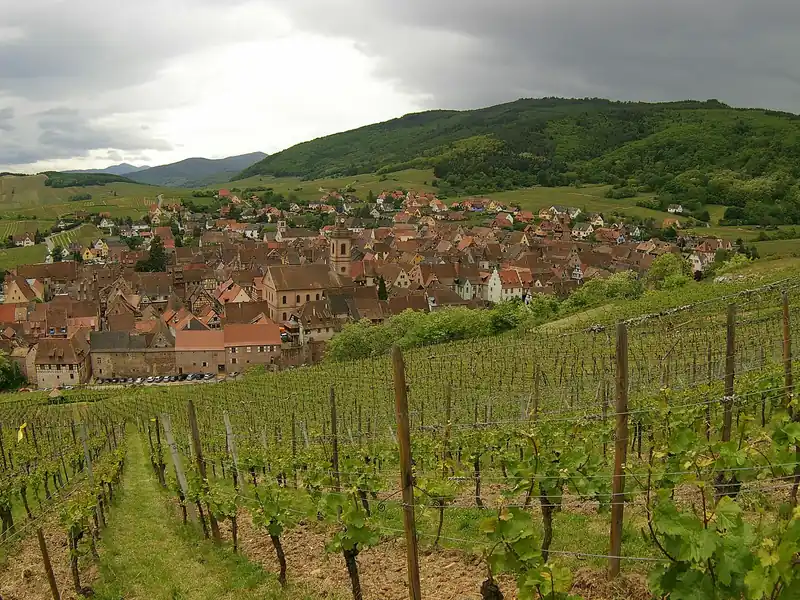
A semi-hard cow's milk cheese from Vosges mountain villages and farm-inns, mostly around the Route des Crêtes, in Alsace (Bas-Rhin, Haut-Rhin) and the Vosges.
Alsace's mountain tomme: a pressed raw cow's-milk cheese made in the farm-inns of the high Vosges pastures, also written Barikass or Bergkäs, or sold as tomme des Vosges. It is a keeping cheese, made when summer milk is plentiful and Munster sales are slow, and it is not protected because each farm follows its own recipe. Summer wheels have a deeper yellow, stronger-flavoured paste than the paler, milder winter ones. It ages on wooden boards and is brushed or washed through the ageing.
Made in: Vosges mountain villages and farm-inns, mostly around the Route des Crêtes, in Alsace (Bas-Rhin, Haut-Rhin) and the Vosges
Melting, mild and fruity with fresh grass and hay notes, often low in salt. Made from summer milk of cows grazing the high pastures, it can taste faintly of bilberry.
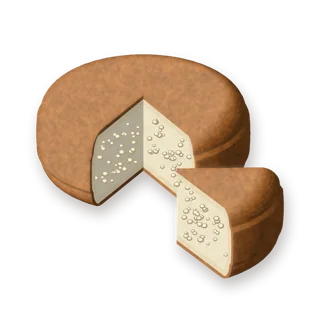
Rind: washed, orange and sticky
Wine and cheese
Bargkass is mild and low in salt, tasting of hay and fresh grass. A dry Riesling's acidity lifts the supple, melting paste without covering its gentle summer-pasture flavour.
Sylvaner is a dry, fresh white with high acidity and restrained fruit, gentle enough for a mild pressed cheese that tastes of hay and fresh grass, so neither side overpowers the other.
The grapes behind these winesRieslingSylvaner
From the source
Farm-inn on the Route des Crêtes run by a marcaire family for seven generations, making Munster and Bargkass from its own cows' milk. Open mid-April to mid-October for cheese sales and marcaire meals.
High-pasture farm-inn on the Route des Crêtes at 1,180 m, turning the milk of its dairy herd into Bargkass, Cœur de Massif, Cendré des Chaumes, flavoured tommes, butter and fresh cheese. Open Easter to 1 November.
Fromagerie in central Strasbourg run by Christelle and Cyrille Lorho, both Meilleurs Ouvriers de France fromagers. About 250 cheeses, matured in their Vosges caves, plus cheese boards and raclettes.
Colmar shop of a family affineur founded in 1981, with ageing caves at Buhl. More than 400 cheeses, custom boards, and a stand in the covered market.
Strasbourg fromagerie trading under the Fromagerie Tourrette name: over 200 cheeses matured in its own cellars, custom platters, wines and groceries, with the La Cloche à Fromage restaurant a few steps away.
Long-established Strasbourg crèmerie run by Goretti Christen: mostly raw-milk cheeses, Swiss alpine types, and Alsace Munster, farm goat cheeses and Bargkass.
Self-guided visit of about 1h30 with films, exhibitions, the cowshed and the stages of making Munster, ending with a commented tasting of three cheeses (Siaskass, Munster, Barikass). Shop and restaurant on site; visits run in timed slots, best booked online.
Cheese route established in 1968, about 90 km from the Maison du Fromage in Gunsbach by the D417 to the Col de la Schlucht, along the Route des Crêtes, then down by Le Schnepfenried. Farm-inns on the high pastures serve mountain meals with Munster.
Mountain farm meal at 1,180 m: the farm's daily menu runs to tourte with salad, smoked collar with potatoes, a plate of the farm's own cheeses and dessert; the dairy makes Bargkass, Cœur de Massif and tommes. Open Easter to 1 November; booking a table is strongly advised.
Fromagerie Saint-Nicolas keeps a stand in Colmar's covered market, selling its matured cheeses and custom boards; the hall, on the rue des Écoles, lists a fromagerie among its vendors.
Weekly food and textile market on the Place du Marché in Munster, held Tuesday and Saturday mornings; the valley tourist office lists local cheeses, charcuterie and breads among the produce.
No. Wikipedia says it has no protected designation because each farm has its own recipe, and Château Landsberg's guide also lists it as outside the AOP, AOC and IGP schemes.
Wikipedia gives the Alemannic roots: barg means mountain and käss means cheese, so mountain cheese.
Le Guide du Fromage says it is a spin-off of Munster: a cheese made to keep, produced in the same farms when milk is abundant and Munster sales are slow.
Same cheeseboard
Plan the trip
Tastings and tours where it is made, and somewhere to stay.
Booking links go to our partners (GetYourGuide, Viator, Zen Hotels), who may pay us a commission. It never decides what we cover. Editorial standards.
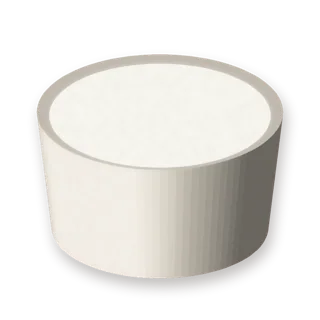
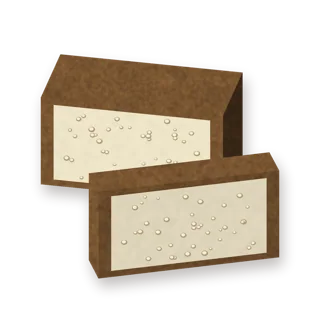
Sources: www.leguidedufromage.com, fr.wikipedia.org. The drawing is made from the cheese's recorded shape, rind and paste, not a photograph.