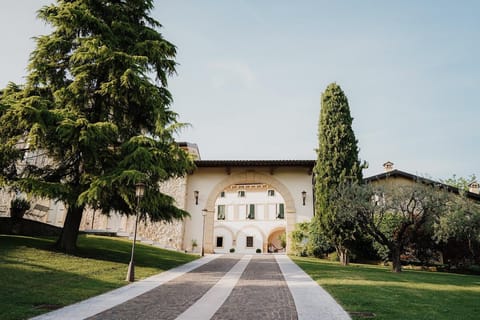
Valpolicella Classica: Visit and tasting at Corte Borghetti
Visit the vineyards and winery of Corte Borghetti and taste 5 wines in the 17th-century barrel cellar, with cold cuts and cheeses from Lessinia, extra virgin olive oil...
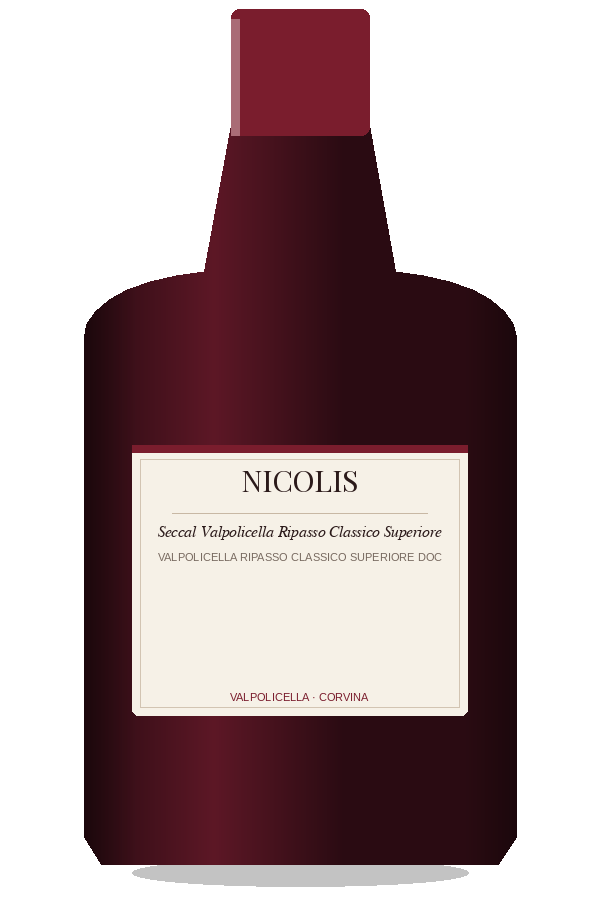 Deep garnet
Still Red · Valpolicella Ripasso Classico Superiore DOC · Valpolicella
Deep ruby red, intense and elegant with ripe plum and cherry and spice, then full-bodied, balanced, enveloping and of excellent persistence.
No critic score is published for this bottle that we can cite with a reviewer, a vintage and a review year, so none is shown. The rating in the header is our own.
Aroma: ripe plum, ripe cherry, spice
Palate: full enveloping body, balanced persistence
Deep ruby red, intense and elegant with ripe plum and cherry and spice, then full-bodied, balanced, enveloping and of excellent persistence.
Seccal is Nicolis's Ripasso, made by the traditional Valpolicella method of refermenting the young wine on the pomace of the estate's dried-grape wines, which are pressed and fermented in winter after at least three months in the drying lofts.
The estate reports a deep ruby red colour, an intense and elegant nose with hints of ripe plums and cherries and spices, and a full-bodied, balanced, enveloping taste of excellent persistence.
By the ripasso method, refermenting the year's Valpolicella on the pomace of the estate's dried-grape wines, which are pressed and fermented in winter after at least three months in the drying lofts.
Two to twelve years from the vintage is a fair window for a Ripasso of this weight.
Visit the vineyards and winery of Corte Borghetti and taste 5 wines in the 17th-century barrel cellar, with cold cuts and cheeses from Lessinia, extra virgin olive oil...

Embark on an immersive experience in Valpolicella and discover the history, art, vineyards and excellent contemporary wines on a tour of Tenuta Santa Maria owned by Gi...
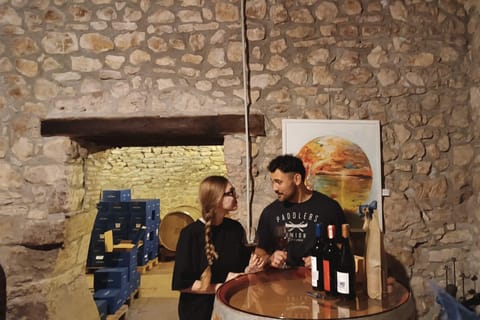
A "well-rounded" tasting of Valpolicella wines: 5 wines that will give you an overview of our production and introduce you to the particularities of the typical varieties