
6 Day Wine and Gastronomy Tour of Northern Spain
We are offering the best experience focus on Wine & Gastronomy of Northern Spain partnering with local tour guides in order to show these regions combining history, be...
 Ruby
Ruby
Still Red · DO Ribera del Duero · Ribera del Duero
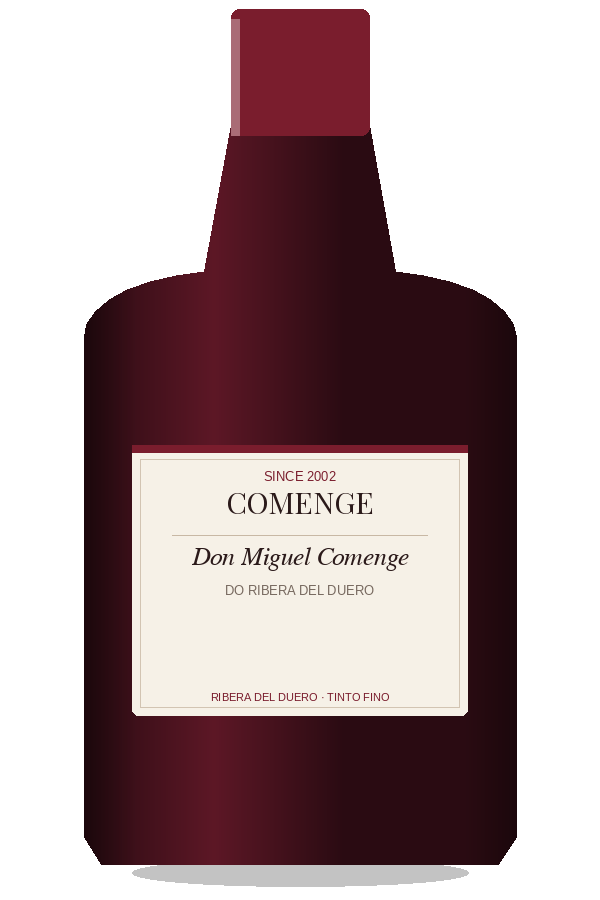
The prestige organic Bordeaux-style blend from Comenge at Curiel de Duero, first produced in 2002. Aged 20 months in new French oak from castle-view hillside vineyards for concentrated dark fruit and exceptional ageing potential.
No critic score is published for this bottle that we can cite with a reviewer, a vintage and a review year, so none is shown. The rating in the header is our own.
Allow 65 minutes from open to pour.
Don Miguel Comenge is the prestige cuvee of the Comenge organic estate at Curiel de Duero, named for a member of the founding family and first produced in 2002 from the estate's oldest plots overlooking Curiel castle.
Drink 8-25 from vintage. Young vintages benefit from 30-90 minutes of decanting; mature bottles should be handled carefully for sediment.
Whole roasted lamb is the canonical pairing. Other strong matches include Wild game stew with berries and Aged Manchego with honey. The wine's power and concentration suit the grandest Castilian roasts.
The blend is Tinto Fino, Cabernet Sauvignon, Merlot. The wine is classified as DO Ribera del Duero.
We are offering the best experience focus on Wine & Gastronomy of Northern Spain partnering with local tour guides in order to show these regions combining history, be...

If you are spending some days in Madrid and you are a wine lover, you cannot miss Ribera del Duero! Take the train in Madrid and travel to Valladolid station, where y...

In our "like a native" experience we take care of visiting very special and exclusive wineries that you cannot find on your own, and we always try to offer the most lo...