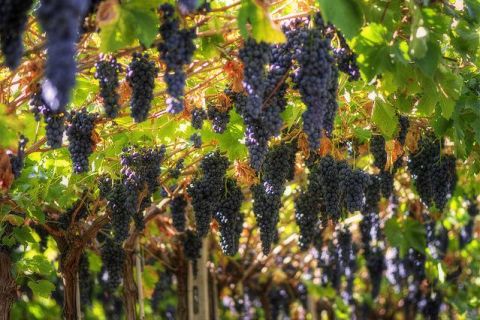
The eastern shore of Lake Garda between Lazise and Garda town is lined with the Corvina-based vineyards of the Bardolino Classico zone. The light-bodied red and the celebrated pale Chiaretto rose are the dominant styles.
Pours: Bardolino DOC Classico, Bardolino Chiaretto DOC, Custoza DOC
Tip: Combine the Bardolino Classico zone with a swim stop at Punta San Vigilio, the prettiest headland on the lake, within the Bardolino DOC boundary.
The 30-kilometre Strada del Prosecco between Conegliano and Valdobbiadene passes through the UNESCO World Heritage Prosecco Hills landscape: steep ciglioni terraces, bellussera-trained Glera vines and medieval village hilltops. The Rive single-vineyard programme covers 43 named sites along the route, each with distinct soil character.
Pours: Prosecco Superiore DOCG Extra Dry, Cartizze DOCG Dry, Rive single-vineyard Prosecco
Tip: Drive the Strada from Valdobbiadene south toward Conegliano to end at the historic enological school; stop at Ruggeri, Bisol and Nino Franco along the way.
The walled medieval town of Soave is one of the best-preserved castle towns in northern Italy. The Scaligeri castle dominates the volcanic basalt hillside above.
Pours: Soave Classico DOC, Soave Classico Superiore, Recioto di Soave DOCG
Tip: Pieropan in particular is worth booking ahead; their Calvarino and La Rocca single-vineyard Soave Classico are serious cellar-worthy whites. Soave town itself has a small enoteca inside the castle.
The volcanic Colli Euganei (Euganean Hills) south of Padua produce a diverse range of wines including the rare Fior d'Arancio DOCG (sweet and sparkling Moscato Giallo).
Pours: Colli Euganei Rosso DOC (Merlot, Cabernet, Carmenere), Colli Euganei Fior d'Arancio DOCG (Moscato Giallo)
Tip: Fior d'Arancio DOCG is Italy's only mandatory passito-or-spumante-only DOCG for an aromatic white; try it at the winery before the thermal baths.
Crossing north through the Adige Valley and into Trentino-Alto Adige takes the visitor from Veneto's appassimento zone into the Alpine wine landscape of Teroldego, Gewurztraminer and Pinot Noir.
Pours: Teroldego Rotaliano DOC, Alto Adige Gewurztraminer DOC, Trentino Marzemino DOC
Tip: Foradori in Mezzocorona is the undisputed benchmark for Teroldego Rotaliano; Elena Walch and Tramin are the Alto Adige reference points for Gewurztraminer.
Friuli Venezia Giulia to the east of Veneto is Italy's other great white-wine territory. The Collio hillsides on the Slovenian border produce Ribolla Gialla, Friulano (Tocai), Malvasia Istriana and complex Collio Bianco blends. The Grave plain is the industrial heartland of Pinot Grigio. Producers Jermann, Schiopetto and Radikon (the latter famous for extended maceration orange wines) define the Collio range.
Pours: Collio Bianco DOC, Friuli Grave Pinot Grigio DOC, Ribolla Gialla, Friulano (Tocai)
Tip: If making the trip, include Radikon in Oslavia for the benchmark orange wine experience; Stanko Radikon's sons continue the multi-month skin-contact tradition.
Franciacorta on the shores of Lake Iseo in Lombardy produces Metodo Classico sparkling wine (Franciacorta DOCG, established 1995) from Chardonnay, Pinot Nero and Pinot Bianco.
Pours: Franciacorta DOCG Brut, Franciacorta DOCG Saten, Franciacorta DOCG Blanc de Blancs
Tip: A Franciacorta day-trip pairs naturally with a lunch at a Michelin-recognised restaurant in Brescia city; the 90-minute drive from Verona west is easy on the A4.
The Lugana DOC covers the southern tip of Lake Garda between Peschiera del Garda and Desenzano, straddling the Veneto-Lombardy border. Turbiana on the distinctive clay-moraine soils produces wines with a distinctive floral, slightly saline character. Zenato, Ca' dei Frati and Ottella are the major producers, all offering visits.
Pours: Lugana DOC, Lugana Superiore DOC, Lugana Riserva DOC
Tip: Lugana Riserva from top estates ages surprisingly well for a northern Italian white; compare a current vintage to a three-year-old Riserva at Zenato for a compelling demonstration.