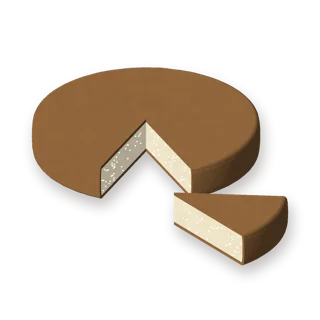
AOP, first protected 1952Cow milk, rawHardBrushed rind
A cooked, pressed wheel made from the raw milk of Montbéliarde and Simmental cows. Milk is collected in a circle 25 km across around each dairy and made into cheese within 24 hours, with no additives or colourings, in about 150 village fruitières. INAO says it was recognised as an appellation as early as 1952. Wheels average 40 kg and rest in cellars at least four months, many far longer.
Taste: Dense and smooth, moving from fruity and milky notes in young wheels to roasted ones with age. INAO lists hazelnut, honey, butter, caramel, egg yolk and vanilla, and older wheels can show small white tyrosine crystals.
Ageing: 4 months minimum, can run to 18 months or more
Made in: Jura massif at 500 to 1,500 m: Doubs, Jura and eastern Ain, with parts of Saône-et-Loire and Haute-Savoie
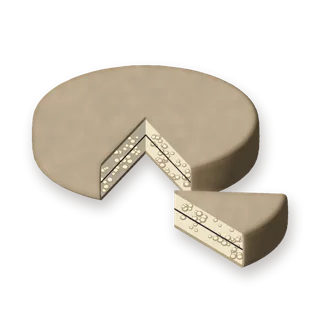
AOP, first protected 2000Cow milk, rawSemi, hardNatural rind
An uncooked pressed cow's milk cheese cut across the middle by a thin horizontal line of vegetable charcoal. INAO says the farmer once made a small cheese from the evening milk, coated it with cauldron soot overnight and topped it with the morning cheese; French Wikipedia puts the first written traces in the late 18th century. A wheel is 35 cm across and 7 cm high (INAO) and weighs about 7 kg (French Wikipedia; Le Guide du Fromage gives 5 to 8 kg).
Taste: Creamy and melting, with lactic, caramel, vanilla and fruit notes that turn roasted, spiced and vegetal with age (INAO). The natural rind is beige to orange, and the ivory paste carries a few scattered small openings.
Ageing: 45 days minimum
Made in: Jura plateaus: Doubs, almost all of Jura, and a few communes of Ain and Saône-et-Loire
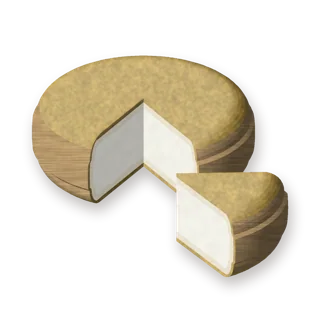
AOP, first protected 1981Cow milk, rawSoft, washedWashed rindAlso Vacherin du Haut-Doubs
A seasonal soft cheese of the high Doubs, sold as Mont d'Or or Vacherin du Haut-Doubs. A band of spruce bark is wrapped around it at the dairy, and it ripens in a round spruce box. Wheels run from 480 g to 3.2 kg, in boxes 11 to 33 cm across. Making is allowed only from 15 August to 15 March, with sales from 10 September to 10 May.
Taste: Creamy and slightly runny, with the mild mushroom and cream of the milk lifted by the resin and woody scent of the spruce band. Le Guide du Fromage also notes hazelnut. The surface forms soft folds as the cheese settles in its slightly smaller box.
Ageing: 21 days minimum
Made in: Haut-Doubs communes with pastures always above 700 m, on the slopes of the Mont d'Or (1,461 m) and the upper plateaus of the Jura massif
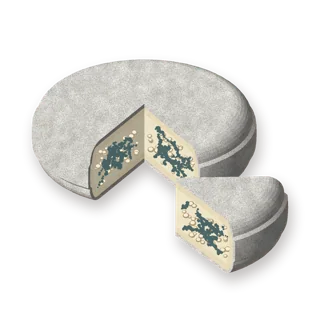
AOP, first protected 1935Cow milk, rawBlueNatural rindAlso Bleu de Gex Haut-Jura ou Bleu de Septmoncel
A blue cheese of the high Jura, made from raw milk of Montbéliarde or Simmental cows, with a whitish, slightly floury rind stamped with the word Gex in relief. Wheels are 31 to 35 cm across and weigh 6 to 9 kg. Le Guide du Fromage says it seems to go back to the 13th century and to the cheesemaking of the monks of the Abbey of Saint-Claude. The Fromagerie du Haut-Jura at Les Moussières calls itself one of the last four dairies making it.
Taste: Milder than most blue cheeses, with a light salt note and a pleasant bitterness. Vanilla cream and mushroom, chanterelle in particular, lead, with a floury rind and blue-green marbling through ivory paste.
Ageing: 3 weeks minimum
Made in: Haut-Jura peaks of the Jura massif, in Ain and Jura
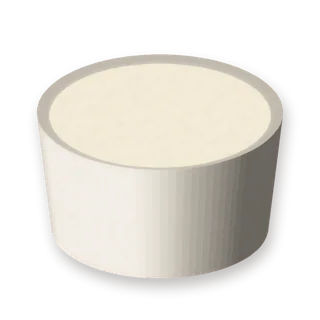
IGP, first protected 2022Cow milkOtherAlso Cancoyotte
A melted cheese from Franche-Comté, protected as an IGP since 2022. Skimmed cow's milk is first made into white metton, which is aged, then melted with water and butter into a semi-liquid, slightly sticky paste. It comes plain or flavoured with garlic, white wine, vin jaune, mushrooms or walnuts. It is eaten cold on bread or hot like a fondue, and holds less than 15 percent fat.
Taste: Recalls milk and butter with a faint yeasty note; the colour runs from cream to pale yellow. Flavoured pots add garlic, wine or nuts. Light and spreadable rather than rich.
Ageing: The white metton is aged before it is melted
Made in: Former Franche-Comté (Doubs, Jura, Haute-Saône, Territoire de Belfort), parts of Ain and Saône-et-Loire, and neighbouring communes of Côte-d'Or, Haute-Marne and Vosges
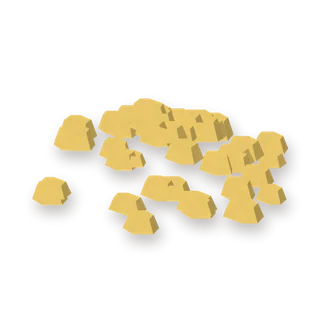
Cow milkOther
The raw material of Cancoillotte. Skimmed milk, or whey, is heated, pressed and crumbled, then left to ferment slowly in a warm spot until the grains turn from white to yellow and give off a fairly strong smell. It is not made to be eaten on its own: Le Guide du Fromage calls it essential to making Cancoillotte, which is melted from it.
Taste: Le Guide du Fromage rates it mild (suave) on its intensity scale, though the ripened grains give off a fairly strong smell, which is why they are melted into Cancoillotte rather than served as a table cheese.
Ageing: Fermented slowly in a warm place until the grains turn yellow
Made in: Doubs, Haute-Saône, Jura and Territoire de Belfort (Bourgogne-Franche-Comté)