Fromagerie Janin
Five generations of cheesemongers since 1885, now run by brothers Marc and Mathieu Janin; Marc is Meilleur Ouvrier de France 2015. Raw-milk cheeses ripened in its own cellars, plus wines, beers and spirits.

Cheese · Jura
A cow's milk cheese from Doubs, Haute-Saône, Jura and Territoire de Belfort (Bourgogne-Franche-Comté).
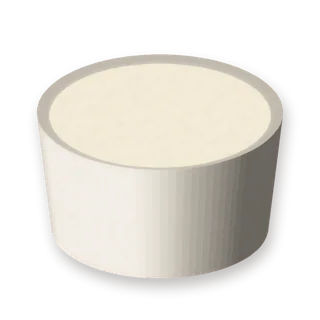
The raw material of Cancoillotte. Skimmed milk, or whey, is heated, pressed and crumbled, then left to ferment slowly in a warm spot until the grains turn from white to yellow and give off a fairly strong smell. It is not made to be eaten on its own: Le Guide du Fromage calls it essential to making Cancoillotte, which is melted from it.
Made in: Doubs, Haute-Saône, Jura and Territoire de Belfort (Bourgogne-Franche-Comté)
Le Guide du Fromage rates it mild (suave) on its intensity scale, though the ripened grains give off a fairly strong smell, which is why they are melted into Cancoillotte rather than served as a table cheese.
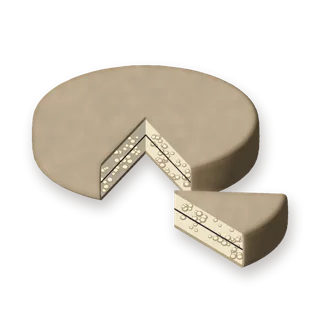
Rind: none, eaten fresh
From the source
Five generations of cheesemongers since 1885, now run by brothers Marc and Mathieu Janin; Marc is Meilleur Ouvrier de France 2015. Raw-milk cheeses ripened in its own cellars, plus wines, beers and spirits.
Cheese shop on place Notre-Dame in Poligny, run by Philippe Bouvret, under a barrel-shaped wooden ceiling. It sells Comté aged up to 33 months, regional cheeses, charcuterie and Jura wines.
Family cheese shop since 1950 in Lons-le-Saunier with more than 150 cheeses from cow, goat and sheep milk, regional specialities made in house, and a vending machine outside. Open seven days.
Shop in the centre of Poligny created in 1986 by the Juramonts union of Comté fruitières, selling the Comtés of its member dairies next to Morbier, Bleu de Gex and raclette.
Interpretive centre on Comté in Poligny, in three buildings for the milk producers, cheesemakers and ageing cellars. Films, sensory games and interactive displays lead to a tasting of two Comtés.
Guided walk through the Comté ageing cellars inside the Fort des Rousses, with a tasting of Comtés of different profiles at the end. Online reservation is compulsory.
Morning visit of the Plasne cooperative: the workshop, the ageing cellars and a tasting of its Comté, Morbier and Tomme. Reservation is required; call the fruitière to book.
Network of farms, fruitières, ageing cellars and cheese museums that welcome visitors, with themed circuits on foot, by bike, car, ski, motorbike or motorhome. The Comté trade body that runs it is based in Poligny.
Once a year the Plasne fruitière opens to the public with guided visits of the factory, a local producers market and a fondue served on booking.
The main food market of Lons-le-Saunier, held on Thursday morning with cheese among the fresh and regional produce. Other stalls fill place du 11 Novembre all day, with a smaller producers market on Wednesday evenings.
Melting into Cancoillotte, the protected Franche-Comté spread, according to Le Guide du Fromage.
Skimmed milk or whey, heated, pressed, crumbled and fermented.
Same cheeseboard
Plan the trip
Tastings and tours where it is made, and somewhere to stay.
Booking links go to our partners (GetYourGuide, Viator, Zen Hotels), who may pay us a commission. It never decides what we cover. Editorial standards.
Sources: www.leguidedufromage.com, fr.wikipedia.org. The drawing is made from the cheese's recorded shape, rind and paste, not a photograph.