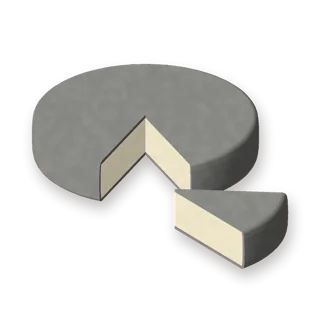
PGI, first protected 2023Goat milk, pasteurisedSemi, softBloomy rindAlso Formatge Garrotxa
A goat's milk cheese with a grey, fuzzy bloomy rind, registered as an EU PGI in December 2023 for the whole of Catalonia. The specification requires whole pasteurised goat's milk, mixed curdling, a rind mould that is never artificially inoculated, and at least 21 days of maturing, and sets two sizes, about 0.5 kg and 1 kg. It records that goat farmers of the Garrotxa district had specialist cheesemakers revive the recipe in the early 1980s; ACREFA names Sant Miquel de Campmajor and 1982. Cheesemakers trained at the Torre Marimon agricultural college then took it to dairies across Catalonia.
Taste: The EU specification describes a firm, smooth, off-white paste, aromas of medium intensity led by fresh goat's milk and butter, damp cellar notes from the rind and lactic notes in the mouth. ACREFA calls it mild and easy to eat.
Ageing: At least 21 days under the PGI specification; ACREFA gives three weeks to two months
Made in: The whole of Catalonia, the PGI area, the Penedès included; the cheese was revived in the early 1980s by goat farmers of the Garrotxa district (Girona)
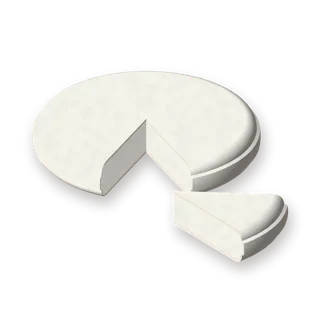
Goat and cow and sheep milkFresh
A fresh, unsalted Catalan cheese. The milk is heated hard, 85 degrees or more according to ACREFA and Catalan Wikipedia, so all the protein, whey included, sets in the curd. ACREFA says it was historically made from goat's milk and is now mostly cow's. The name appears in the medieval Sent Soví recipe book, and mató with honey is a classic Catalan dessert. The "Mató de Montserrat" of the farms round the Montserrat abbey is the same cheese: ACREFA tells how pilgrims spread the fame of the local mató and does not treat it as a separate type.
Taste: Milky, mild and moist with a short finish, and a granular or gelled texture, according to Catalan Wikipedia. ACREFA calls the colour clearly white, the smell neutral and the texture soft and light.
Ageing: Not aged; keep at 2 to 5 degrees and eat within four or five days, according to ACREFA
Made in: Traditionally central Catalonia: an arc of about 100 km around Barcelona taking in Bages, Osona, the south of Berguedà and the upper parts of the Penedès, Anoia and Vallès, according to ACREFA
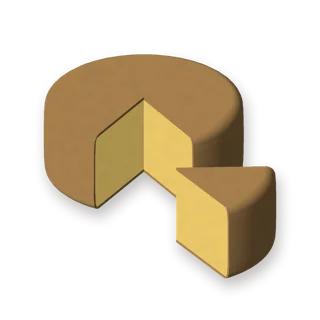
Sheep and cow and goat milk, bothSemi, hardNatural rindAlso Serrat
A pressed, uncooked cheese made first from sheep's milk by Pyrenean farmers and now also from cow's and goat's milk. ACREFA presents it as representative of Catalan cheesemaking. The name points both to the mountain ridges (serrats) where it began and to the pressed, compact paste, with little moisture and no eyes, which keeps well. Today it is made raw or pasteurised across Catalonia, far from its mountain origins.
Taste: A fatty, aromatic cheese of intense flavour, slightly peppery, according to Catalan Wikipedia, which gives a thin smooth yellowish-brown rind and a compact yellow paste without holes. ACREFA stresses the dense, eyeless paste that keeps well.
Ageing: Medium to long ripening: two months for raw milk, one month for pasteurised, according to Catalan Wikipedia
Made in: Originally the Catalan Pyrenees and pre-Pyrenees, from the Vall d'Aran to the Ripollès; today made across Catalonia. Included here as a Catalan cheese, not a Penedès one


