DOP, first protected 2007Cow milk, pasteurisedSemi, hardWashed rindAlso Stelvio DOP
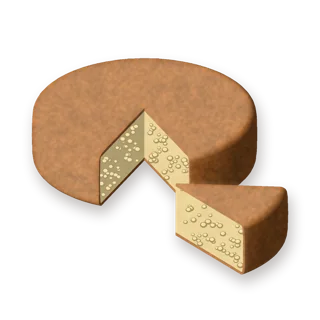
Stilfser, Stelvio in Italian, has been an EU protected designation of origin (PDO) since 2007, and Mila calls it the only South Tyrolean cheese with that protection. It is a cylindrical cow's milk cheese made entirely in the province of Bolzano, from milk that Italian Wikipedia says is heat-treated at 72 degrees C. The EU publication of the specification gives a flat-faced wheel 34 to 38 cm across and 8 to 11 cm high, weighing 8 to 10 kg, with at least 50 percent fat in the dry matter, so the figures recorded here are midpoints. It ripens at least 60 days on wooden boards, turned and washed with a salt solution that carries the bacterial flora giving the rind its yellow to orange-brown colour. Qualigeo dates its origins to the 13th century, citing land registers in which the cheese was used to pay dues to landowners.
Taste: Qualigeo describes a compact, soft and elastic paste with a strong, spicy aroma and an intense flavour. German Wikipedia calls the taste aromatic and pronounced, at times sharp; Mila adds a slightly nutty note with fine wood tones.
Ageing: 60 days minimum, on wooden boards
Made in: 84 municipalities of the autonomous province of Bolzano, the city of Bolzano among them, in the Vinschgau, Burggrafenamt, Salten-Schlern, Pustertal and Eisacktal districts
PATCow milk, bothOtherAlso Formaggio grigio
Graukäse, grey cheese, is a sour-milk cheese of the Tyrolean Alps made from the skim milk left after butter-making and curdled by acidification, with no rennet. It is so lean that fat in the dry matter does not exceed 2 percent. In South Tyrol it belongs above all to the Ahrntal and its side valleys, where the Valle Aurina Graukäse is a Slow Food presidium; Slow Food traces the first written mention to the 1325 registers of Sonnenburg convent. Grey-green moulds grow during ripening and the shape is irregular. Italy lists it as a traditional agri-food product (PAT), and Slow Food gives the production season as June to September.
Taste: Slow Food describes a strong, penetrating smell and a bitter note that grows with ripeness, in a marbled paste with a chalk-white core that turns yellow and greasy. It is classically eaten in pieces dressed with oil, wine vinegar and thinly sliced onion.
Ageing: 2 to 3 weeks, or up to 12 weeks when finished in a cold room
Made in: South Tyrol, above all the Ahrntal and its side valleys; the Slow Food presidium covers the Tures and Aurina valleys from Gais to Kasern with Mühlwald, Lappach, Weissenbach and Rein, and dairies in the Hochpustertal make it too
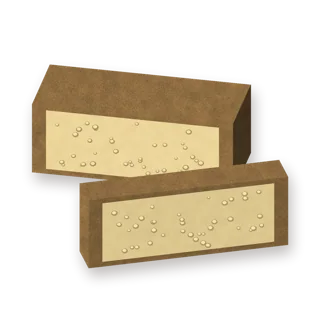
PATCow milk, pasteurisedSemi, hardAlso Formaggio originale di Dobbiaco
Toblacher Stangenkäse is a bar-shaped cut cheese made in Toblach in the Pustertal and listed as a traditional agri-food product (PAT). Italian Wikipedia says it was born of the need to use surplus milk with a cheese that could be ripened. The Sennerei Drei Zinnen, which makes it, calls it its best-known product: a semi-hard cheese with 45 percent fat in the dry matter, ripened about six weeks, with an edible rind and a mild-sour taste. A bar measures 35 x 13 x 13 cm and weighs about 5.5 kg. The dairy sells the bar and a Gold Edition made from hay milk in its Toblach and Innichen shops and in its online shop.
Taste: The Sennerei Drei Zinnen describes a tender but sliceable paste with pea-sized holes and cracks, a mild-sour flavour and an edible rind; Italian Wikipedia calls it sweet and pleasant, and says the paste melts almost like mozzarella.
Ageing: about 6 weeks
Made in: Toblach (Dobbiaco) in the Hochpustertal
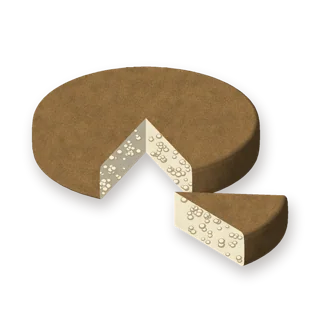
PATCow milk, pasteurisedSemi, hardAlso Formaggio di montagna di Sesto
Sextner Almkäse is a full-fat cut cheese with about 50 percent fat in the dry matter, made in Sexten from pasteurised, GMO-free milk of the village's mountain farms. It appears on the Italian list of traditional agri-food products as the mountain cheese of Sesto. The Käserei Sexten, a cooperative working since 1926, says the cheese shows its full qualities after at least eight weeks of ripening. The cut is smooth and ivory to straw yellow, with small round holes. The dairy also makes a Sextner Graukäse of about 1 percent fat in the dry matter.
Taste: The dairy calls the paste very soft and supple, with a smell and taste from mild to aromatic and spicy, and stresses its soft, supple texture above all.
Ageing: 8 weeks minimum
Made in: Sexten (Sesto) in the Hochpustertal, from the milk of Sexten mountain farms
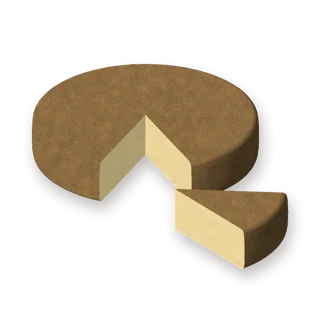
PATCow milkSemi, softAlso Formaggio contadino semigrasso di Lagundo
Algunder Bauernkäse halbfett, the semi-fat farmhouse cheese of Algund, is on the Italian list of traditional agri-food products. The Sennerei Algund, a cooperative founded in 1899, makes it from skimmed and whole cow's milk delivered by 52 mountain farms between 800 and 1,500 m around Algund, Partschins, Plaus, Marling and Naturns. Its data sheet gives a wheel of about 7 kg with 20 percent fat (35 percent in the dry matter) and states that it is lactose free.
Taste: The Sennerei Algund describes a mild to slightly spicy flavour and a paste that slices softly but does not run. The data sheet lists 26.9 g of protein and 1.5 g of salt per 100 g.
Made in: Algund and the neighbouring municipalities of Partschins, Plaus, Marling and Naturns near Meran
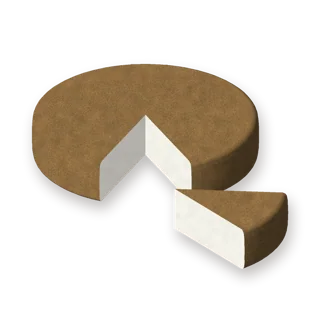
PATGoat milkSemi, softAlso Caprino di Lagundo
Algunder Ziegenkäse is a full-fat goat's milk cheese of the Sennerei Algund, listed among Italy's traditional agri-food products (PAT) as the goat cheese of Lagundo. The South Tyrol dairy federation says the cooperative processes just under 3 million litres of cow's milk and more than 300,000 litres of goat's milk a year. Its data sheet gives a loaf of about 1 kg, a ripening time of about 10 days and 22 percent fat (45 percent in the dry matter).
Taste: The Sennerei Algund calls the flavour characteristic, a little sharp when fully ripe but not unpleasant, in a paste that is soft to semi-firm yet compact.
Ageing: about 10 days
Made in: Algund near Meran, from goat's milk of South Tyrol
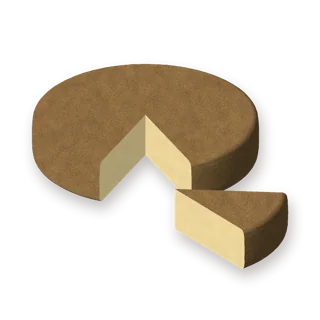
PATCow milkSemi, softAlso Formaggio magro Aschbacher
Aschbacher Magerkäse is the lean cut cheese of the Sennerei Algund and shares its name with Aschbach, one of the mountain hamlets whose farms supply the dairy. It is on Italy's list of traditional agri-food products (PAT). The data sheet gives a loaf of about 6 kg made from skimmed and whole cow's milk, with 8 percent fat (15 percent in the dry matter) and 35.4 g of protein per 100 g.
Taste: The Sennerei Algund describes a mild, faintly sour, clean and specific taste in a paste that slices softly but does not run. The data sheet lists 2.2 g of salt per 100 g.
Made in: Algund near Meran, named for the mountain hamlet of Aschbach
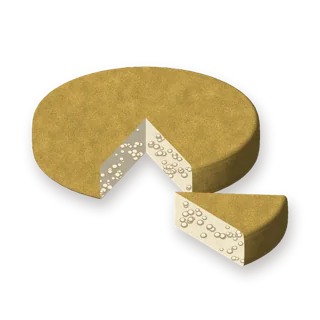
PATCow milkSemi, hardAlso Formaggio da taglio Pusteria
Pustertaler is the cut cheese Mila has sold since 1974, which the cooperative calls a Urgestein, a bedrock of its range. The Italian PAT register lists it as Schnittkäse Pustertaler. The rind is dark yellow to slightly reddish and can be eaten; the paste is yellowish-white with pea-sized holes. Mila's nutrition table gives 30 g fat and 24 g protein per 100 g, and it describes the cheese as naturally lactose free, under 0.1 g per 100 g.
Taste: Mila describes a supple, elegant consistency and a pleasantly mild-aromatic taste. It serves the cheese with speck or apples.
Made in: Pustertal, from the milk of South Tyrolean mountain farms
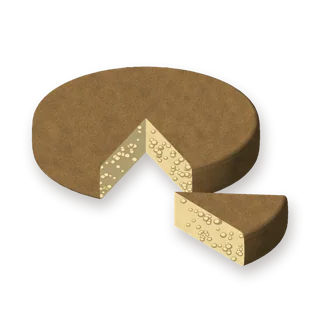
PATCow milkSemi, hardAlso Formaggio da taglio Monte Maria
Marienberger takes its name from Marienberg abbey, which stands high above Burgeis in the upper Vinschgau, and is listed in Italy's register of traditional agri-food products as Schnittkäse Marienberger. Mila describes a firm, rough rind that can be eaten around a light to straw yellow paste with pea-sized holes, compact but soft and supple on the palate. Its table gives 30 g fat and 23 g protein per 100 g, and Mila says the cheese is naturally lactose free and tagged mild.
Taste: Mila describes a fresh, milky aroma and calls it a very harmonious, balanced cheese. Its own recipe serves it over jacket potatoes with leek cream and truffle.
Made in: Upper Vinschgau, named for Marienberg abbey above Burgeis
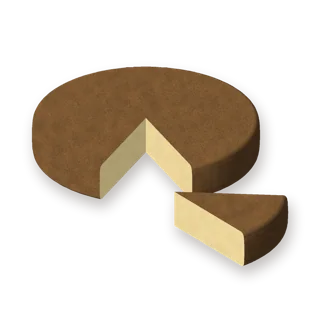
PATCow milkSemi, hardAlso Formaggio Ortler
Ortler is named for the Ortler, the highest mountain of South Tyrol, and appears on the Italian list of traditional agri-food products. Mila describes a firm, dark brown, waxy rind around a light to straw yellow paste with cracks and slits instead of round holes. The paste is compact yet supple and slightly crumbly. Mila's table gives 34 g fat and 24 g protein per 100 g, and its page does not mark the rind as edible.
Taste: Mila describes milky, nutty aromas with light pistachio notes and a pleasantly piquant spice. It says the cheese goes very well with sesame.
Made in: South Tyrol, named for the Ortler, the province's highest mountain
PATCow milkSemi, hardAlso Formaggio al taglio Venosta
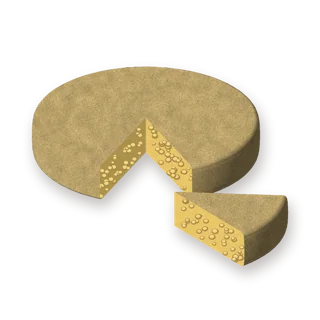
Vinschger is the cut cheese of the Vinschgau, the upper Adige valley in western South Tyrol, and is on Italy's list of traditional agri-food products as Schnittkäse Vinschger. Mila describes a firm, straw yellow rind around a deep yellow paste with an occasional pea-sized round hole. The nutrition table gives 30 g fat and 23 g protein per 100 g, and Mila says the finish is strong and the complex flavours linger on the palate.
Taste: Mila describes an intense, complex flavour with light fruit and notes of grass and hay, in a supple melting paste with a long, strong finish.
Made in: Vinschgau (Val Venosta), South Tyrol
PATCow milkSemi, hardAlso Formaggio da taglio Dolomitenkönig
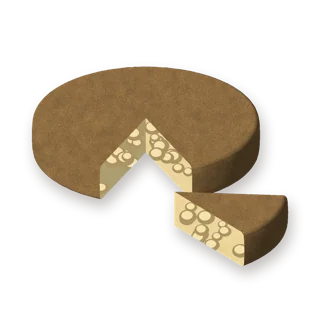
Dolomitenkönig, the Dolomite king, is on Italy's list of traditional agri-food products as Schnittkäse Dolomitenkönig. Mila describes a firm, slightly rough rind that can be eaten around a light to straw yellow paste with cherry-sized holes, compact but soft and supple. The nutrition table gives 27 g fat and 27 g protein per 100 g, and the smell is complex and faintly sweet.
Taste: Mila describes a nutty, spicy aroma with fine honey notes, developing fully on the palate.
Made in: South Tyrol, from mountain milk
PATCow milkHardAlso Formaggio duro Alta Badia
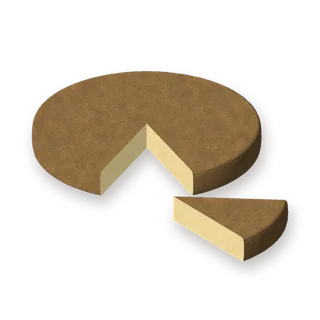
Alta Badia is a hard cheese named for the Ladin-speaking Dolomite valley and listed in Italy's register of traditional agri-food products as Hartkäse Alta Badia. Mila describes a firm, dry, rustic rind around a straw yellow paste with no holes, and says it has one of the longest ripening times of its cheeses, without giving a figure. The nutrition table gives 32 g fat, 26 g protein and 1.8 g salt per 100 g.
Taste: Mila describes an intense, complex flavour with milky and toasted notes and a trace of potato, in a short, firm yet melting paste.
Ageing: one of the longest ripening times in Mila's range
Made in: South Tyrol, named for the Alta Badia valley of the Dolomites