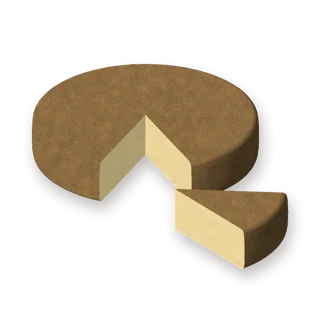
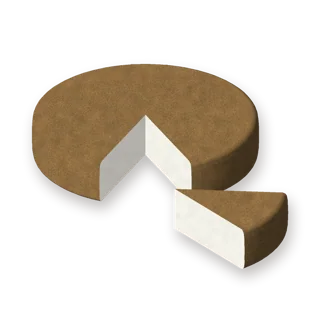
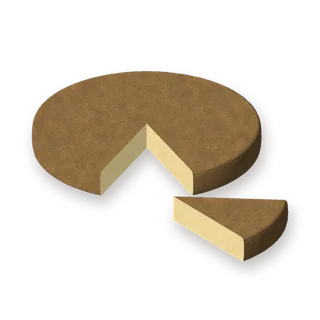
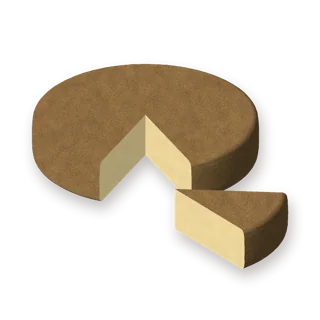
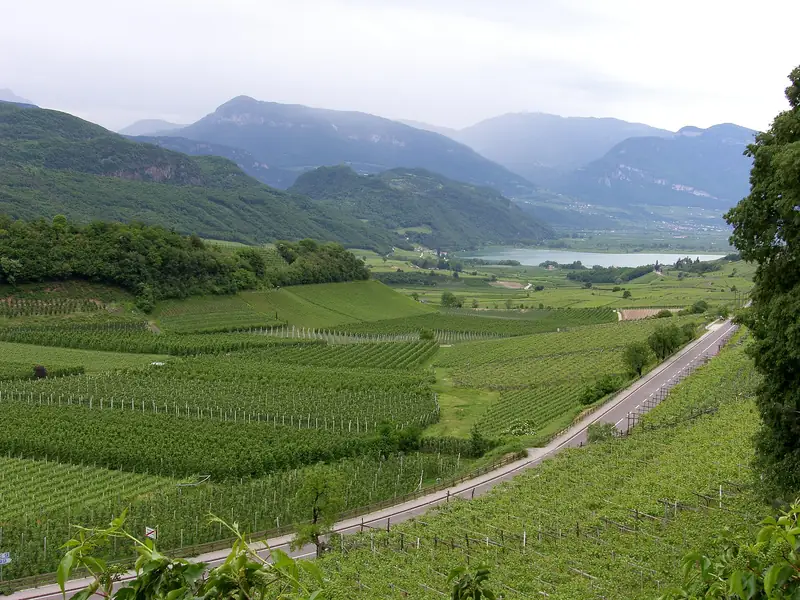
A cow's milk cheese from South Tyrol, above all the Ahrntal and its side valleys; the Slow Food presidium covers the Tures and Aurina valleys from Gais to Kasern with Mühlwald, Lappach, Weissenbach and Rein, and dairies in the Hochpustertal make it too.
Graukäse, grey cheese, is a sour-milk cheese of the Tyrolean Alps made from the skim milk left after butter-making and curdled by acidification, with no rennet. It is so lean that fat in the dry matter does not exceed 2 percent. In South Tyrol it belongs above all to the Ahrntal and its side valleys, where the Valle Aurina Graukäse is a Slow Food presidium; Slow Food traces the first written mention to the 1325 registers of Sonnenburg convent. Grey-green moulds grow during ripening and the shape is irregular. Italy lists it as a traditional agri-food product (PAT), and Slow Food gives the production season as June to September.
Made in: South Tyrol, above all the Ahrntal and its side valleys; the Slow Food presidium covers the Tures and Aurina valleys from Gais to Kasern with Mühlwald, Lappach, Weissenbach and Rein, and dairies in the Hochpustertal make it too
On the plate
Slow Food describes a strong, penetrating smell and a bitter note that grows with ripeness, in a marbled paste with a chalk-white core that turns yellow and greasy. It is classically eaten in pieces dressed with oil, wine vinegar and thinly sliced onion.
Rind: none, eaten fresh
Wine and cheese
What to pour with Graukäse
Valle Isarco Sylvaner Alto Adige
Our pick
Slow Food describes a lean cheese with a bitter note that grows with ripeness, classically dressed with oil, wine vinegar and onion. Sylvaner's high acidity can stand next to the vinegar, and its fruit and mineral savour soften the bitterness.
Cooperative dairy in Toblach whose show dairy has glass walls onto the cheese room and the ripening cellar, with a museum, shop and bistro in the same building. It makes Toblacher Stangenkäse among about twenty cheeses, from the milk of about 120 farms.
Family farm dairy at 1,300 m in Ahornach, keeping 10 cows. A producer of Ahrntaler Graukäse (named by Slow Food) and of the cone-shaped Graukäse Ziggolan, with butter and a show dairy.
Village dairy working since 1926, taking milk from nearly 60 farms above 1,300 m. Its shop sits at the production site and opens Monday to Saturday all year; it makes Sextner Almkäse, Bergkäse, Stangenkäse and Graukäse.
Farm dairy in Mühlwald named by Slow Food among the producers of Valle Aurina Graukäse; the Ahrntal tourist board lists it as open all year, selling butter, yoghurt and other cheeses besides the Graukäse.
Affineur's shop founded in 1994 by Hansi Baumgartner, a trained cook, which selects cheeses from small dairies and finishes them, ripening them in a former military bunker. The counter in Vahrn offers tastings of 12 cheeses (EUR 24) or 15 (EUR 30), with drinks charged extra.
Pur Südtirol's first market, in the Meran Kurhaus since 2010. A cheese sommelier, a wine academy graduate and a meat sommelier advise; the speck ripening cellar is downstairs, and there is a wine bar and a sunny terrace on one of Meran's shopping streets.
Mila's shop in Bruneck, where its cheese dairy is, with the whole range and other South Tyrolean specialities. The Senni Bar at the same address opens at 6:00 on weekdays and from 7:00 to 13:00 on Sunday, when the shop lists no hours.
Branch of the Sennerei Drei Zinnen at Burgweg 1, a few steps from Innichen's pedestrian zone and station. It is closed on Sunday and on Thursday afternoon, and can be reached on +39 0474 913317.
FairSand in Taufers, Ahrntalthird weekend of March per the Ahrntal tourist board, in the years it is held (ONAF calls it biennial); the 16th edition was held 13 to 15 March 2026
Cheese market and festival in the Ahrntal's main village, with producers from South Tyrol and beyond, a cooking arena and tastings run with Slow Food. ONAF calls it biennial. The 16th edition was held 13 to 15 March 2026.
TourToblach, Hochpustertalabout 1 hour for a guided tour, about 90 minutes with a tasting
Museum, production area and ripening cellar behind glass. Self-guided in opening hours, with cheese being made Tuesday to Friday until about 13:00; public guided tours are paused until Tuesday 29 December 2026, groups of 15 or more on request.
FairLuttach and Steinhaus, Ahrntalrecurring, held in September (the 9th edition ran 5 to 20 September 2026, opening in a tent in Luttach and closing with a dinner in Steinhaus)
Two weeks of Graukäse: an opening festival with market and tastings, 12 participating businesses, producer visits and a closing five-course dinner by registration. The 9th edition was held in September 2026.
Tasting of the Eggemoa raw-milk cheeses, starting with the mild Candidum and moving to the larch-needle and alpine-herb cheeses, rind included, with advice on which drink fits. Reserve through the form on its website; no dates or price are published.
A guided tasting at the Algund dairy where up to 16 visitors make their own cheese under staff guidance and take it home, and taste the dairy's cheeses. The page gives no dates, price or booking link and names no season, so telephone +39 0473 448710 to arrange it.
RouteMoos, Sextenroute 3.7 km, 55 minutes for the walk there and back, as given by the tourist board
Family theme trail on a forest path beside a stream, with stations on how milk becomes cheese and on local specialities. It ends at the Käserei Sexten at 1,310 m, where the dairy sells its cheese. The tourist board gives no season.
Graukäse: questions
What is Graukäse made from?
Slow Food says it is made with the milk left over from butter-making, curdled by acidification without rennet, so the fat in the dry matter stays under 2 percent.
How is it traditionally eaten?
Slow Food gives the classic way as small pieces dressed with seed or olive oil, wine vinegar and a little thin onion. The Käserei Sexten page also names Pressknödel (cheese dumplings) as a use.
Does it have a rind?
Slow Food and the Ahrntal tourist board both say it has no rind; grey-green mould forms on the surface as it ripens. Producers differ, and the Moarhof describes a thin ripened outer layer around a white, curdy core.
Is it protected?
Italy lists South Tyrol Graukäse as a traditional agri-food product (PAT), and Slow Food runs a presidium for the Valle Aurina version. German Wikipedia notes that Tiroler Graukäse holds an EU protected designation of origin, citing the Austrian register; that designation covers the cheese of the Austrian state of Tyrol, not South Tyrol.