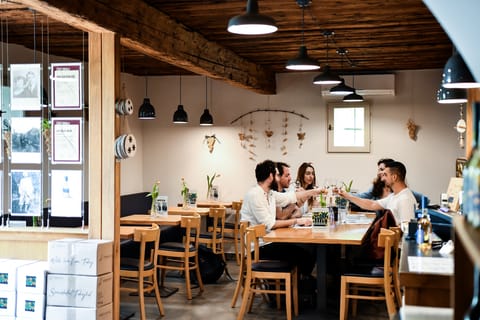
A guide to cheese farms in Tokaj.

Cheese Farms in Tokaj

Tokaji Sajt ★ 4.2

Tokaj townDairyScheduled tours

Cheese maker and shop on Petőfi út in Tokaj; its Facebook page shows it smoking cheeses and selling parenyica, ostorszíj and görcs, and it ran cheese-making afternoons in 2025.

Cheeses: Parenyica

Visiting: cheese shop on Petőfi út (Tokaji Sajtozó), cheese-making afternoons, held on six Saturdays from April to September 2025

Mádi Sajtmanufaktúra (Mádi Sajt) ★ 4.1

MádDairyBy appointment

Family cheese workshop on a narrow Mád street, founded in 2010; its semi-hard cheese ripens in a cellar and is wiped weekly with salted apricot brandy.

Cheeses: semi-hard cellar-ripened cheese, cheese bonbons rolled in spices or seeds, cheesecake of thick yoghurt with blue cheese and aszú wine jelly

Visiting: cheeses can be tasted and bought at the workshop, group cheese tastings for 10 to 30 people

Zempléni Sajt ★ 4.0

TarcalDairyBy appointment

Hand-made cheese from its own cows' milk in Tarcal, at the foot of the Tokaj wine region, ripened 3 to 8 weeks; a small shop at the workshop, and web orders collected by appointment.

Cheeses: Gomolya, Zempléner, an Emmental-style cheese, Hegyaljai semi-hard cheese, smoked cheese, white-mould soft cheese, Camembert style, herb and spice cheeses (thyme, rose pepper, clover)

Visiting: small shop at the workshop, web orders collected at the dairy at a time agreed in advance, webshop with courier delivery across Hungary
Book wine experiences in Tokaj

See all 35 bookable experiences in Tokaj

Cheese Farms in Tokaj, FAQ

Is the parenyica made in Tokaj the protected Slovak cheese?

No. Slovenská parenica is a protected geographical indication for cheese made in Slovakia, entered in the EU register on 11 July 2008. Tokaji Sajt in Tokaj sells its own cheese as parenyica.

What milk is parenyica made from?

The Hungarian HÍR collection of traditional foods says it was once made from raw sheep's milk and is now made mostly from cow's milk. Hungarian Wikipedia, describing the Slovak cheese, says the sheep's milk share must be at least 50 percent.

How big is a roll?

The HÍR collection gives about 0.3 kg for a roll 7 to 8 cm across, wound from a ribbon 6 to 7 cm wide. Slovak and English Wikipedia give about 100 g for a typical Slovak roll.

How is traditional gomolya made?

Per the HÍR collection, rennet was stirred into warmed milk, the curd was broken after an hour to free the whey and poured through a loose-woven cloth whose size set the size of the cheese, then left to drip and dried on a cheese table or pressed. Today it is salted and drained to its final shape in cloth.

Can you buy gomolya in the Tokaj area?

Zempléni Sajt in Tarcal lists a grill gomolya on its webshop in 250 g packs, sent vacuum-packed; its terms of sale also allow collection at the dairy at a time agreed in advance.

← Back to Tokaj wine guide