Key eras
Roman-era viticulture in Pannonia, 1st-4th century AD
1st to 4th century AD
Roman legions planted vines in Pannonia, the province encompassing present-day western and central Hungary, from the 1st century AD. The volcanic foothills of the Zemplén mountains at the confluence of the Tisza and Bodrog rivers already attracted viticultural settlement. Ampelographic traces and Roman-era wine vessels discovered in the region confirm an unbroken vine presence predating Magyar arrival by nearly a millennium.
References to Pannonian viticulture appear in Roman agricultural texts and are documented in Hungarian archaeological surveys. The Tokaj wine region's cultural heritage application to UNESCO cites the Roman-era vine presence as the earliest layer of the region's viticultural record.
Magyar settlement and vine continuity, 9th century
895-1000
Magyar tribes under Arpad crossed the Carpathians and settled the Pannonian basin from 895. The written Magyar land-grant documents from the 10th and 11th centuries mention vineyards in the Zemplén hills, confirming that the Magyar settlers adopted and maintained the existing vine culture rather than starting afresh. The Benedictine Abbey of Sárospatak, founded in the 10th century, was among the first to record vineyard ownership in the Tokaj foothills.
Hungarian monastic records and the Tokaj Wine Region's UNESCO nomination dossier cite 10th-century vineyards in the Zemplén range as evidence of viticultural continuity from the pre-Magyar era through the Arpad dynasty.
Mongol invasion and Italian vine-grower resettlement, 1241
1241-1270
The Mongol invasion of 1241 devastated the Hungarian population and its vineyard workforce. King Béla IV subsequently invited Italian, German and Flemish vine-growers to resettle the Hegyalja hills.
The arrival of Italian vine-growers after 1241 is documented in Hungarian medieval chronicles and referenced in the Tokaj UNESCO nomination dossier. The Italian connection to Furmint's ampelographic origins is noted in regional wine history by researchers at the University of Pécs.
First documented Aszú, late 16th century
1571-1600
The first written reference to Tokaji Aszú, the noble-rot botrytised sweet wine that would define the region globally, is attributed to a liturgical sermon recorded at Sárospatak.
Szepsi Laczkó Máté's account is reproduced in Hungarian wine-history scholarship and cited by Royal Tokaji and other producers' history pages. The 1571 attribution is the conventional date cited by the Tokaj Wine Region Council, though some historians place the documented emergence slightly later in the 16th century.
Rákóczi family ascendancy and Bodrog castle as regional wine centre, 17th century
1600-1700
The Rákóczi family, Princes of Transylvania and the dominant Magyar noble house, controlled the key Tokaj hill estates through the 17th century.
The Rákóczi family's role in Tokaj wine is documented by the Royal Tokaji history page and by Hungarian national heritage records. The 'Vinum Regum' attribution is reproduced widely in regional wine literature, including Disznókő's estate history.
Polish and Russian noble markets, 17th century
1650-1700
Tokaji became the prestige wine of northern European courts and noble households in the second half of the 17th century. Hungarian and Polish wine merchants established regular trade routes from the Hegyalja hills to Krakow and Warsaw. By the late 17th century, Tokaji was regularly shipped to the Russian tsarist court in Moscow and later Saint Petersburg. Peter the Great and his successors maintained a standing order for Tokaji from the Hegyalja, a connection that would deepen through the 18th century.
The Polish and Russian connections of Tokaj are documented in Hungarian trade history and referenced by multiple producer histories including Oremus. The tsarist court connection is cited in the Tokaj Wine Region Council's heritage pages.
Royal decree of Charles VI, 1737: the world's first formal wine appellation
1737
On 28 April 1737, Holy Roman Emperor and Hungarian King Charles VI issued a royal decree formally classifying and delimiting the Tokaj wine region and its vineyards into quality tiers.
The 1737 decree is documented in the Tokaj Wine Region's UNESCO World Heritage nomination and is cited by multiple academic and trade sources as the first formal wine appellation in European history. Royal Tokaji and Disznókő both reference the 1737 classification on their estate history pages.
Tsarist court standing order and peak northern European prestige, 18th century
1700-1800
Through the 18th century, Tokaji's standing at European royal courts reached its height. The Russian tsarist court under Peter the Great and later Catherine the Great maintained a standing order for Tokaji from the Hegyalja, reportedly sending Cossack guards to escort the wine caravans back to Saint Petersburg. The Swedish, Prussian, Austrian and Polish courts also consumed Tokaji as a highly esteemed wine of northern Europe. Voltaire and Goethe both celebrated Tokaji in their writings, the latter praising it in Faust.
The tsarist standing order and Cossack escort story are cited in the Tokaj UNESCO nomination and by producer histories. Voltaire and Goethe references to Tokaji are documented in wine-history scholarship. The period of peak prestige is confirmed in the Tokaj Wine Region Council's heritage material.
Phylloxera arrives in Tokaj, 1873
1873-1900
The phylloxera louse, which had been destroying French vineyards from the 1860s, reached the Tokaj Hegyalja in 1873. Within two decades, most of the region's 5,000-plus hectares of old-vine Furmint, Hárslevelü and Muscat Blanc were destroyed. Replanting on American rootstocks, the standard phylloxera remedy, was completed through the 1880s and 1890s, though the replanting erased many of the oldest pre-phylloxera vine selections that had defined the Primae Classis vineyards.
The 1873 phylloxera arrival in Tokaj is recorded in Hungarian agricultural history archives and referenced by the Tokaj Wine Region Council and by producer histories including Royal Tokaji.
Soviet collectivisation and quality collapse, 1945-1989
1945-1989
After World War II, the communist government nationalised all Hungarian vineyards and wineries. The state-owned enterprise Borkombinát took over the entire Tokaj wine trade and prioritised volume production over quality.
The Soviet collectivisation and Borkombinát era is documented in the histories of Royal Tokaji, Disznókő and Oremus, all of which were founded after privatisation and explicitly position their missions as quality restoration from this period.
Privatisation and Western reinvestment wave, 1990-1995
1990-1995
Hungary's transition from communism in 1989-90 opened the Tokaj wine region to private ownership and foreign investment for the first time since 1945. A wave of major international wine investors arrived: Royal Tokaji was founded in 1990 by British wine writer Hugh Johnson and the team behind Vega Sicilia in Spain; Disznókő was acquired by AXA Millésimes in 1992; Oremus was acquired by Vega Sicilia's Álvarez family in 1993; Hétszőlő was acquired by Suntory of Japan also in the early 1990s. The influx of capital, winemaking expertise and quality focus initiated the modern revival of Tokaj.
The founding histories of Royal Tokaji (1990), Disznókő-AXA (1992) and Oremus-Vega Sicilia (1993) are documented on each producer's history page. Hugh Johnson's involvement in Royal Tokaji is confirmed on the producer's website and in trade press.
UNESCO World Heritage listing, 2002
2002
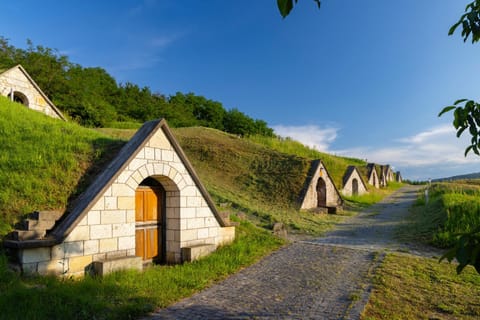
In 2002, the 'Tokaj Wine Region Historic Cultural Landscape' was inscribed on the UNESCO World Heritage List under criteria iii and v, recognising it as an outstanding example of a traditional human settlement and land-use that illustrates the interaction between people and their environment across more than a thousand years of uninterrupted viticulture. The listing encompasses 27 villages, 5,570 hectares of vineyards, and thousands of historic cellars carved into the volcanic tuff of the Zemplén hills.
The UNESCO World Heritage inscription (reference 1063) is documented on the WHC official website with the full nomination statement and criteria justification.
István Szepsy pioneers single-vineyard dry Furmint, 2000s
2000-2010
In the early 2000s, István Szepsy, widely regarded as Tokaj's leading individual producer, began championing single-vineyard dry Furmint bottlings at a time when Tokaj's identity was still almost entirely known for Aszú. His Betsek, Úrágya and Nyulászó vineyard-designated dry Furmints demonstrated that the Furmint grape could produce compelling dry white wines of mineral precision and ageing potential comparable to white Burgundy or Alsace, fundamentally repositioning Tokaj's range for a global market that was moving away from sweet wine.
Szepsy's role in the dry Furmint renaissance is documented in Decanter, Wine Enthusiast and Jancis Robinson's Oxford Companion to Wine. His estate at Mád is the reference point cited by all subsequent dry Furmint producers.
2013 Aszú reform: five puttonyos minimum
2013
In 2013, Hungarian wine law was amended to raise the minimum sweetness threshold for wine labelled as Tokaji Aszú. The former 3 puttonyos and 4 puttonyos designations were retired; Aszú must now carry a minimum 5 puttonyos level (corresponding to a minimum of 120 g/L residual sugar). The Aszúeszencia category, for wines above 450 g/L, was also reformulated into the existing Eszencia category. The reform was designed to concentrate the Aszú name on wines of genuine depth and complexity.
The 2013 reform is documented by the National Council of Wine Communities of Hungary and referenced by all major Tokaj producers including Royal Tokaji and Disznókő on their wine classification pages.
Natural wine wave: Bott Pince and Pendits, 2010s
2010-2020
The 2010s saw a new generation of small producers in Tokaj embrace low-intervention winemaking, inspired by the natural wine movement in France and Georgia.
Bott Pince and Pendits are profiled in the natural wine press including Raisin.app and feature in international wine media coverage of Hungarian natural wine. Both producers are documented as active estates in Mád.
Furmint February: the global dry Furmint celebration, 2010s
2013-present
Furmint February began as a Budapest-centred event bringing together Tokaj producers and Hungarian wine bars every January and February to champion dry Furmint as an internationally recognised dry white wine.
Furmint February is documented on the Hungarian Wine Marketing Agency (HPBT) communications and is covered annually in Decanter and Wine-Searcher editorial features.
Single-vineyard and dulo classification revival, 2010s-2020s
2010-2026
Building on the 1737 vineyard classification, a generation of Tokaj producers led by Szepsy, Royal Tokaji, Disznókő and Holdvölgy began releasing single-vineyard ('dulo') designated wines with increasing consistency and transparency. Named sites including Nyulászó, Betsek, Úrágya, Mézes Mály, Király and Szt. Tamás in Mád became internationally recognised as top-tier Furmint terroir sites. The dulo revival positioned Tokaj alongside Burgundy and the Mosel as a region where vineyard identity is a primary axis of quality communication.
The dulo revival and named vineyard bottlings are documented in Royal Tokaji's wine range, Holdvölgy's estate pages, and in Jancis Robinson's Oxford Companion to Wine (Furmint entry). Szepsy's single-vineyard program is covered in multiple Decanter features.
Hárslevelü and Sárga Muskotály: the secondary varietals of Tokaj
16th century-present
While Furmint is Tokaj's defining grape, the region's Aszú blends have always incorporated Hárslevelü (Linden Leaf), which contributes floral and spice complexity, and Sárga Muskotály (Yellow Muscat), which adds aromatic lift. Both varieties are covered under the Tokaj Hegyalja PDO and appear in varying proportions across producers' Aszú and Szamorodni releases. Hárslevelü is increasingly bottled as a single-variety dry wine by producers seeking to differentiate from Furmint's mineral austerity.
Hárslevelü and Sárga Muskotály as approved Tokaj varieties are documented in the Hungarian wine law gazette and confirmed on producer pages including Oremus, Royal Tokaji and Disznókő.
Eszencia: the concentrated nectar tradition
17th century-present
Eszencia (Essence) is Tokaj's rarest production category: the free-run juice that weeps from piles of botrytised Aszú grapes under their own weight, without any pressing.
Eszencia is documented by Royal Tokaji, Disznókő and Oremus on their wine range pages and is described in detail in the Oxford Companion to Wine and in the UNESCO Tokaj World Heritage nomination.
Climate change and harvest timing shift, 2010s-2020s
2010-2026
The Tokaj wine region has documented consistent warming over the past two decades, with average temperatures rising 1.5-2°C since the 1980s.
The climate change impact on Tokaj harvest timing is discussed by winemakers in Decanter's Tokaj vintage reports and in academic viticulture papers from Hungarian research institutes. The 2017 botrytis failure is documented in producer vintage notes from Royal Tokaji and Disznókő.