When to visit Burgundy: harvest, en primeur and the calendar that shapes a cellar visit.
Spring
- Grands Jours de Bourgogne, March of even years (March):
Every second March the entire region opens for the Grands Jours de Bourgogne, a five-day professional tasting marathon from Chablis to the Maconnais.
What to taste: ['Latest-vintage Grand Cru and Premier Cru releases', 'Appellation-by-appellation flights', 'New-release Chablis']
- Budbreak and frost watch, April (April):
Budbreak arrives in April and with it the threat of spring frost, a recurring danger on the Cote d'Or that has cut yields hard in recent vintages. Growers light candles and run wind machines through cold dawns to protect the fragile new shoots.
What to taste: ['Recently bottled village whites', 'Spring-fresh Aligote', 'Cremant de Bourgogne as an aperitif']
Summer
- Flowering and fruit set, June (June):
Flowering through June fixes the size of the crop, with roughly a hundred days from flowering to harvest a rule of thumb on the Cote d'Or. Warm settled weather at flowering points to a generous vintage; rain and coulure thin the bunches.
What to taste: ['Chilled village whites in the vineyard', 'Bourgogne Aligote', 'Light Cote de Beaune reds']
- Peak-season cellar visits, July to August (July):
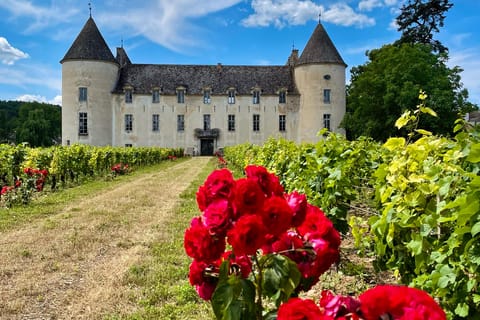
High summer is the busiest visitor window on the Route des Grands Crus from Dijon to Santenay. The vines are in full leaf, the Cite des Climats centres run tastings, and Beaune's courtyards fill, though many small domaines slow down for August holidays.
What to taste: ['Route des Grands Crus tasting flights', 'Cite des Climats guided tastings', 'Cremant de Bourgogne and white Burgundy']
- Veraison, late August (August):
In late August the Pinot Noir berries colour up at veraison and the Chardonnay softens, the last stretch before harvest. Growers walk the rows tasting for ripeness and removing green bunches, fine-tuning the picking date.
What to taste: ['Estate barrel samples of the prior vintage', 'White Burgundy on the terrace', 'Rose de Marsannay']
Autumn
- Vendange on the Cote d'Or, September (September):
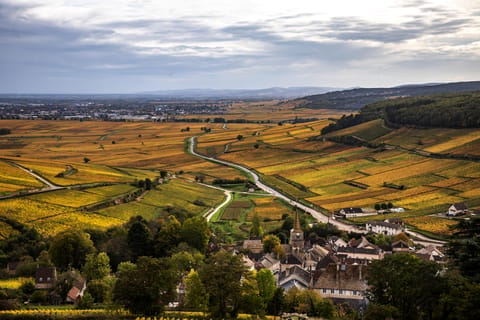
Harvest sweeps the Cote d'Or in September, whites first in the Cote de Beaune then Pinot Noir across the Cote de Nuits. Recent warm vintages have pushed picking earlier, sometimes into late August, and the villages buzz with pickers and crushing must.
What to taste: ['Cellar-side fermenting must on private visits', 'Last-vintage village reds', 'Just-pressed white juice']
- Harvest in Chablis and the Maconnais, September (September):
Chablis in the north and the Maconnais in the south pick their Chardonnay through September. Cool northern Chablis often finishes a touch later than the warmer Maconnais, where Pouilly-Fuisse and Saint-Veran fruit comes in under the Roche de Solutre.
What to taste: ['Chablis Premier Cru from cooler vintages', 'Pouilly-Fuisse and Saint-Veran', 'Macon-Villages whites']
- Fete des vins de Chablis, late October (October):
On the fourth weekend of October the town of Chablis baptises its new vintage. Around 40 producers of Chablis and the Grand Auxerrois pour every tier from Petit Chablis to Grand Cru, alongside a brotherhood induction and walks through the vines.
What to taste: ['Petit Chablis', 'Chablis Premier Cru', 'Chablis Grand Cru']
- Les Trois Glorieuses and the Hospices auction, November (November):
The third weekend of November is the climax of the Burgundian calendar: the Saturday Tastevin banquet at Clos de Vougeot, the Sunday Hospices de Beaune charity auction in the Halles de Beaune, and the Monday Paulee de Meursault harvest lunch.
What to taste: ['Hospices de Beaune barrel cuvees', 'Older white Burgundy poured at the Paulee', 'Cote de Nuits Grand Cru at the Tastevin banquet']
- Beaujolais Nouveau release, third Thursday of November (November):
Just south of Burgundy proper, the Gamay-based Beaujolais Nouveau is released by law on the third Thursday of November. The same week as the Hospices auction, it is the most visible new-vintage event in greater Burgundy, a young carbonic-maceration red drunk within months.
What to taste: ['Beaujolais Nouveau', 'Beaujolais-Villages Nouveau', 'Cru Beaujolais such as Morgon and Fleurie']
Winter
- Saint-Vincent Tournante, late January (January):
The winegrowers' year opens with the Saint-Vincent Tournante, a two-day festival in honour of the patron saint of vine-growers held each late January in a different Burgundian village.
What to taste: ['Village-level Bourgogne reds and whites from the host village', 'Cremant de Bourgogne', 'Cellar-aged Premier Cru pours']
- Winter pruning across the Cote d'Or, January to February (February):
The deep winter is the pruning season. Across the Cote de Nuits and Cote de Beaune growers walk the rows cutting back canes in the cold, the quiet work that sets each vine's crop for the coming vintage. Cellars are calm and tastings unhurried.
What to taste: ['Library-release village Burgundy', 'Cellar barrel samples by appointment', 'Aligote and Bourgogne Blanc']
Seasonal in Burgundy, FAQ
When is the best time to visit Burgundy for wine?
Peak wine-travel season in Burgundy is spring through autumn, with harvest the standout window.
Do I need an appointment to taste at Burgundy estates?
classified-growth and grand-cru estates require booking days to weeks ahead; smaller family domaines often take walk-ins midweek.
What hours do Burgundy cellars and tasting rooms keep?
most estates open 10:00 to 17:00 by appointment, often closed Sunday and Monday.
How does tipping work at Burgundy tastings?
tipping is not expected at tastings; buying a bottle from the cellar door is the customary thank-you.
What is the one wine to try in Burgundy?
Ask the next local you meet what they would order. Burgundy rewards trust.