Domaine des Brureaux ★ 4.2
One of Chénas's small number of independent producers working the smallest of the ten crus, producing powerful, spicy Gamay from granite and sand soils bordering Moulin-a-Vent.
The estates, domaines and châteaux worth the drive in Beaujolais, from first growths to grower gems.
The estates, domaines and châteaux worth the drive in Beaujolais, from classified growths to grower gems.
One of Chénas's small number of independent producers working the smallest of the ten crus, producing powerful, spicy Gamay from granite and sand soils bordering Moulin-a-Vent.
Saint-Amour estate producing fragrant, cherry-forward Gamay from the northernmost cru, a favourite on Valentines Day menus for its evocative name and approachable style.
Brouilly estate in Saint-Etienne-la-Varenne, one of the six communes of the Brouilly AOC (granted 1938, around 1300 hectares). Produces round, fruit-expressive Gamay from the gently sloping granite terrain of Brouilly.
Brouilly estate in the commune of Saint-Lager, one of the six communes making up the largest of the Beaujolais crus. Produces ripe, generous Gamay from sandy granite.
Morgon estate and spiritual home of the natural Beaujolais movement, producing whole-cluster Gamay with minimal sulfur following Jules Chauvet's method. Marcel died in 2010; the domaine continues.
Tasting: Visits and tastings by appointment; the domaine is a pillar of the natural Beaujolais movement founded on Jules Chauvet's principles.
Signature wines: lapierre-morgon, lapierre-raisins-gaulois
Tip: Book tastings well ahead; allocation wines sell quickly through specialist importers.
Morgon estate anchored on the Cote du Py lieu-dit, a Gang of Four natural pioneer. Jean Foillard studied under Jules Chauvet and has farmed organically for decades.
Tasting: Visits by appointment only. The estate is best known for its Cote du Py parcel.
Signature wines: foillard-morgon-cote-du-py, foillard-morgon-eponym
Tip: The Cote du Py cuvee rewards 3 to 5 years in bottle.
Gang of Four member producing Morgon Vieilles Vignes from old Gamay vines with zero-sulfur philosophy and whole-cluster fermentation. A key reference for natural Beaujolais.
Fourth member of the Gang of Four, farming Morgon with the same minimal-intervention approach shaped by Jules Chauvet. Produces deeply concentrated Gamay from old vines.
Yvon Métras produces Fleurie with uncompromising natural methods from a 5-hectare estate based in Vauxrenard near Fleurie, with old Gamay vines including pre-phylloxera plantings dating to 1898 in the Grille-Midi and La Madone lieux-dits. Tiny production, allocated through specialist importers.
Domaine run by Damien Coquelet (stepson of Jean Foillard) based at Les Bourrons in Vauxrenard. Produces Gamay from Morgon Cote du Py and Chiroubles with the same natural approach as his mentor, started in 2007 at age 19.
Morgon estate producing cuvees from the Cote du Py lieu-dit. Burgaud is known for well-structured Gamay with ageing potential drawn from the schist and iron-rich soils.
Regnié estate at Thulon in Lantignié, farmed under Demeter biodynamic certification since the 1980s, one of the earliest fully certified biodynamic producers in Beaujolais.
Brouilly estate run on natural-wine principles, biodynamic in practice. Jean-Claude Lapalu is a key figure in the Gang of Four orbit, producing vivid, fruit-driven Gamay from granite slopes.
Natural-wine producer working across Régnié and Fleurie, known for transparent, mineral Gamay with whole-cluster character. Julien Sunier trained in Burgundy and brings terroir precision to Beaujolais.
Cote de Brouilly estate operated by the Geoffray family since 1877, sited on the volcanic Mont Brouilly. Produces Cote de Brouilly and Brouilly as well as Beaujolais Blanc.
Tasting: Cellar visits and tastings available; the estate sits on the volcanic Mont Brouilly slope.
Signature wines: thivin-cote-de-brouilly, thivin-brouilly
Tip: The estate's Cote de Brouilly cuvees reflect the volcanic basalt soils of Mont Brouilly distinctively.
Family domaine in Fleurie producing elegant, perfumed Gamay from granite soils with a traditional winemaking approach balancing fruit and structure.
Tasting: By appointment; small family domaine on the granite hills of Fleurie.
Independent Fleurie producer created in 1954 by Rene Berrod, now farmed by Guillaume Ruet. Produces Fleurie and Moulin-a-Vent with traditional methods as member of Vignerons Independants.
Tasting: Visits by appointment at the estate in Fleurie village.
Historic Moulin-a-Vent estate centred on the appellation's landmark windmill lieu-dit, producing age-worthy Gamay from granite and manganese soils.
Tasting: Cellar door and tasting room at the estate near the signature windmill lieu-dit.
Signature wines: chateau-du-moulin-a-vent-grand-cru
Six-generation Despres family estate in Fleurie producing terroir-expressive Gamay from the hillside above the village. Historic estate name drawn from the local Madonna chapel.
Tasting: Family estate open for visits; six-generation Despres family property.
Family estate of the Chermette family at Saint-Vérand, in production since the 17th century. Renamed Domaines Chermette in 2023 when Jean-Etienne Chermette took over from his parents Martine and Pierre-Marie Chermette.
Beaujolais negociant house founded by Georges Duboeuf in 1964 and known for popularising Beaujolais Nouveau globally from the 1970s onward. The Hameau Duboeuf park at Romanèche-Thorins, opened in 1993, is a major wine-tourism draw.
Tasting: The Hameau Duboeuf wine theme park and museum at Romanèche-Thorins is open to visitors; includes cellar tour, flower exhibition and tasting.
Burgundy house Louis Jadot acquired Chateau des Jacques in Moulin-a-Vent, bringing Burgundy winemaking rigour to Beaujolais. Produces single-lieu-dit Gamay cuvees of notable depth.
Tasting: Cellar visits and tastings at Chateau des Jacques in Moulin-a-Vent. Book through Louis Jadot Beaune.
Anne-Sophie Dubois farms eight hectares in the Les Labourons lieu-dit of Fleurie, organically certified with old vines (the oldest over 60 years).
Natural-wine producer based at Le Clachet in Villié-Morgon, working roughly 8 hectares across plots in Quincié and Lantignié. Karim Vionnet trained with Guy Breton and started his own operation in 2006, vinifying Gamay with indigenous yeasts, no added sugar and minimal sulphur through full carbonic maceration.
Micro-negociant based in Cercié, just outside Villié-Morgon. Christophe Pacalet (nephew of Marcel Lapierre) set up his own winery in 1999 and vinifies purchased grapes from multiple Beaujolais appellations including Beaujolais-Villages, Fleurie, Saint-Amour and Moulin-a-Vent, using the Chauvet method (whole bunches, carbonic maceration, no additives).
Small Brouilly and Cote de Brouilly estate at Odenas, on land farmed by the Cotton family since 1856. Pierre Cotton (joined by partner Marine Bonnet in 2020, with the estate now operating as Bonnet-Cotton) reclaimed 1 hectare of Cote de Brouilly in 2014 for his first cuvee; the domaine farms organically and ferments without added sulphur in concrete tanks before ageing in old foudres.
Family estate in Cercié on the slopes of Mont Brouilly, operated by Nicole Chanrion since 1988 and dating to 1861. The domaine farms around 7.5 hectares of Gamay on east- and northeast-facing volcanic schist and diorite mid-slopes, with vineyards planted at 10,000-12,000 vines per hectare and whole-cluster carbonic maceration aged in large oak foudres.
Family domaine in Villié-Morgon farming roughly 7 hectares of old Gamay vines across Morgon lieux-dits Douby, Cote de Py and Delys plus small parcels in Chiroubles and Cote de Brouilly.
Lafont family estate at Lantignié producing Beaujolais since 1840 with parcels across five crus. Jean-Marc Lafont has run the estate since 1985 from 23 hectares of vineyard, working with eco-friendly vine techniques (HVE certified) and producing a recognised Moulin-a-Vent Les Burdelines among the cuvees.
Family domaine on 8 hectares (6 in Fleurie, 1.5 in Morgon, 1.5 in Beaujolais-Villages), certified organic since 2012. Romain Zordan vinified his first vintage in 2012 under the mentorship of Jean-François Ganevat, producing pure, refreshing Gamay with very little added sulphur via long, cool whole-bunch semi-carbonic maceration.
Family estate of the Gelin family at Lancié, the only Beaujolais-Villages commune enclosed between the Morgon, Fleurie and Moulin-a-Vent crus.
Sambardier family estate at Denicé in the southern Beaujolais. Dating from 1850 and now covering 34 hectares across multiple appellations (Beaujolais, Beaujolais-Villages, Brouilly, Juliénas, Moulin-a-Vent, Fleurie and Beaujolais Blanc) farmed across 50 plots ranging from 50 to 100 years old.
Julienas estate producing spicy, full-bodied Gamay from the granite and schist soils of this Saone-et-Loire cru. Traditional producer maintaining the cru's reputation for structured reds.
Historic Julienas producer with old-vine Gamay planted on granite-rich slopes. The Clos du Fief cuvee is among the more structured and age-worthy in the appellation.
Fourth-generation family domaine at Chénas managed by Franck Bessone, named for the granitic soils that define this part of the Beaujolais. The 12-hectare estate produces Moulin-a-Vent, Fleurie, Chénas and Saint-Amour with manual harvests and ageing in oak barrels, casks and cement tanks.
Historic Chiroubles estate established in 1868 by Émile Cheysson, with 26 hectares of vineyards on steep granite slopes and a 17th-century cellar originally built by the monks of Cluny Abbey.
Family domaine in Régnié, the youngest of the ten crus granted AOC status in 1988. Produces fresh, fruit-forward Gamay from granitic-sandy soils on the west-facing slopes of the appellation.
Regnié estate producing straightforward, approachable Gamay from one of the most recently promoted crus. An honest, everyday wine producer anchored in the village tradition.
Historic 17th-century chateau in Odenas with 23 cadastral plots across Brouilly, Cote de Brouilly, Fleurie and Morgon. The estate has produced Beaujolais since 1676; acquired by Christophe Gruy in 2017. The chateau, its formal gardens by Mansart and Le Nôtre, and the walled 108-metre 18th-century cellar are protected monuments.
Tasting: Guided tours of the exterior and gardens (designed by Jules Hardouin-Mansart and André Le Nôtre) ending in the historic 108-metre 18th-century cellar; visits and tastings available.
Family estate at Odenas south of Mont Brouilly, with a winegrowing tradition that traces back to 1752. Sylvie Dufaitre-Genin works 11.65 hectares of Gamay across Brouilly and Cote de Brouilly on granite-dominated soils.
Mee Godard established her domaine in Morgon in February 2013 around three benchmark sites: Corcelette, Grand Cras and Cote du Py. The estate centres on old Gamay vines (some 70 years old) and an oenologist's approach to whole-cluster or partial-destemming fermentation with extended ageing in wood, producing structured Morgon described by Jancis Robinson as 'vivid, intense, defiant, arresting'.
Jean-Paul Brun's 60+ hectare family estate in the southern Beaujolais, started in 1979 with 4 hectares in Charnay. Eschews carbonic maceration in favour of traditional Burgundian vinification with indigenous yeasts and minimal sulphur; produces both classic Gamay cuvees (notably L'Ancien Vieilles Vignes) and unusual old-vine Chardonnay and Pinot Noir.
Fleurie estate on pink granite soils producing perfumed, floral Gamay characteristic of the queen cru. Traditional fermentation in cement and ageing in large old oak.
Family domaine in Fleurie founded by Robert Depardon in 1955 and now in its third generation, working 16 hectares. Produces several Fleurie cuvees plus Morgon, Moulin-à-Vent and Beaujolais Blanc (Chardonnay), with red wines from 100% Gamay.
Small Julienas estate producing spiced, full-flavoured Gamay on the granite and schist slopes of this Saone-et-Loire cru shared between the Rhone and Saone-et-Loire departments.
Moulin-à-Vent estate established in 1907 and expanded over the appellation's terroir. In 2005 Philippe Guérin and his wife added Chiroubles to the holdings, and Élise Guérin now produces a Moulin-à-Vent and a Beaujolais-Villages including the Les Thorins cuvée.
Family domaine making Beaujolais the old-fashioned way since 1935, located just across the road from the signature Moulin-à-Vent windmill. Bernard Diochon succeeded his father in 1967 and appointed Thomas Patenôtre as his successor in 2007. The estate produces a single old-vine Moulin-à-Vent each vintage from vines planted in 1920, 1950 and the 1960s.
Joint project founded in 2014 by Frédéric Lafarge of Domaine Michel Lafarge in Volnay and his wife Chantal (née Vial). Farms 6.29 hectares across Fleurie and a small adjoining parcel in Chiroubles' Bel-Air lieu-dit, biodynamic since the start with vineyard work done manually and horse-ploughing on the steep slopes. Vinifies in the Burgundian style with natural yeasts in open concrete vats, around 25% whole cluster.
Historic estate in Fleurie founded around 1100 by the Benedictine monks of Cluny, covering 12 hectares (5 around the chateau in Fleurie, plus plots in Beaujolais-Villages, Saint-Amour and Moulin-à-Vent).
A single-vineyard Fleurie clos producing consistently floral, silky Gamay from a sheltered granite bowl above the village, a historically documented single-parcel Fleurie clos.
Domaine founded in 2007 by Richard Rottiers at Romanèche-Thorins on 3 hectares of 40-80 year-old vines, now extended to 12 hectares across Moulin-à-Vent, Brouilly and Beaujolais-Villages.
Saint-Amour estate producing aromatic, fresh Gamay from the northernmost cru, historically connected to the Benedictine priory that gave the appellation its name.
Family estate based in the neighbouring Chénas commune, working 20 hectares of vineyards at high altitude across Moulin-à-Vent, Chénas, Saint-Amour, Morgon and Saint-Véran.
Historic medieval chateau dating to the 13th century at Belleville-en-Beaujolais (Saint-Jean-d'Ardières), with a 4-star hotel and spa on site and 80 hectares of vineyards producing six appellations: white, rosé and red Beaujolais, Régnié, Morgon and Brouilly under the Château de Saint-Lager label.
Tasting: The chateau and hotel-restaurant operates full cellar tours, tastings and vineyard walks; estate stay available.
Tip: One of the few wine-tourism estates in Beaujolais with a hotel and restaurant on site.
Julienas estate on mixed granite and schist soils, producing robust, well-structured Gamay with characteristic spice and full fruit of the appellation.
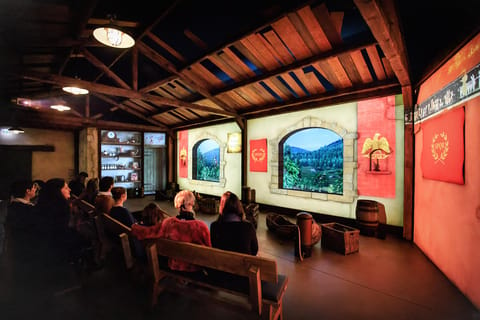
Le Hameau Duboeuf, Europe's 1st vine and wine park! A unique day trip through the world of vines and wine: exhibition rooms, original shows, innovative scenography. An...

Explore the rolling hills of South Beaujolais on a private tour. Visit the medieval village of Oingt, tour a family-run winery, and enjoy a tasting of Beaujolais wines.
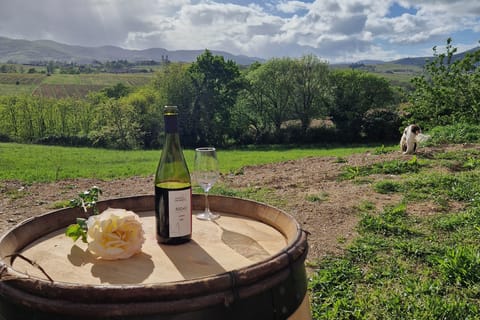
Go on a hike 45 minutes from Lyon to discover Beaujolais, its rolling hills, and its many terroirs. Discover the appellations through a tasting of 4 wines (minimum).
Peak wine-travel season in Beaujolais is spring through autumn, with harvest the standout window.
classified-growth and grand-cru estates require booking days to weeks ahead; smaller family domaines often take walk-ins midweek.
most estates open 10:00 to 17:00 by appointment, often closed Sunday and Monday.
tipping is not expected at tastings; buying a bottle from the cellar door is the customary thank-you.
Ask the next local you meet what they would order. Beaujolais rewards trust.