Gamay Noir a Jus Blanc
the principal grape of Beaujolais and the variety behind all ten crus. Gamay Noir a Jus Blanc accounts for more than 98 per cent of Beaujolais plantings.
The grapes that define Beaujolais: the canonical varietals and how the region expresses them.
The grapes that define Beaujolais: the canonical varietals and how the region expresses them.
the principal grape of Beaujolais and the variety behind all ten crus. Gamay Noir a Jus Blanc accounts for more than 98 per cent of Beaujolais plantings.
Chardonnay is the permitted white grape for Beaujolais Blanc AOC and Beaujolais-Villages Blanc, accounting for a small but growing fraction of the region's production.
Pinot Noir is permitted in Beaujolais under the Coteaux Bourguignons AOC, the declassification overlap classification that bridges Beaujolais and Burgundy.
Aligote appears very occasionally in Beaujolais under the Coteaux Bourguignons AOC overlap, the classification shared with southern Burgundy.
A teinturier mutation of Gamay that produces red juice as well as red skin, in contrast to the standard Gamay Noir a Jus Blanc. Grown in tiny quantities in Beaujolais, it was historically used to add colour to lighter cuvees. Today it is almost entirely absent from commercial production, surviving mainly in old mixed-planting parcels (en foule) alongside standard Gamay. A curiosity of the region's viticultural heritage rather than a commercially significant variety.
A second teinturier mutation of Gamay alongside Gamay de Bouze, producing deeply pigmented red juice. Like Gamay de Bouze, it exists in trace quantities in very old Beaujolais vineyards planted before varietal selection was standardised. Modern winegrowers rarely identify it separately; it appears as an occasional element in en foule (field blend) parcels among the oldest Gamay vines. Its existence is a reminder of pre-clone viticultural diversity in the region.
Melon de Bourgogne, the grape of Muscadet in the Loire Valley, was historically grown in southern Burgundy and the northern fringes of Beaujolais before being effectively banned from both regions by AOC rules.
Not a separate variety but the old-vine expression of Gamay Noir a Jus Blanc, listed here as a distinct entry to reflect its importance in Beaujolais cru winemaking.
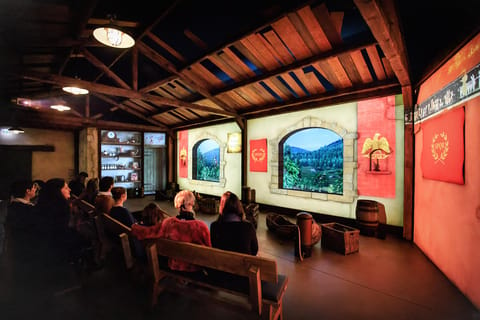
Le Hameau Duboeuf, Europe's 1st vine and wine park! A unique day trip through the world of vines and wine: exhibition rooms, original shows, innovative scenography. An...

Explore the rolling hills of South Beaujolais on a private tour. Visit the medieval village of Oingt, tour a family-run winery, and enjoy a tasting of Beaujolais wines.
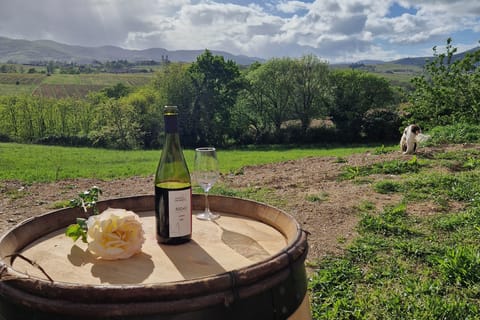
Go on a hike 45 minutes from Lyon to discover Beaujolais, its rolling hills, and its many terroirs. Discover the appellations through a tasting of 4 wines (minimum).
Peak wine-travel season in Beaujolais is spring through autumn, with harvest the standout window.
classified-growth and grand-cru estates require booking days to weeks ahead; smaller family domaines often take walk-ins midweek.
most estates open 10:00 to 17:00 by appointment, often closed Sunday and Monday.
tipping is not expected at tastings; buying a bottle from the cellar door is the customary thank-you.
Ask the next local you meet what they would order. Beaujolais rewards trust.