Key eras
Phoenician and Roman roots, antiquity
1st century BC to 5th century AD
Viticulture reached the upper Ebro through Phoenician trade contacts and was systematised under Rome, which built the road network and amphora trade that moved Ebro-valley wine across Hispania.
The History of Rioja wine summarises Phoenician introduction of vines and the Roman expansion of cultivation in the upper Ebro valley, with surviving rock-cut lagares around San Vicente de la Sonsierra cited as physical evidence.
Medieval monastery viticulture and the Camino de Santiago
10th to 13th century
Benedictine and other monastic houses, anchored at San Millan de la Cogolla, kept viticulture alive through the Middle Ages while the Camino de Santiago carried Rioja wine to pilgrims crossing northern Spain.
Rioja history overviews credit monastic estates around San Millan de la Cogolla and the Camino pilgrim route with sustaining and spreading viticulture through the medieval period.
First documented wine protections, 13th to 17th century
13th to 17th century
From the 13th century onward local statutes protected Rioja wine quality and provenance, and by 1650 a document defended the designation of origin of the wines of the Rioja.
Rioja designation-of-origin histories cite a 1650 document defending the origin of Rioja wines and earlier municipal ordinances regulating quality.
Luciano de Murrieta and the first commercial bodega, 1852
1852 to 1860s
Luciano de Murrieta, later Marques de Murrieta, travelled to Bordeaux, learned barrel-ageing, and on returning established what is generally credited as Rioja's first commercial bodega in 1852, laying the groundwork for the region's modern fine-wine identity.
Berry Bros and Rudd and multiple Rioja histories credit Luciano de Murrieta with founding the first commercial bodega in 1852 after studying Bordeaux methods.
Marques de Riscal and the Medoc Alavesa, 1858
1858
Founded at Elciego in 1858, Marques de Riscal imported Bordeaux grape material and a French oenologist, becoming one of the earliest estates to apply Bordeaux barrique ageing in Rioja Alavesa and helping define the Medoc-influenced regional style.
Rioja histories date the founding of Marques de Riscal to 1858 at Elciego with imported Bordeaux know-how, cited as a pillar of the French-influenced modern style.
The Tudela to Bilbao railway reaches Haro, 1863
1863 to 1880s
Completion of the Tudela to Bilbao railway through Haro in 1863 gave Rioja a fast route to the port of Bilbao and to France. The line is the reason the cluster of bodegas later known as the Barrio de la Estacion grew up beside Haro station.
Inside Rioja documents the Tudela to Bilbao line reaching Haro in 1863 and explains how rail access concentrated bodegas around the station district.
French phylloxera and the Bordeaux influx, 1860s to 1890s
1860s to 1890s
When phylloxera devastated French vineyards from the late 1860s, Bordeaux negociants and winemakers crossed into Rioja to keep producing. They brought barrique ageing and the merchant model that built Haro's reputation, linking Rioja and Bordeaux for over 150 years.
Berry Bros and Rudd and the History of Rioja wine describe Bordeaux negociants moving into Rioja during the French phylloxera crisis and introducing barrel-ageing techniques.
The Barrio de la Estacion bodegas, 1877 to 1901
1877 to 1901
Around Haro station a dense cluster of century-old bodegas took shape: Lopez de Heredia in 1877, CVNE in 1879, Gomez Cruzado in 1886, La Rioja Alta in 1890 and Bodegas Bilbainas in 1901. It is still described as the largest concentration of centenarian wineries in the world.
The Barrio de la Estacion association and Inside Rioja date the founding wineries of the station district and describe it as the world's largest concentration of century-old bodegas.
Barrique ageing and the Crianza to Gran Reserva style
1860s to present
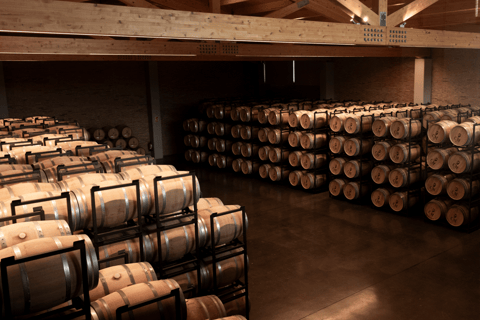
Bordeaux oak ageing reshaped into a uniquely Rioja system of Crianza, Reserva and Gran Reserva, where extended time in 225-litre barrels and bottle gives the silky vanilla-and-leather classic style.
Wine Folly's Rioja classification guide explains the Crianza, Reserva and Gran Reserva ageing tiers that grew from the imported French barrique tradition.
Phylloxera reaches Rioja, around 1899
1899 to 1910s
The louse that had enriched Rioja by ruining France eventually crossed the Ebro around the turn of the century, forcing replanting on American rootstock.
The 15 Bodegas history of Rioja and phylloxera documents the arrival of the pest in Rioja around 1899 and the subsequent replanting on resistant rootstock.
Denominacion de Origen status, 1925
1925
In 1925 Rioja became the first Spanish region granted Denominacion de Origen status, formalising boundaries and quality rules to protect a name that had grown valuable through the export boom. A consejo regulador followed to police the designation.
The Rioja DOCa reference and El Coto's designation history both date Rioja's first DO recognition to 1925, the earliest in Spain.
Lopez de Heredia and the traditional school
1877 to present
Founded in 1877 at Haro station, Lopez de Heredia became the standard-bearer of traditional Rioja: very long American-oak ageing, late releases and a refusal to chase fashion.
Rioja histories and the Barrio de la Estacion association identify Lopez de Heredia, founded 1877, as the most uncompromising traditionalist of the station district.
Elevation to Denominacion de Origen Calificada, 1991
1991
In 1991 Rioja became the first region in Spain awarded the higher Denominacion de Origen Calificada rank, recognising sustained quality and tighter controls. It held that distinction alone in Spain until Priorat joined in 2009.
The Rioja DOCa reference dates the Calificada elevation to 1991, the first in Spain, with Priorat following later.
The alta expresion movement, 1990s
1990s to 2000s
Through the 1990s a wave of producers including Artadi, Roda and Benjamin Romeo broke from long oak ageing to make darker, riper, fruit-forward wines from low-yield old vines, the so-called alta expresion or high-expression style that split Rioja into traditional and modern camps.
Vinous and Spanish Wine Lover essays on Rioja's forking paths describe the alta expresion movement led by Artadi, Roda and Benjamin Romeo in the 1990s.
The traditional houses hold the line: CVNE and La Rioja Alta
1879 to present
While the modernists pushed alta expresion, century-old houses such as CVNE, founded 1879, and La Rioja Alta, founded 1890, kept making patiently aged Reserva and Gran Reserva, anchoring the classic style that still defines Rioja in most export markets.
The Barrio de la Estacion association and Rioja histories date CVNE to 1879 and La Rioja Alta to 1890 as enduring traditionalist houses of the station district.
Vinedos Singulares single-vineyard classification, 2017
2017 to present
From the 2017 harvest the consejo regulador added a provenance pyramid of Vino de Zona, Vino de Municipio and at the top Vinedo Singular, a single-vineyard category requiring old vines, hand harvest and a qualitative tasting. It shifted Rioja's prestige conversation from oak to origin.
The consejo regulador's own Vinedo Singular page and Decanter's panel tasting confirm the 2017 introduction and the single-vineyard requirements.
A living Rioja and Bordeaux relationship
2010s to present
More than 150 years after the phylloxera exchange, Haro and Bordeaux still mark their shared history with joint events, and the barrique remains central to Rioja even as terroir-led single-vineyard wines rise.
BKWine and Berry Bros and Rudd report on Rioja and Bordeaux jointly celebrating their historic ties and the continuing centrality of barrique ageing.
White Rioja and the revival of minor grapes
2000s to present
Alongside the terroir movement, growers revived barrel-fermented Viura whites and long-neglected grapes like Graciano, Maturana and Tempranillo Blanco, broadening Rioja beyond Tempranillo reds and reconnecting with the diversity of its old field-blend vineyards.
World of Fine Wine's white-Rioja survey and Spanish Wine Lover document the revival of barrel-fermented Viura whites and minor varieties such as Graciano and Tempranillo Blanco.