DOPSheep milk, rawSemi, softNatural rind
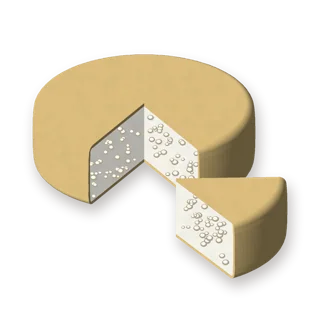
Raw milk from Churra da Terra Quente ewes, known locally as terrinchas, set with animal rennet and drained slowly. The cheese is a low cylinder, 12 to 20 cm across and 3 to 6 cm high, weighing 0.7 to 1.1 kg, under a smooth, pliable, pale straw rind. The area is the Terra Quente and the Douro Superior. The specification points to the Quinta da Terrincha in the Vilariça valley as the source of both the breed's alternative name, terrincha, and the cheese's name. It has been an EU protected designation of origin since Regulation 1107/96 of 1996.
Taste: Mild, clean and characteristic, with an intense aroma that is only slightly astringent. The semi-soft white paste is slightly unctuous and buttery, sometimes yielding where it is cut, with a few small eyes.
Ageing: At least 30 days, at 5 to 12 degrees C and 80 to 90 percent humidity
Made in: Mogadouro, Alfândega da Fé, Torre de Moncorvo, Freixo de Espada à Cinta, Mirandela, Vila Flor, Carrazeda de Ansiães and Vila Nova de Foz Côa, most of Macedo de Cavaleiros and São João da Pesqueira, and parts of Valpaços, Meda and Figueira de Castelo Rodrigo, in the Terra Quente and the Douro Superior (districts of Bragança, Vila Real, Viseu and Guarda)
DOPSheep milk, rawHardNatural rind
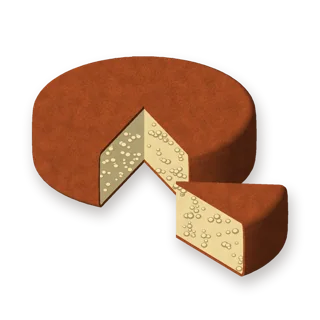
The aged version of Queijo Terrincho DOP, cured for at least 90 days. The specification describes a hard rind, red and sometimes wrinkled, from being rubbed with a paste of paprika extracted in bagaceira brandy or in olive oil; the cheese may also be dipped in olive oil. It is smaller than the young cheese: 10 to 18 cm across, 2 to 6 cm high, 0.5 to 1.0 kg. The paste is hard, close-textured and yellowish, with a few eyes. It falls under the same protected designation of origin as the young cheese, registered in the EU as Queijo Terrincho in 1996.
Taste: Strong and intense, with a balanced mixture of distinctive aromas, according to the specification. The paste is hard and only slightly unctuous, much firmer than the young Terrincho.
Ageing: At least 90 days, at 8 to 14 degrees C and 75 to 85 percent humidity
Made in: Mogadouro, Alfândega da Fé, Torre de Moncorvo, Freixo de Espada à Cinta, Mirandela, Vila Flor, Carrazeda de Ansiães and Vila Nova de Foz Côa, most of Macedo de Cavaleiros and São João da Pesqueira, and parts of Valpaços, Meda and Figueira de Castelo Rodrigo, in the Terra Quente and the Douro Superior (districts of Bragança, Vila Real, Viseu and Guarda)
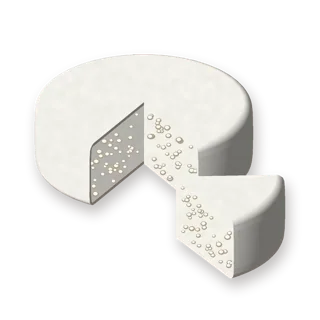
DOP, first protected 1994Goat milk, rawHardNatural rind
Made from raw milk of Serrana goats, set with animal rennet. The curd is drained in moulds under weights or a hand press, then salted and cured for at least 60 days with turning and washing. It is a low cylinder, 12 to 19 cm across and 3 to 6 cm high, 0.6 to 0.9 kg, with a smooth white semi-hard rind and an extra-hard white paste. The area covers ten municipalities of Bragança and Vila Real, in a region where the specification says the Douro basin dominates. LEICRAS, the cooperative in Mirandela that manages the name, dates national recognition to 1994 (Despacho 20/94) and EU registration to 1996 (Regulation 1263/96).
Taste: A pleasant, intense aroma and a clean flavour, usually with a slightly piquant tang. The paste is closed, extra-hard and not buttery, white and uniform, with a few small eyes.
Ageing: At least 60 days, at 5 to 18 degrees C and 70 to 85 percent humidity, with periodic turning and washing
Made in: Ten municipalities of Trás-os-Montes: Mirandela, Macedo de Cavaleiros, Alfândega da Fé, Carrazeda de Ansiães, Vila Flor, Torre de Moncorvo, Freixo de Espada à Cinta and Mogadouro (Bragança), Valpaços and Murça (Vila Real)