Queijaria Amaral ★ 4.3
Cheese shop in Rua de Santo Ildefonso, Porto, trading since 1928 by its own account. Serra da Estrela is its specialty. Its online shop lists an aged Terrincho, marked coming soon in October 2026.
The fromageries and cheese counters in Douro Valley worth a stop.
A guide to cheese shops in Douro Valley.
Cheese shop in Rua de Santo Ildefonso, Porto, trading since 1928 by its own account. Serra da Estrela is its specialty. Its online shop lists an aged Terrincho, marked coming soon in October 2026.
Cheese stall in the Mercado do Bolhão, Porto, trading for more than 40 years by the market's account. It sells Serra da Estrela, Azeitão and island cheeses, artisanal yoghurt and requeijão.

Tradition meets innovation at Calem Cellars in Porto. Join a host on an immersive journey, part museum, part working winery, revealing the art behind winemaking, agein...
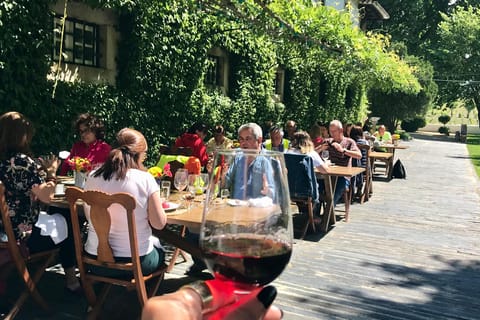
A luxury tour experience in Douro Valley. The walking in vineyardas is a heating time for what comes next. A tasty lunch and wine tasting, in a room designed in detail...
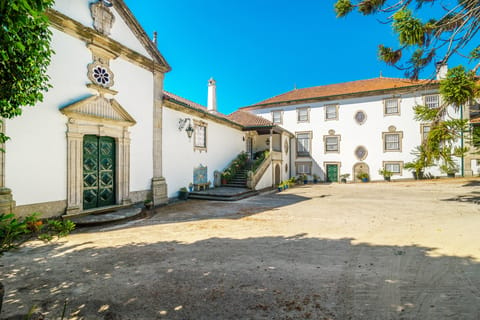
Private estate tour, hear authentic family and Douro history, then enjoy a guided tasting of our estate wines and extra virgin olive oil, followed by a cultural lunch ...
Raw milk from Churra da Terra Quente ewes, set with animal rennet, according to the DOP summary and the 2016 specification published by the Portuguese agriculture directorate (DGADR).
The specification gives 0.7 to 1.1 kg, 12 to 20 cm across and 3 to 6 cm high for the normal size, and a smaller merendeira size of 0.35 to 0.55 kg and 8 to 12 cm across.
At least 30 days at 5 to 12 degrees C. Aged for 90 days or more it becomes Queijo Terrincho Velho, a separate hard, red-rinded version of the same DOP.
In the Terra Quente and Douro Superior of north-eastern Portugal: Mogadouro, Alfândega da Fé, Torre de Moncorvo, Freixo de Espada à Cinta, Mirandela, Vila Flor, Carrazeda de Ansiães and Vila Nova de Foz Côa, most of Macedo de Cavaleiros and São João da Pesqueira, and parts of Valpaços, Meda and Figueira de Castelo Rodrigo.
Velho is aged for at least 90 days instead of 30. The specification gives it a hard, red rind, a hard yellowish paste, a smaller size (0.5 to 1.0 kg, 10 to 18 cm across) and a strong, intense flavour.
The specification says the cheese is rubbed with a paste of paprika extracted in bagaceira brandy or in olive oil, and may also be dipped in olive oil.
At 8 to 14 degrees C and 75 to 85 percent relative humidity, for a minimum of 90 days, according to the 2016 DOP specification.
Raw milk from Serrana goats, set with animal rennet, according to DGADR, the Portuguese agriculture directorate. Its page names the breed's four ecotypes as Transmontano, Jarmelista, Ribatejano and Serra.