Caseificio Gugole shop ★ 4.4
Opened in the 1990s so that people of the Val d'Alpone could buy the Gugole products directly. Open Monday to Saturday with a midday break.
The fromageries and cheese counters in Veneto worth a stop.
A guide to cheese shops in Veneto.
Opened in the 1990s so that people of the Val d'Alpone could buy the Gugole products directly. Open Monday to Saturday with a midday break.
Second shop of La Casara Roncolato, on Corso Vittorio Emanuele in Soave, closed on Sundays.
Shop at the dairy on Via Pennar. Pennar lists two more, Mörar at Via Ceresara 18 in Asiago and Tresché at Cesuna in Roana, and announces one in Vicenza as opening soon.
Dairy shop opened in 1969 beside a bar serving only non-alcoholic drinks, hence Bianco, the white of milk. It stands on the road from the plain towards the Dolomites.
Shop next to the cooperative dairy, rebuilt and enlarged in 2018. Besides cheese it sells a wide range of dairy products.
Opened on 7 June 2014 as the cooperative's second shop. It stocks aged cheeses, fresh mozzarella, ricotta and mascarpone, and truffle and chilli caciottine.
Company shop on Borgo Scroffa in Vicenza, one of seven run by the cooperative; the others are at Bressanvido, Schio, Bassano del Grappa (two), Cittadella and Montecchio Maggiore.
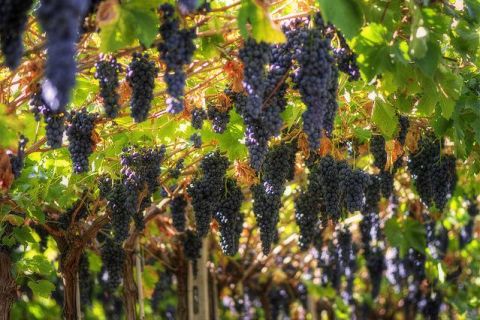
Explore the vineyards of the Valpolicella Valley between Lake Garda and Verona, and taste superb Amarone and Recioto wines with an expert sommelier. Enjoy a scenic dri...

Visit Verona and the Valpolicella wine region on a full-day tour. Enjoy a guided walking tour of Verona, taste Amarone and Valpolicella wines at a family-run winery, a...

Discover the joy of cooking at a historic culinary school in the heart of Verona with fun-loving chefs. Enjoy your meal together and take home an Italian recipes cookb...
Qualigeo describes two types: Fresco (Pressato), made with whole milk and ripened at least 20 days, and Stagionato (d'Allevo), made with partly skimmed milk and aged at least 90 days.
Qualigeo gives the production zone as the province of Vicenza, two bordering areas of Padova and Treviso, and the autonomous province of Trento.
Yes. Qualigeo describes the Fresco type with marked, irregular eyes in a white or slightly straw paste.
Asiago became an Italian denominazione di origine, with a fixed production zone, by presidential decree on 21 December 1978, and an EU DOP in 1996. From 1955 the name had been reserved only as a typical cheese, defined by method but not by place.
Qualigeo gives the label terms: Mezzano is four to ten months, Vecchio ten to fifteen months and Stravecchio over fifteen months of ageing.
A mention allowed when the cheese is made in the mountain area from milk of mountain farms (above 600 m, per Qualigeo). The minimum ageing for the aged type stays at 90 days.
Qualigeo says the aged type is the older one; the fresh Pressato began to be made in the 1920s.
Asiago became an Italian denominazione di origine, with a fixed production zone, by presidential decree on 21 December 1978, and an EU DOP in 1996. From 1955 the name had been reserved only as a typical cheese, defined by method but not by place.