FreshAlso Bibbeliskäs
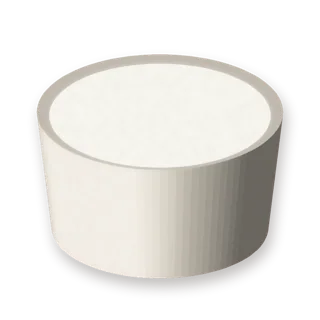
Quark worked with chives, salt and pepper and a little milk and cream, sometimes with onion, shallot or garlic. German Wikipedia calls the name an Alemannic word for quark, leaves its origin open (Bibbeli means a small lump, and also a chick) and says the herb version is widespread in Baden and neighbouring Alsace, served with potatoes or farmhouse bread, often in the warm season. The old base was a dry, crumbly sour-milk white cheese such as the Hofsgrunder Käsle, now rarely sold in Germany. Bio-Hofkäserei Roser in Freiamt sells its Bibiliskäs in the farm shop on Wednesday mornings.
Taste: Fresh and lightly sour from the curd, sharpened by chives and pepper. German Wikipedia calls it a low-fat dish that still brings protein and carbohydrates, with a pleasantly refreshing character.
Ageing: None; eaten fresh
Made in: Baden (Bibbeleskäs in the south, weißer Käs in the north) and across the Rhine in Alsace
g.U., first protected 1997Cow milk, rawSemi, hardNatural rind
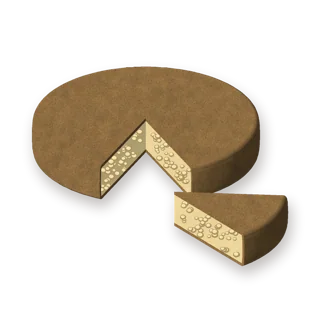
A raw-milk, rind-ripened round cheese, protected as a g.U. (PDO) since 24 January 1997. The EU summary sheet asks for wheels of 15 to 50 kg at production, pea-sized eyes from scattered to sparse, at least the full-fat grade (45 to 49 percent fat in dry matter) and four months' ripening, and traces the cheese to Swiss herdsmen hired into the Allgäu around 1820. The area takes in the Bodenseekreis on Baden's Bodensee shore, though the cheese is mainly an Allgäu one. In Freiburg the Münstermarkt stall Alles Käs' says Allgäuer Bergkäse from the Sellthüren dairy, young and aged, has been sold on the market for over 30 years.
Taste: Mild and aromatic with a nutty character that grows stronger with age, as German Wikipedia describes it; the paste is darker than Emmentaler's and the holes are smaller.
Ageing: At least 4 months
Made in: Districts of Lindau (Bodensee), Oberallgäu, Ostallgäu, Unterallgäu, Ravensburg and Bodenseekreis, plus the cities of Kaufbeuren, Kempten and Memmingen
Cow milk, bothSemi, hardWashed rind
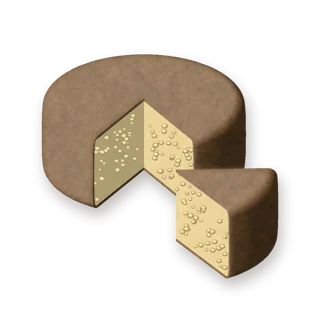
A cut cheese of cow's milk named after the East Prussian town of Tilsit, with a thin, brownish rind rubbed with salt water and red-smear cultures through about six months of ripening. German Wikipedia says it is made from raw or pasteurised milk, in wheels or increasingly in blocks, with a pale yellow, supple paste and holes the size of barley grains; the historical East Prussian wheels were about 25 cm across and 10 cm high. The name is unprotected, and Holsteiner Tilsiter is a separate PGI. Near the Bodensee, the Hofgemeinschaft Heggelbach in Herdwangen-Schönach makes a Tilsiter from pasteurised Demeter milk and calls it würzig, spicy.
Taste: German Wikipedia: from mild and lightly spiced to strong and sharp depending on the maker, with a supple, elastic, fairly moist paste. Heggelbach describes its own Tilsiter as würzig, spicy.
Ageing: About six months (German Wikipedia); Swiss grades from 30 to 180 days
Made in: Unprotected name, made in Germany, Switzerland and elsewhere; in this region at the Heggelbach farm dairy in the Linzgau, north of the Bodensee