AOP, first protected 1969Cow milk, bothSoft, washedWashed rindAlso Munster-Géromé
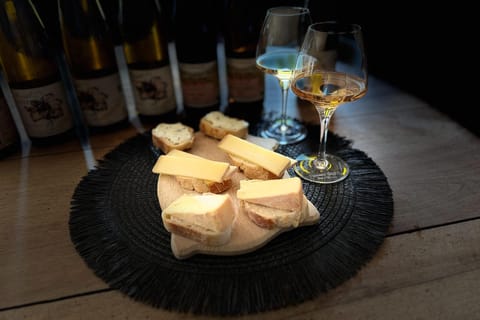
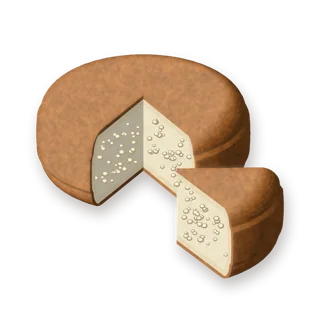
A soft, washed-rind cow's-milk cheese made on both sides of the Vosges: Munster on the Alsace slope, Géromé (from Gérardmer) on the Lorraine side, one appellation today. French Wikipedia traces its cheesemaking to Benedictine monks who founded a monastery in the Vosges in 660. The curd is moulded without washing or kneading, dry-salted, then rubbed or washed during ageing in humid cellars, which gives the orange-red rind. Farm Munster is raw milk only; dairies may thermise or pasteurise. Caraway seeds can go into the curd or be served alongside.
Taste: A powerful, ammonia-tinged smell and an orange rind around a supple, unctuous, mild paste, with dairy, hay, ripe-fruit and nut notes (Le Guide du Fromage; INAO for the odour). Caraway seeds can be mixed into the curd or served alongside.
Ageing: At least 14 days for the petit Munster format and 21 days for the standard format, counted from the production date
Made in: Vosges massif: parts of Bas-Rhin, Haut-Rhin, Vosges, Meurthe-et-Moselle and Moselle, plus a few communes of Haute-Saône and the Territoire de Belfort
Cow milk, rawSemi, hardWashed rindAlso Barikass
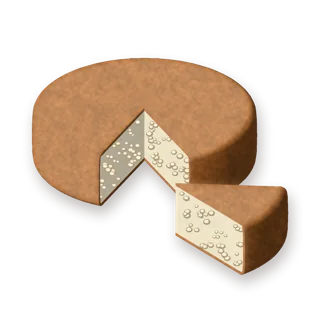
Alsace's mountain tomme: a pressed raw cow's-milk cheese made in the farm-inns of the high Vosges pastures, also written Barikass or Bergkäs, or sold as tomme des Vosges. It is a keeping cheese, made when summer milk is plentiful and Munster sales are slow, and it is not protected because each farm follows its own recipe. Summer wheels have a deeper yellow, stronger-flavoured paste than the paler, milder winter ones. It ages on wooden boards and is brushed or washed through the ageing.
Taste: Melting, mild and fruity with fresh grass and hay notes, often low in salt. Made from summer milk of cows grazing the high pastures, it can taste faintly of bilberry.
Ageing: At least 2 months (Le Guide du Fromage); three to six months with washing twice a week (French Wikipedia)
Made in: Vosges mountain villages and farm-inns, mostly around the Route des Crêtes, in Alsace (Bas-Rhin, Haut-Rhin) and the Vosges
Cow milk, rawSemi, hardNatural rind
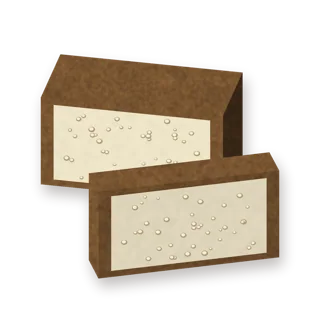
A young Vosges cheese, created in October 2015 by breeders to save the Vosgienne cow breed. It is a cooked, pressed raw-milk slab, a square block about 29.5 by 28 cm and 6 to 8 cm high, weighing 5 to 8 kg when aged. Producers follow a charter: at least 55% Vosgienne cows at joining, rising 5% a year, fed on pasture grass with no silage or maize. It is protected by a charter, not by an AOP.
Taste: A tender, creamy paste (Le Guide du Fromage: moelleux, onctueux), ivory-yellow with small openings, under a fine, irregular natural rind, grey to brown, on which yellow to brown blooms can develop.
Ageing: At least 2 months
Made in: Vosges massif: parts of Haut-Rhin, Bas-Rhin, Vosges, Meurthe-et-Moselle and Moselle, plus parts of Haute-Saône and the Territoire de Belfort
FreshAlso Bibeleskäs
A traditional Alsatian fresh cheese dish: drained curd or fromage blanc, sometimes loosened with crème fraîche, seasoned with salt and pepper and often chives; garlic or shallot appear in some modern recipes. French Wikipedia says it is eaten cold with potatoes boiled in their skins, in Alsace and Moselle, and that the name means chicks' cheese, after a mash of curd, oats and bran once fed to chicks. Siesskas, plain fromage blanc with cream, sugar or kirsch, is its sweet counterpart on farm-inn dessert menus (Carola).
Taste: Fresh white cheese enriched with crème fraîche and seasoned with garlic, shallots and chives, per Carola's guide to Alsatian cheeses, and served alongside sautéed or steamed potatoes.
Ageing: None; eaten fresh
Made in: Alsace and Moselle