
DOP, first protected 1995Cow milk, rawPasta, filataNatural rind
A stretched-curd cheese of raw whole cow's milk from the Hyblaean country of south-eastern Sicily. The curd is cooked at 80 C, drained, scalded and worked by hand into a block with a square section and rounded corners, brined, then tied in pairs and hung astride poles to ripen. Qualigeo dates its trade beyond Sicily to the 16th century. The consortium's published specification gives a section of 15 to 18 cm a side, a length of 43 to 53 cm and 12 to 16 kg; 14 kg is the midpoint. It is made in the forage season, from November to May. Italy listed Ragusano as a typical cheese, by method only, in 1955; it became a denominazione di origine tied to its zone in 1995 and an EU DOP in 1996.
Taste: Sweet and delicate, with a vanilla note and little piquancy when young; savoury and piquant in the grating type, with a hint of almond in long-aged wheels, per the consortium. The rind is smooth, thin and golden to straw, browning with age.
Ageing: Minimum 3 months from moulding; eaten as a table cheese up to about 4 months, grated once aged over 12 months
Made in: The whole province of Ragusa plus Noto, Palazzolo Acreide and Rosolini in the province of Syracuse

DOP, first protected 1955Sheep milk, rawHardNatural rindAlso Picurinu
The island's protected ewe's milk cheese, made from whole raw milk of sheep raised in Sicily and set with lamb rennet paste. The curd is drained by hand into rush baskets (fascedde) that print their weave on the rind, scalded, dry-salted twice ten days apart and ripened at 14 to 18 C. There are three ages, fresh, semi-aged and aged, and a peppered Pepato. Sizes are midpoints of Qualigeo's ranges for the aged type: 6 to 14 kg, 15 to 30 cm across, 15 to 25 cm high. Qualigeo traces the cheese to antiquity, citing Homer and Pliny the Elder. Italy recognised it as a denominazione di origine in the presidential decree of 30 October 1955, and the EU registered it as a DOP in 1996.
Taste: Sweet with strong pasture notes when young, spicier with age. The consortium (via CoRFiLaC) describes a decided, slightly piquant but fruity taste with a floral and spiced aroma, the heat growing over 4 to 8 months of ageing.
Ageing: Fresh 20 to 30 days, semi-aged 60 to 90 days, aged at least 120 days
Made in: The whole of Sicily
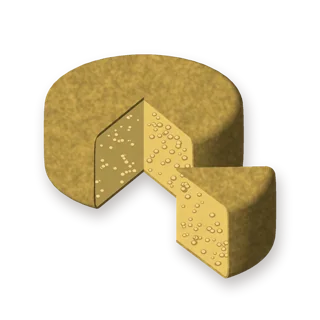
DOP, first protected 2011Sheep milk, rawHardNatural rind
A pressed ewe's milk cheese of central Sicily, made from whole raw milk of the Comisana, Pinzirita and Valle del Belice breeds and their crosses. Local saffron goes into the milk with the rennet and whole black peppercorns into the curd before it is pressed into rush baskets, so the rind is grooved and the paste yellow and flecked with pepper. It ripens for at least 60 days. Slow Food reads the name as the dialect for 'pleasing'; legend says the Norman count Roger added saffron to cheese to lift his wife Adelasia's depression. It became a DOP in 2011.
Taste: Ranges from mildly to more intensely peppery with age, with a characteristic smell and light saffron notes (Qualigeo). Slow Food calls it one of Sicily's least aggressive cheeses, delicate in smell and aromatic and slightly sweet from the saffron after about 60 days.
Ageing: At least 60 days
Made in: Province of Enna

DOP, first protected 2010Sheep milk, rawPasta, filataAlso Vastedda
One of the rare stretched-curd cheeses made from sheep's milk. Raw whole milk of Valle del Belice ewes is set with lamb rennet and rested 24 to 48 hours in rush baskets; the soured curd is then cut, covered with whey at 80 to 90 C in a wooden vessel and stretched by hand into a flat disc on a ceramic plate, 15 to 17 cm across and 500 to 700 g. It has no rind and is brined for 30 minutes to two hours. Slow Food says the name comes from vasta, spoiled, because it began as a way to rework defective summer pecorini.
Taste: Fresh sheep's cheese, a little tangy but not piquant (Qualigeo). Slow Food finds butter first, with grasses and valerian of the Belice valley behind, and says the best way to eat it is in thick slices with Sicilian olive oil, tomato and oregano.
Ageing: Eaten fresh, 12 to 48 hours after brining; not aged
Made in: 18 municipalities in the provinces of Agrigento, Trapani and Palermo, in the Belice valley
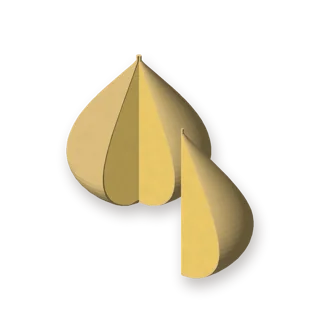
DOP, first protected 2020Cow milk, rawPasta, filataNatural rind
A stretched-curd cheese of raw cow's milk from the Nebrodi mountains of north-eastern Sicily. At least 60 percent of the cows' feed must come from the production zone. The curd is scalded in water at 65 to 70 C, stretched in wooden vessels under boiling whey and shaped by hand into a pear with the old 'ncuppatina technique, then hung in pairs astride a pole. Besides fresh, semi-aged and aged forms there is a flaky 'sfoglia' type and one with a whole green lemon worked into the paste. The figures recorded are for the aged cheese, which Qualigeo describes as oval with a short neck: midpoints of its 2 to 10 kg and 12 to 25 cm across. DOP since 2020.
Taste: Fresh: sweet, slightly acidic, with a soft ivory paste. With age it turns increasingly peppery, the paste yellow to amber and semi-hard to hard, and it may flake. Slow Food adds that long kneading of the curd before stretching makes it tend to flake in the mouth.
Ageing: Fresh, semi-aged and aged types; the Slow Food presidium says it must be aged at least three months
Made in: Numerous municipalities in the provinces of Catania, Enna and Messina, in the Nebrodi mountains

Cow milkPasta, filataNatural rindAlso Caciocavallo di Godrano
A stretched-curd cow's milk cheese named for Godrano, a village in the Palermo area, and also made around Corleone. Italian Wikipedia lists it as a traditional agri-food product (PAT), not a protected name, and says its milk comes mostly from the native Cinisara cows that graze freely on hills and woods; Slow Food names it among the cheeses made from that breed's milk. A document of March 1412 already tells it apart from cow and sheep cheeses. It is a squared block of about 10 kg, hung astride a pole to drain for 18 to 20 hours, with a thin smooth amber rind and a straw-yellow paste.
Taste: Fragrant, with a smell that changes with age and a piquant flavour, per Italian Wikipedia; the compact, tough paste flakes in older cheeses. Slow Food credits the Cinisara cows' wild-herb diet with notes of citrus, sage and hay in the milk.
Ageing: Eaten fresh after a couple of weeks, or aged to about six months for grating
Made in: Godrano, the Corleone area and neighbouring parts of the province of Palermo

Sheep and goat milk, rawHardNatural rind
A very large pecorino of the Peloritani mountains in the province of Messina. Slow Food gives raw sheep's milk with about 20 percent goat's milk and sometimes up to 20 percent cow's, set with kid or lamb rennet paste; the curd is cooked in a tinned copper cauldron, packed into wooden hoops and pricked by hand with an iron needle to let out air and whey, then dry-salted for 20 to 30 days and ripened for up to 24 months in underground stone cellars. Wheels are about 35 cm across, 12 cm high and 10 to 18 kg. It is a Slow Food presidium and, per Italian Wikipedia, a PAT, not a protected name.
Taste: Delicate for a pecorino, turning piquant with age (Italian Wikipedia). Slow Food describes a compact white paste tending to straw under an amber-yellow rind that darkens to brown; Italian Wikipedia adds that from the third month the rind is treated with Sicilian olive oil.
Ageing: Complete at about 8 months, and may go on to 24 months
Made in: Peloritani mountains, province of Messina

Cow and sheep and goat milkWheyNatural rindAlso Ricotta al forno
Baked ricotta, made across Sicily from the whey of cow's, sheep's or goat's milk, alone or mixed. The whey is heated to 90 C with sea salt or acidified whey, the curd that rises is lifted into baskets and drained for one or two days, then set in a buttered ceramic dish, sometimes with ground black pepper, and baked in a stone oven at 180 to 200 C for about 30 minutes until a thin reddish-brown skin forms. Slow Food's Ark of Taste describes discs 10 to 12 cm across and 2 cm thick. Italian Wikipedia lists it as a PAT, not a protected name.
Taste: Slow Food's Ark of Taste describes a creamy, ivory-white paste under a thin reddish-brown skin formed in the stone oven, with black pepper sometimes ground over it before baking. That page gives no flavour notes beyond this.
Ageing: Not aged: drained for one or two days, baked about 30 minutes at 180 to 200 C, then rested a day
Made in: All of Sicily