AOP, first protected 2003Goat milk, rawSemi, softLeaf rindAlso Banon AOP
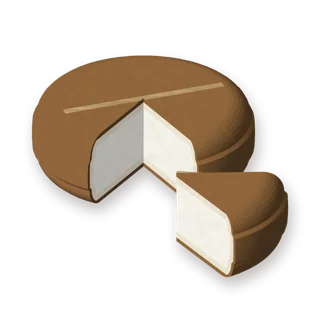
A small round goat's cheese from the hills of Haute-Provence, made from raw whole milk by the soft-curd method, drained in moulds, then wrapped in brown chestnut leaves tied with a strand of natural raffia. It ripens naked for 5 to 10 days and then at least 10 more under the leaves, which keep it moist and pass their tannins into the paste. It was the first cheese of the Provence-Alpes-Côte d'Azur region to be protected, as an AOC in 2003, and only Provençale, Rove and Alpine goats may supply the milk.
Taste: A smooth, creamy paste, unctuous at the heart, under a cream-yellow rind that sits beneath the leaves. INAO says it releases the scents of the Haute-Provence undergrowth, and Androuet describes a taste from tangy to pronounced.
Ageing: 5 to 10 days naked, then at least 10 days wrapped in chestnut leaves (15 days minimum in all)
Made in: 179 communes in Alpes-de-Haute-Provence, Hautes-Alpes, Drôme and Vaucluse
AOP, first protected 2018Goat milk, pasteurisedFresh
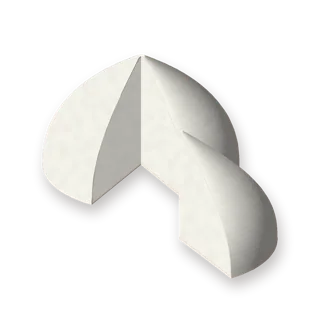
A fresh cheese from the garrigue hills behind Marseille, made from whole milk of the Rove goat. The milk is heated to about 90 C, cooled to about 70 C and curdled with spirit vinegar, and the curds are skimmed into elongated cone moulds about 12 cm long. French Wikipedia stresses that, unlike other brousses, it is made from milk rather than whey. It became an AOC in 2018 and an EU PDO in 2020, after eight breeders began the protection process in 2007 to set it apart from industrial imitations.
Taste: Androuet describes a tender, light and creamy fresh cheese with a faint lactic smell, and it is not ripened. English Wikipedia describes the goats grazing scrubland of grass, broom, gorse and kermes oak, with thyme and rosemary.
Ageing: Not ripened, sold fresh
Made in: Dry limestone kermes-oak country of the Bouches-du-Rhône, the southern tip of Vaucluse and western Var, around Le Rove and the Étoile chain near Marseille
Goat milk, rawSoft, bloomyBloomy rindAlso Tomme à l'ancienne
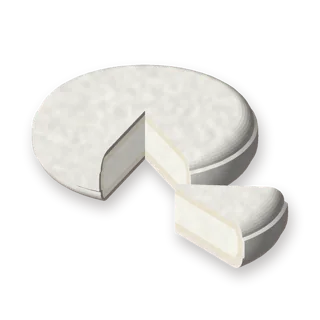
A traditional creamy goat's cheese of Provence, made from raw whole milk of Alpine, Provençale and Rove goats. French Wikipedia says it is made like Banon, by the soft or mixed curd method, but is not wrapped in chestnut leaves. It is a small puck, about 6 to 7 cm across and 1 to 2 cm high, or a slightly larger 8 cm by 2 to 3 cm for about 100 g, ripened for ten days to three weeks. It has no protected name; producers have said they want to protect it with an AOC or IGP. The Fromagerie de Banon makes one.
Taste: Medium strength, with notes of walnut and spice and a touch of acidity, according to French Wikipedia. The white paste runs from creamy to runny as the cheese ripens.
Ageing: 10 days to 3 weeks
Made in: Provence (no delimited area; producers are seeking an AOC or IGP)
Goat and cow milkSemi, softNatural rindAlso Pèbre d'aï
A soft cheese with a natural rind, coated in dried herbs, made around Mont Ventoux from goat's or cow's milk. Its name comes from pèbre d'aï, the Provençal name of winter savory (Satureja montana), one of the herbs in the coating. French Wikipedia and Androuet both describe a round disc 7 to 8 cm across and 3 cm thick, weighing 100 to 120 g, and Androuet says it is akin to Banon, the goat's cheeses of the area.
Taste: A sweet, fragrant flavour and a fine, tight paste, according to Androuet and French Wikipedia. Under the herbs the rind should be a bluish white to golden white.
Made in: Around Mont Ventoux: Comtat Venaissin, provençal Drôme and Haute-Provence
Sheep milkFreshAlso Tome d'Arles, Gardian, Trident
A fresh ewe's milk cheese of the Camargue, also sold as Gardian or Trident. French Wikipedia describes a white, supple paste flavoured with Provençal herbs, drained in round moulds and then set side by side so that the cheeses become small bricks, about 5 to 6 cm a side and 1.5 cm thick, sold covered with a bay leaf. Androuet says it has no rind and sits nude under the leaf. French Wikipedia counts about twenty producers; Androuet names the Mas du Trident at Vauvert as the last to make it for sale. It is best after the spring and autumn lambing.
Taste: Delicate and subtle, melting and creamy according to Androuet, with a white, supple paste flavoured with Provençal herbs according to French Wikipedia. It is eaten fresh, or left to dry for a deeper aroma.
Ageing: Eaten fresh, or dried for a stronger flavour
Made in: Camargue; French Wikipedia places most producers in the Avignon and Nîmes areas
Goat and sheep milkOtherAlso Fort du Ventoux, cacha
A strong fermented cheese preparation, a fromage fort, from the Comtat Venaissin around Mont Ventoux. French Wikipedia says it starts from remnants of old dry cheeses, softened and mixed with salt, pepper, garlic or a splash of spirit, sometimes with pieces of blue, packed in a large earthenware jar and kept for at least three weeks until it becomes a creamy paste. After each helping an equal amount of cheese is added, so the jar keeps going. It is a home tradition around the mountain, also called fort du Ventoux.
Taste: Powerful aromas and a robust, lasting taste with a sharp, pungent finish, a cheese for those who like strong sensations, according to French Wikipedia; a home-cook's blog calls it extremely pungent. It is spread on toasted peppered bread with raw onion, and a Provençal proverb says one crumb makes you eat a loaf.
Ageing: At least three weeks in an earthenware jar, then kept going by adding cheese after each helping
Made in: Comtat Venaissin around Mont Ventoux, Vaucluse