Stift Melk, the Benedictine monastery perched dramatically on a promontory above the western end of the Wachau, is one of the most visited sites in Austria.
Pours: Stift Melk Wachau Gruner Veltliner, Stift Melk Wachau Riesling
Vienna is the only capital city in the world with significant commercial vineyards within its municipal boundaries. The Wien DAC Wiener Gemischter Satz (a field blend of multiple white varieties grown and fermented together) is a unique local wine style, and the Heuriger wine-tavern tradition of Vienna's wine villages (Grinzing, Nussdorf, Gumpoldskirchen fringe) is a distinct wine-cultural experience from the Wachau's cellar-door visits. Vienna is also the hub for Austrian wine trade events and the Viennese Gemischter Satz Renaissance of the 2010s.
Pours: Wiener Gemischter Satz DAC, Nussberg Riesling, Heuriger young Gruner Veltliner from the tap
Burgenland, to the southeast of Vienna on the Hungarian border, is Austria's principal red wine region and home to the Blaufränkisch grape, which produces structured, spiced reds in the Mittelburgenland DAC. The town of Rust on the Neusiedlersee produces Ruster Ausbruch, one of Austria's historic noble-sweet wines made from botrytised grapes. A day trip contrasts the Wachau's white-wine focus with Austrian red wine and dessert wine production.
Pours: Blaufränkisch Mittelburgenland DAC, Ruster Ausbruch (dessert wine), Zweigelt
The Mostviertel (Most = cider/must country) is a hilly region immediately north of the Wachau where pear and apple orchards dominate rather than vines.
Pours: Mostviertler Birnenmost (pear cider), Apfelmost (apple cider), Mostviertel pear schnapps
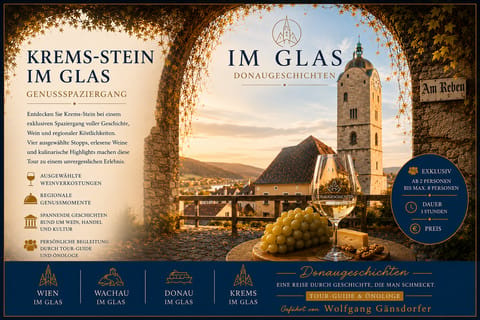
The Kremstal DAC appellation begins at the eastern boundary of the Wachau and centres on the city of Krems and the Stein quarter. Kremstal Riesling tends toward rounder fruit than Wachau, with slightly warmer growing conditions at lower elevation. The Loisium Wine World in Langenlois (just north of Krems) offers architecture, a subterranean cellar tour, and a comprehensive wine spa combining the regional visit with wellness. Krems-Stein's old town wine bars and the Kunstmeile galleries make this a half-day culture-and-wine combination.
Pours: Kremstal DAC Gruner Veltliner, Kremstal DAC Riesling, Loisium Wine World tastings
The Kamptal DAC, centred on Langenlois and the Kamp river valley, is home to Schloss Gobelsburg (the Cistercian-heritage estate with a historic cellar), Weingut Bründlmayer, and a cluster of ambitious younger producers.
Pours: Kamptal DAC Gruner Veltliner Reserve, Kamptal DAC Riesling, Schloss Gobelsburg Cistercian-method wines