
IGP, first protected 2025Cow and sheep milk, pasteurisedFresh
A white, moist, unripened cheese made by enzymatic coagulation of pasteurised whole milk from cows and sheep, unpressed and without a rind. The IGP rules set three grades by the share of sheep's milk: plain Queso de Burgos 5 to 10 %, Selecto 11 to 30 % and Supremo above 30 %. Whole cheeses weigh 250 g to 2.3 kg. The Commission regulation entering it in the EU register is dated 4 September 2025, and the single document calls it the only fresh cheese in Spain with a geographical name. It is made across the province of Burgos, so the Ribera del Duero's Burgos stretch around Aranda de Duero and Roa is part of its area.
Taste: Mild, milky and slightly sweet, either lightly salted or not salted, neither sour nor bitter, with a soft, slightly grainy or buttery texture and a little elasticity. The sheep's milk note is very light in the plain grade and clearly noticeable in Supremo.
Ageing: None: a fresh cheese, ready to eat after the curd is cut, drained and moulded
Made in: Every municipality of the province of Burgos, which includes the Burgos part of the Ribera del Duero around Aranda de Duero and Roa
IGP, first protected 2020Sheep milk, bothSemi, hardNatural rind
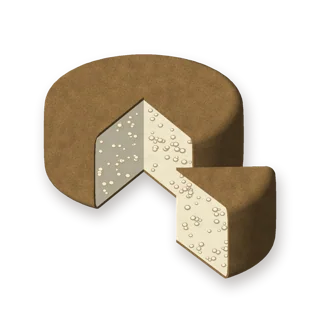
A pressed, enzymatically curdled sheep's milk cheese, fat or extra-fat, made from raw or pasteurised milk from Castilla y León farms and matured in the region. The specification caps a cheese at 25 cm across, 15 cm high and 3.8 kg. The rind is well defined, free of mould and can be natural or coated with authorised products, from pale yellow to brown. The paste is firm, close and pale, with few small round holes. The European Commission registered the name in February 2020; the IGP's own website lists 17 member dairies.
Taste: High flavour intensity, both acid and salty, with a moderate animal note and caramel, hints of nut and a light fruity and vegetal aroma. Slightly piquant, with fairly high persistence and a low aftertaste. The paste is firm, slightly adhesive, elastic, friable and grainy; every note sharpens with age.
Ageing: At least 30 days for cheeses of 1.5 kg or less, at least 60 days for larger formats
Made in: The whole of Castilla y León, which includes the Burgos, Valladolid, Segovia and Soria stretches of the Ribera del Duero


