When to visit Jerez & Sherry: harvest, en primeur and the calendar that shapes a cellar visit.
Year round
- Albariza vine flowering: May: Palomino Fino flowers in May across the albariza chalk vineyards of the Jerez Superior zone. Cool Atlantic breezes from the Cadiz coast moderate temperatures and extend the flowering window.
- Veraison and summer ripening: July-August: The Jerez summer is extreme: temperatures regularly exceed 40 degrees Celsius and rainfall is near zero from June through September. Albariza chalk acts as a water reservoir released slowly to the vine roots, making the soils uniquely suited to sustain Palomino Fino through the heat. Levante winds from North Africa can spike temperatures for days at a time, accelerating sugar accumulation and reinforcing the need for early harvest timing.
- Vendimia: harvest season, early-mid September: The Jerez harvest, or vendimia, typically begins in the first week of September, earlier than most European wine regions due to Andalucia's intense summer heat.
- Asoleo: Pedro Ximenez sun-drying on esparto mats, September: Immediately after harvest, Pedro Ximenez and Moscatel grapes destined for sweet sherry are spread on circular esparto grass mats on the open ground beside the bodega and left in the September sun for 10-14 days.
- First fermentation and classification of new must, October: The freshly pressed must ferments to dryness in stainless steel tanks or American oak butts over approximately two to three weeks in October.
- Flor growth season: peak activity, October-May: The flor yeast veil that protects fino and manzanilla from oxidation grows most actively at temperatures between 15 and 20 degrees Celsius, making the cooler Andalucian autumn and spring the peak biological ageing windows. In Sanlucar de Barrameda, the Atlantic humidity sustains the flor veil throughout the year at greater thickness than in Jerez, which is why manzanilla develops its distinctive lighter, saltier, chamomile-like character. During the hot summer months flor thins and the wines can shift toward the amontillado style.
- En rama spring bottling: April-May: Most Jerez and Sanlucar bodegas release their en rama editions in late April and May when the flor veil is at its thickest and most active following winter dormancy.
- Sacas and rocio: solera transfers, year-round: The solera system involves periodic sacas (withdrawals) from the oldest barrels and rocio (irrigation) additions of younger wine to replenish them, typically two to three times per year.
- Feria del Caballo: the May sherry social season: The Feria del Caballo (Horse Fair) held each May in Jerez is the year's most socially significant sherry consumption event. Thousands of decorated horse-drawn carriages parade through the fairground while attendees in flamenco dress drink chilled fino and manzanilla from traditional long-stemmed copitas in the casetas (tent pavilions). For the city's bodegas, the Feria represents the highest-volume selling week of the year for local fino.
- Sanlucar beach horse races and Manzanilla: August: The Carreras de Caballos en la Playa de Sanlucar de Barrameda, held on the beach at Sanlucar de Barrameda each August since 1845, are among Europe's oldest beach horse races and the most photogenic event in the Sherry Triangle's wine-tourism calendar. Spectators line the beach drinking chilled Manzanilla from the town's tabancos and bodegas while the horses race on the wet sand at the mouth of the Guadalquivir. Hidalgo La Gitana and Barbadillo are the dominant Manzanilla brands sold at the races.
- Fiesta de la Vendimia de Jerez: ceremonial harvest festival, September: The Fiesta de la Vendimia de Jerez, held on the first Sunday in September, is the traditional public opening of the Jerez harvest. The ceremony, held on the steps of the Collegiate Church of San Salvador, features the treading of the first grapes by foot in traditional Jerez esparto baskets, a blessing of the must by the Archbishop of Jerez, and the first ceremonial filling of the venencia, the long-handled sherry sampling cup. The event draws pilgrims from across the wine world to witness the opening of the harvest season.
- Christmas and festive season: the oloroso and PX moment, December: Oloroso, Cream, and Pedro Ximenez sherries reach their seasonal peak of sales in December, when the Spanish tradition of serving sweet sherry with turrón and polvorones (Andalucian Christmas biscuits) drives the highest volume of domestic consumption. The festive period is also when Spain's supermarkets and wine shops stock their widest sherry selections, and the grandes marcas (Gonzalez Byass, Lustau, Osborne, Williams and Humbert) launch their Christmas gift editions. Palo cortado, valued for its combination of amontillado aroma and oloroso body, has grown rapidly as a prestige Christmas gift.
Book wine experiences in Jerez & Sherry

Guided tour1.5 hours5.0 from 2 reviewsfrom €30
Discover one of the oldest wineries in the Marco de Jerez. Stroll through its historic corridors and enjoy a Manzanilla sherry tasting paired with delicious accompaniments.

Guided tour3.5 hours4.4 from 4 reviewsfrom €40
Upgrade your experience by combining a historic center city tour with a visit to one of the most famous wineries in Jerez. Taste three excellent wines at the winery.
Guided tour75 minutes4.6 from 50 reviewsfrom €25
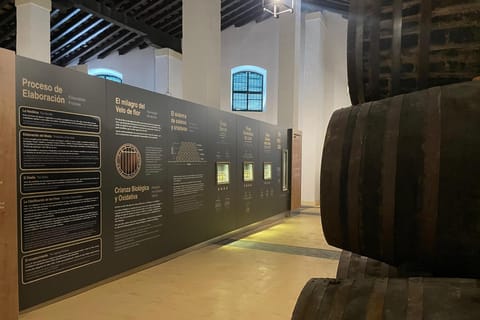
A guided tour of an 1850's winery, the tour includes an audio-visual, history of sherry wine and winemaking. Also wine tasting an exhibition with historical labels
Wine tastings and winery visits in Jerez and Cádiz (26) · Wine tours and day trips in Jerez and Cádiz (6)
See all 291 bookable experiences in Jerez & Sherry
Seasonal in Jerez & Sherry, FAQ
When is the best time to visit Jerez & Sherry for wine?
Peak wine-travel season in Jerez & Sherry is spring through autumn, with harvest the standout window.
Do I need an appointment to taste at Jerez & Sherry estates?
classified-growth and grand-cru estates require booking days to weeks ahead; smaller family domaines often take walk-ins midweek.
What hours do Jerez & Sherry cellars and tasting rooms keep?
most estates open 10:00 to 17:00 by appointment, often closed Sunday and Monday.
How does tipping work at Jerez & Sherry tastings?
tipping is not expected at tastings; buying a bottle from the cellar door is the customary thank-you.
What is the one wine to try in Jerez & Sherry?
Ask the next local you meet what they would order. Jerez & Sherry rewards trust.