The cheeses made in and around Brda: the protected names first, then the local cheeses people actually eat, with their milk, rind, ageing and taste.

The cheeses of Brda

Tolminc

PDO, first protected 2003Cow milk, bothHardNatural rind

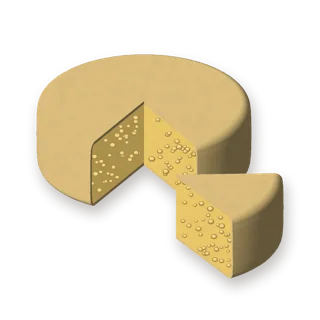
A hard, full-fat cow's milk cheese of the upper Soča valley, made in the municipalities of Kobarid, Tolmin and Bovec from raw milk or milk thermised at 57 to 68 °C, at least four fifths of it from brown cows. Wheels are 23 to 27 cm across, 8 to 9 cm high and 3.5 to 5 kg; they are pressed, brined for one to two days and matured for at least 60 days. Records from the 13th century mention it as payment of taxes to the lord of the land, and the name Formaggio di Tolmino appears on a 1756 cheese price list in Udine. Slovenia protected the name nationally in 2003, and the EU registered it as a PDO in 2012.

Taste: The specification calls the taste sweet and piquant and the smell distinctive and free from foreign odours. Planika, the Kobarid dairy, says that after at least two months on wooden shelves the taste grows ever more intense, rich and aromatic. Slovenian Wikipedia adds that it slices well, is traditionally used in frika and, well aged, in sauces.

Ageing: At least 60 days; some wheels are kept a year or longer

Made in: Zgornje Posočje, the upper Soča valley: the municipalities of Kobarid, Tolmin and Bovec
Albuminska skuta

Cow milkWhey

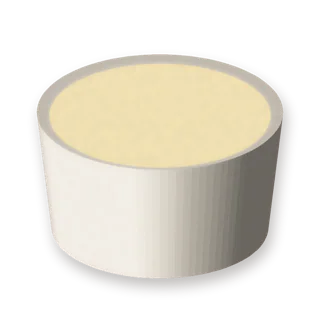
A soft whey cheese of the Soča valley, made from the whey left after cheesemaking. Planika makes it from the primary whey, naturally sweet from its lactose, drawing out most of the albumin and globulin proteins and setting them as skuta. The dairy calls it a traditional Posočje product known for centuries, good on its own or in baking. Kramar's farm in Zatolmin sells a salted version in 0.5 kg tubs. Soča Valley tourism names albumin skuta, with Tolminc and Bovec sheep's cheese, among the valley's best-known local products. It has no protected name.

Taste: Planika says the primary whey is naturally sweet because it holds a relatively large share of lactose, which shapes the taste of its sweet albumin skuta. Kramar sells a salted version and suggests it on salads, mixed with herbs, vegetables and spices as a spread on bread or baked potato, or in baking.

Made in: Posočje, the Soča valley, as a by-product of its cheesemaking

Which local wines to drink with them →

Book wine experiences in Brda

See all 6 bookable experiences in Brda

Cheeses in Brda, FAQ

Is Tolminc a raw milk cheese?

It can be either. The EU specification allows raw or thermised cow's milk (57 to 68 °C) and requires the label to say which was used. Planika, the Kobarid dairy, says its Tolminc is made from thermised milk.

How big is a wheel of Tolminc?

The specification gives a round wheel 23 to 27 cm across and 8 to 9 cm high, weighing 3.5 to 5 kg.

Can I buy Tolminc near Brda?

Planika lists the Kmetijska zadruga Tolmin shops, including the one in Nova Gorica, the town beside Brda, among the places that sell its products. For the full range, the dairy's own market and its cheese museum are in Kobarid, a day trip north up the Soča valley.

What is albuminska skuta?

A whey cheese. Planika makes it from the primary whey left from cheesemaking, where the albumin and globulin proteins are drawn out and set; the dairy calls it a traditional Posočje product known for centuries.

Is it sold near Brda?

The Kmetijska zadruga Tolmin shop in Nova Gorica says its deli stocks Planika's albumin skuta. Kramar's farm also lists that Nova Gorica cooperative shop among its sales points.

← Back to Brda wine guide